Top drone industry trends 2025
The drone world is buzzing, and 2025 looks like another big year for this tech. We’re seeing changes everywhere, from how companies get new customers to what people are actually using drones for. It’s not just about cool gadgets anymore; drones are becoming serious tools for businesses. This article dives into the key drone industry trends you need to know about, looking at what’s driving the market and what challenges companies are facing. We’ll also highlight some of the big players making waves.
Key Takeaways
- Regulatory hurdles continue to be the main roadblock for the drone sector, making it tough for companies to expand and operate smoothly.
- Getting new clients and securing enough money are growing concerns for drone businesses, especially as operations become more complex.
- While safety was once the top reason for drone use, saving time and improving the quality of work are now the main drivers for adoption.
- Mapping and surveying remain popular drone applications, but other uses like spraying, delivery, and tracking are gaining ground.
- Despite challenges, the overall feeling in the drone industry is optimistic, with companies expecting steady growth in the coming years.
1. Regulatory Obstacles
It seems like every year, the drone industry has to deal with a bunch of rules and regulations, and 2025 is no different. Honestly, it’s still the biggest headache for most companies, and it’s been that way for a while now. Getting approval to fly drones, especially for things like flying beyond visual line of sight (BVLOS), can be a real maze. The old ways, like needing individual waivers for everything, just took too much time and money.
There’s some hope, though. New rules, like the proposed FAA Part 108 in the US, are trying to make things smoother. The idea is to be smarter about risk and let industry standards play a bigger role. Plus, they’re trying to get on the same page with other countries, which is good for anyone operating globally. But will it actually fix everything? That’s still up in the air.
Here’s a quick look at how things stack up:
- Navigating complex approval processes: Getting the green light for specific operations can be slow and costly.
- Keeping up with evolving rules: Regulations change, and staying compliant requires constant attention.
- International harmonization: Different countries have different rules, making global operations tricky.
The pace of regulatory change is a double-edged sword. While new rules can open up possibilities, the process of getting them implemented and understood can create significant delays and uncertainty for businesses trying to scale their operations. It’s a constant balancing act between safety, innovation, and market access.
Despite these hurdles, the industry is pushing forward. The focus is shifting towards making these regulations work better for everyone, allowing for more advanced operations without compromising safety. It’s a work in progress, for sure.
2. Client Acquisition
Getting new clients in the drone industry in 2025 is still a bit of a puzzle, but it’s getting clearer. It’s not just about having the best tech anymore; it’s about showing people how your drones can actually solve their problems. Think about it: a construction company doesn’t want to hear about your drone’s flight time, they want to know if it can save them money on site inspections. Tailoring your pitch to specific industries is key.
We’re seeing a few main ways companies are finding their customers:
- Industry Events and Trade Shows: Still a big deal. Being there lets you show off your gear and talk face-to-face with potential clients. It’s a good place to see what competitors are up to, too.
- Online Presence and Content Marketing: Having a solid website and sharing useful info online, like case studies or blog posts about how drones help in certain fields, draws people in. It shows you know your stuff.
- Partnerships and Referrals: Working with other companies or getting happy clients to spread the word can open a lot of doors. It’s like a built-in trust factor.
- Direct Outreach: Sometimes, you just have to pick up the phone or send a targeted email to companies you think could really benefit from your services. It takes effort, but it can pay off.
It’s also really important to understand the market you’re trying to break into. Knowing the numbers and who else is playing in that space can make a huge difference in how you approach potential customers. This kind of detailed market research is something many companies are looking for to help them plan their next moves [003c].
The drone market is maturing, and clients are becoming more sophisticated. They’re not just buying a drone; they’re buying a solution. This means businesses need to be ready to demonstrate clear ROI and tangible benefits, not just technical specs. It’s about building relationships and proving value consistently.
3. Additional Funding
Getting the money needed to keep a drone business going is getting tougher. It’s moved up to the third biggest worry for companies, right after regulations and finding customers. This isn’t just about getting a little extra cash; it’s about having enough to actually grow and compete.
Think about it: if you can’t scale up because you’re stuck waiting for approvals or can’t get enough clients, having more money is the only way to grab a piece of the market before someone else does. But with funding drying up, that’s becoming a real challenge. It’s a bit of a catch-22 situation.
Here’s a look at why funding is such a big deal:
- Operational Expansion: More funds mean you can buy more drones, hire more people, and take on bigger projects. Without it, you’re stuck.
- Research & Development: Developing new tech or improving existing drones costs money. Companies need this to stay ahead.
- Market Penetration: Funding helps with marketing, sales, and building partnerships to reach more customers.
- Navigating Regulations: Sometimes, you need money just to deal with the complex and costly process of getting permits and approvals.
The drone market is seeing a shift. Companies are focusing less on just getting people to know about drones and more on actually getting clients and, importantly, securing the funds to make it all happen. It’s a competitive landscape, and having the financial backing is key to survival and success.
It’s not all doom and gloom, though. Some sectors, like drone hardware and software, are still seeing a lot of optimism for the next year. Investors are still looking for good opportunities, but they’re being more selective. Having a solid business plan and a clear path to profitability is more important than ever. You can find more insights into the current state of the industry in the Global State of Drones 2025 white paper.
4. Mapping And Surveying
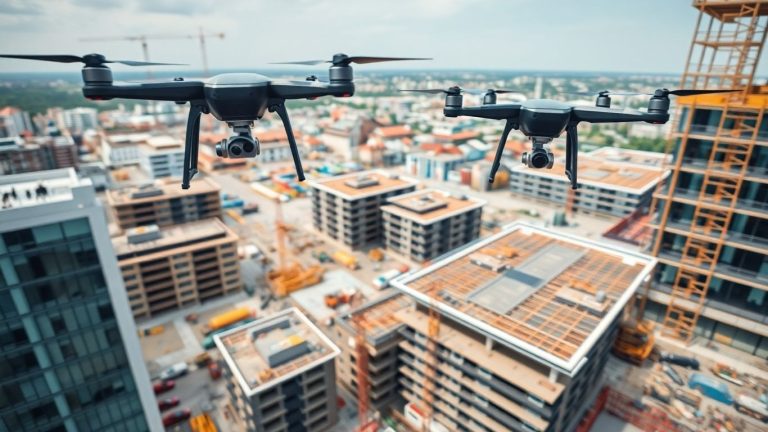
Mapping and surveying continue to be the main ways drones are used, with about 35% of drone operators relying on them. This area has really taken off because drones can get to places that are hard for people to reach and collect a lot of data quickly. Think about construction sites or large farms – drones can fly over them and create detailed maps and 3D models that would take ages to do by hand.
The ability to turn drone photos into accurate maps and models is a game-changer for many industries.
Here’s a quick look at what makes drone mapping so useful:
- Speed and Efficiency: Drones cover large areas much faster than traditional methods.
- Accuracy: They provide precise measurements and detailed visual data.
- Accessibility: Drones can reach difficult or dangerous terrain safely.
- Cost-Effectiveness: Over time, using drones can be cheaper than older survey techniques.
Software companies like Pix4D, DroneDeploy, and Maps Made Easy are making it easier than ever to process this data. You can plan your flight, capture images, and then use their software to create everything from simple maps to complex 3D models. These models are super helpful for tracking progress on building sites, managing crops, or even monitoring environmental changes.
The data collected by drones is being used to make better decisions. Instead of guessing, people can look at actual maps and models to see exactly what’s going on. This helps avoid mistakes and saves resources.
Companies like Propeller Aero are also providing full solutions, combining hardware and software so that construction and mining folks can easily track site changes, measure materials, and keep projects on schedule. It’s all about getting clear, up-to-date information from above to make smarter choices on the ground.
5. Inspection
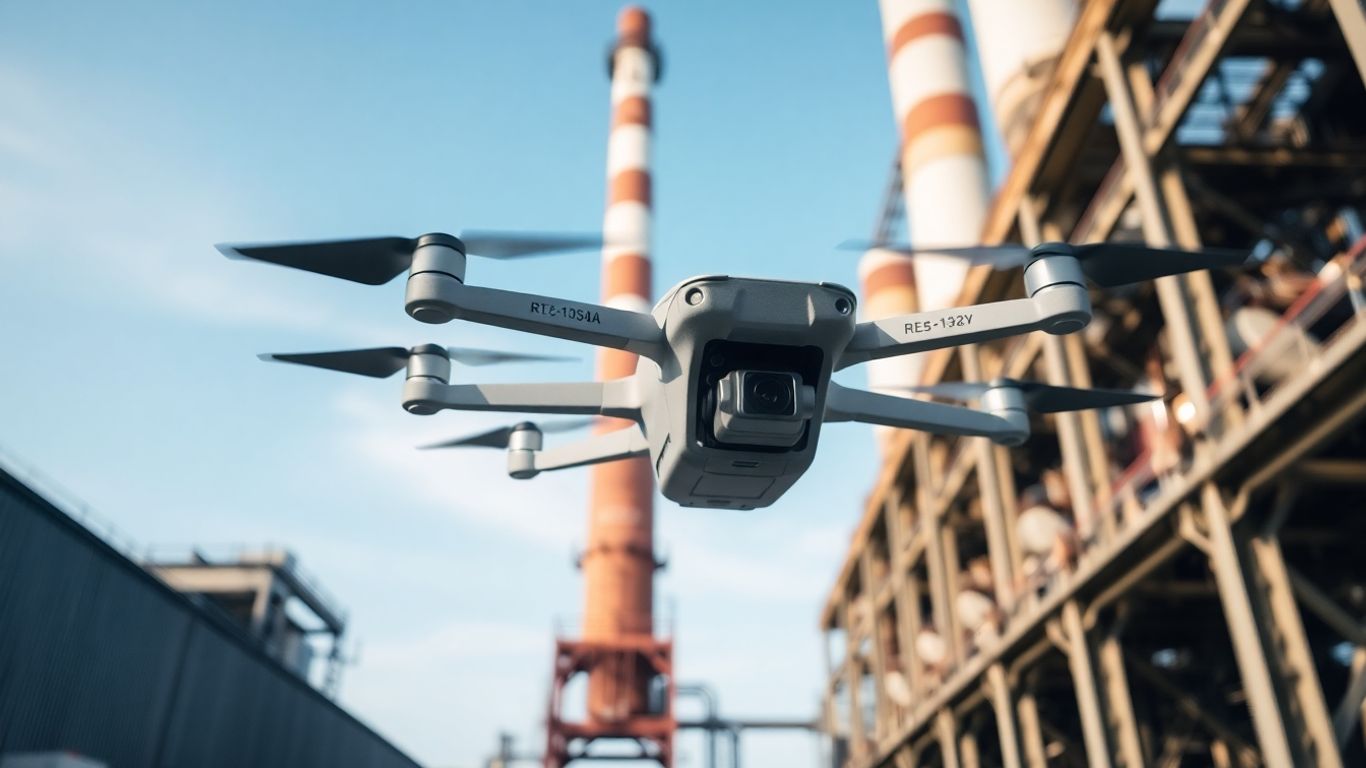
When it comes to inspecting infrastructure, drones are really changing the game. Think about bridges, wind turbines, or even power lines. Before, you’d need a whole crew, scaffolding, or even helicopters, which is expensive and takes ages. Now, a single drone pilot can get up close and personal with these structures, capturing detailed images and video.
This ability to get high-resolution data from hard-to-reach places is a massive win for industries like energy, construction, and infrastructure management. It means we can spot potential problems much earlier, before they turn into costly repairs or safety hazards. Companies are using specialized drones equipped with thermal cameras to find heat leaks in buildings or check for damage on solar panels. Others are using drones with advanced sensors to inspect the insides of pipelines or confined spaces, areas that were previously almost impossible to check safely.
Here’s a quick look at what makes drone inspections so useful:
- Reduced Costs: Significantly lower operational expenses compared to traditional methods.
- Improved Safety: Keeps human inspectors out of dangerous environments.
- Faster Data Collection: Gathers information in a fraction of the time.
- Enhanced Data Quality: Provides detailed visuals and sensor data for better analysis.
The technology is getting so good that drones can now fly autonomously along pre-programmed routes, collecting data without constant human input. This makes the whole process more efficient and repeatable, which is great for regular maintenance checks.
It’s not just about spotting damage, either. Drones are also being used for progress monitoring on construction sites, checking the structural integrity of buildings over time, and even inspecting agricultural fields for crop health. The sheer amount of data these flights can generate is impressive, and with advancements in AI, analyzing that data is becoming quicker and more accurate. This whole sector is really taking off, and it’s easy to see why. You can find out more about how drones are being used in various sectors in the Global Drone Survey Results 2025.
Some companies are even developing drones specifically for indoor inspections, like those used in mines or industrial facilities. These often have protective cages to prevent damage if they bump into things, which is pretty clever. It’s clear that drone inspections are moving beyond just a novelty and becoming a standard tool for many businesses.
6. Photography And Filming
Photography and filming using drones have seen a bit of a dip, going from 28% in 2023 down to 18% in 2025. It seems like this area is often folded into bigger jobs, like mapping or inspections, rather than being a standalone task. Think about it – when you’re mapping a large area, you’re probably capturing footage along the way anyway.
This shift doesn’t mean drones aren’t being used for cool visuals, though. High-end real estate, for example, is really leaning into drone tech. We’re seeing drones with 4K video and super sharp cameras that can show off properties in amazing detail. It’s a big step up from just having a few aerial shots. You can get these incredibly immersive views that really sell a place, especially for luxury homes Luxury real estate is embracing advanced drone technology for 2025.
Here’s a quick look at how drone photography and filming are being integrated:
- Cinematic Shots: Creating sweeping, dynamic footage for films, commercials, and documentaries.
- Event Coverage: Capturing unique perspectives of weddings, concerts, and sporting events.
- Property Marketing: Providing detailed aerial views for real estate listings.
- Tourism Promotion: Showcasing landscapes and attractions from breathtaking angles.
While dedicated photography and filming might be a smaller slice of the pie now, it’s still a vital part of how many industries showcase their work or products. It’s just becoming more integrated into broader data-gathering missions.
It’s interesting to see how the reasons for using drones have changed too. While safety used to be the top concern, now it’s all about saving time and improving the quality of the final output. This suggests that drone technology is really starting to prove its worth in terms of efficiency and results.
7. Spraying And Dispensing
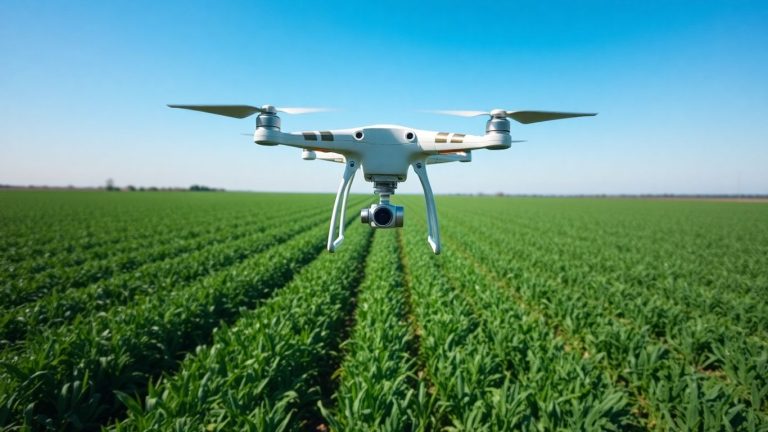
When it comes to spraying and dispensing, drones are really starting to show their worth, especially in agriculture. Think about it – instead of a big tractor churning up the soil, a drone can precisely target weeds or apply fertilizer exactly where it’s needed. This means less waste of chemicals and less impact on the environment. Companies like Hylio are making waves with their large agricultural drones, designed to handle big fields efficiently. Their systems let farmers map out areas and automate the whole spraying process, which is pretty neat.
The precision these drones offer is a game-changer for reducing chemical usage and boosting crop yields.
Here’s a quick look at what makes this area so interesting:
- Precision Application: Drones can apply pesticides, herbicides, and fertilizers with incredible accuracy, targeting specific areas and reducing overspray. This is a big deal for both cost savings and environmental protection.
- Efficiency Gains: Covering large areas quickly is a major advantage. Drones can complete tasks in a fraction of the time it would take traditional methods, especially in difficult terrain.
- Payload Capacity: Modern agricultural drones can carry significant amounts of liquid, making them suitable for commercial-scale operations. Some can hold several gallons of spray.
- Reduced Soil Compaction: Unlike heavy machinery, drones don’t compact the soil, which is important for soil health and crop growth.
The technology is moving fast. We’re seeing drones that can not only spray but also dispense seeds for reforestation projects or even apply beneficial insects for pest control. It’s about more than just agriculture; it’s about targeted application of various substances in a controlled and efficient manner.
While agriculture is a huge market for this, we’re also seeing potential in other areas, like applying treatments for public health or even in industrial settings for specific coating applications. It’s a growing field, and the ability to precisely deliver materials is what makes it so promising.
8. Delivery
Delivery by drone is really starting to take off, and it’s not just for pizza anymore. We’re seeing a lot more serious applications, like getting medical supplies to remote areas or even just dropping off packages in places that are hard to reach.
The big push is for speed and efficiency, especially for time-sensitive items. Think about it: instead of waiting hours for a truck, a drone can get there in minutes. This is a game-changer for emergency services and for businesses that need to move small, high-value goods quickly.
Here’s a quick look at what’s happening:
- Medical Deliveries: Getting medicines, blood samples, or even organs to hospitals or patients faster than ever before. This is huge for saving lives.
- E-commerce: Small packages, like electronics or last-mile deliveries in urban areas, are becoming more common. It’s still early days, but companies are testing this out.
- Rural Access: Delivering goods to farms or isolated communities where traditional transport is difficult or slow.
Of course, there are still hurdles. Regulations are a big one, and figuring out how to manage a whole fleet of delivery drones safely is complex. Plus, the weather can be a real pain for flying.
The technology is getting better all the time, with drones that can carry more weight and fly further. The main challenge now is building the infrastructure and getting the rules in place so this can become a regular thing, not just a special project.
It’s exciting to watch this space develop. We’re moving from just talking about drone delivery to actually seeing it happen, and it’s going to change how we get things.
9. Localisation And Tracking
When we talk about drones, localisation and tracking might not be the first things that come to mind, but they’re becoming super important. Think about it: knowing exactly where your drone is, and where it’s been, is key for a lot of jobs. It’s not just about not losing your expensive piece of tech, either.
Accurate positioning is becoming a core requirement for many advanced drone operations.
This is especially true for things like precision agriculture, where you need to know the exact spot to spray or monitor. Or in construction, to keep track of assets on a large site. Even for simple delivery drones, knowing their precise location is a must for safe and efficient operation.
Here’s a quick look at why it matters:
- Asset Management: Keeping tabs on multiple drones, especially in large fleets, helps prevent loss and ensures efficient deployment.
- Operational Safety: Real-time tracking allows for geofencing and collision avoidance, keeping drones and people safe.
- Data Integrity: For tasks like surveying or monitoring, knowing the exact coordinates of the data collected is vital for accuracy.
- Regulatory Compliance: Many areas require drones to be tracked for safety and security reasons.
The technology behind this is getting better all the time. We’re seeing more sophisticated GPS and other positioning systems being integrated directly into drones, making them more reliable even in tricky environments. Plus, the software side is catching up, offering better ways to visualize and manage this location data.
Companies are developing specialized software that can take all this location data and turn it into useful information. It’s not just a dot on a map anymore; it’s about understanding movement patterns, identifying areas of interest, and integrating that information with other systems. It’s a pretty big deal for making drones more useful in everyday work.
10. Saving Time
It turns out, one of the biggest reasons people are using drones these days is pretty straightforward: they save a ton of time. This isn’t just about getting a job done faster, it’s about fundamentally changing how work gets done. Think about it – instead of days or weeks of manual labor for tasks like surveying large areas or inspecting tall structures, a drone can often do it in hours, or even minutes.
This shift is pretty significant. For a long time, improving safety was the main selling point for drones. But now, the focus has really moved towards efficiency. It’s like the industry is maturing, and companies are seeing real, tangible benefits in their bottom line because of the time savings.
Here’s a quick look at how drones are making a difference:
- Mapping and Surveying: Covering vast tracts of land for agricultural planning or construction site monitoring used to be a slow, ground-based process. Drones can capture detailed aerial data much quicker.
- Infrastructure Inspection: Checking bridges, power lines, or wind turbines often requires dangerous climbs or specialized equipment. Drones get eyes on the problem areas without putting people at risk or taking extensive time to set up.
- Progress Monitoring: For large construction projects, keeping track of progress can be a logistical headache. Regular drone flights provide a consistent, fast way to document how things are developing.
The move towards time-saving as a primary driver suggests that drone technology is not just a novelty anymore. It’s becoming a practical tool that directly impacts operational speed and, by extension, project timelines and costs. This efficiency is becoming a key factor in deciding whether to adopt drone solutions.
Ultimately, the ability to gather high-quality data rapidly is what’s driving drone adoption across so many different fields. It’s not just about having cool tech; it’s about getting the job done more effectively and with less delay.
11. Improving Quality
It’s pretty wild how much better drones are making things these days, right? We’re not just talking about slightly better pictures anymore. Think about construction sites – instead of a foreman squinting at blueprints, a drone can fly over and give a super detailed, accurate look at progress. This means catching mistakes early, before they turn into expensive problems. The precision offered by drone data is really changing the game for quality control across many fields.
This push for better quality isn’t just about catching errors, though. It’s also about making sure things are done right the first time. For example, in agriculture, drones can monitor crop health down to the individual plant, allowing farmers to apply exactly what’s needed, where it’s needed. That kind of targeted approach just wasn’t possible before.
Here’s a look at how drones are boosting quality:
- Precision Data Collection: Drones equipped with advanced sensors can gather incredibly detailed information, far beyond what humans can easily see or measure.
- Early Issue Detection: By regularly surveying sites or assets, potential problems like structural weaknesses or developing faults can be spotted much sooner.
- Standardized Assessments: Drones provide consistent data collection methods, reducing human variability and ensuring assessments are comparable over time.
- Enhanced Visualization: High-resolution imagery and 3D models make it easier for teams to understand complex situations and make informed decisions about quality.
The ability to get such detailed and consistent information from drones means that projects, from building bridges to inspecting pipelines, are being completed to a higher standard. It’s less about guesswork and more about data-driven accuracy, which is a huge step forward for industries that rely on getting things exactly right.
This focus on quality is a big reason why so many businesses are looking into drone technology. It’s not just about speed anymore; it’s about doing the job right, and drones are proving to be a reliable tool for that. For businesses looking to adopt this technology, understanding the capabilities for improving operational quality is a key consideration.
12. Improving Work Safety
It’s interesting to see how the drone industry is evolving. For a while there, a big selling point for using drones was how much safer they made certain jobs. Think about inspecting tall bridges or power lines – sending a drone up is way less risky than sending a person. And that’s still true, of course.
But here’s the thing: improving work safety has actually slipped down the list of why companies are using drones. It’s now the third most important reason, behind saving time and getting better quality data. This doesn’t mean safety isn’t important anymore, not at all. It just means other benefits are becoming even more of a focus for businesses.
So, while drones are still fantastic for keeping people out of harm’s way, the conversation has shifted. Companies are really looking at the bottom line and how drones can speed things up and give them more accurate information. It’s a sign that the industry is maturing, and these tools are proving their worth in more ways than one.
Here’s a quick look at why safety was such a big deal and how it’s still relevant:
- Reduced Risk in Hazardous Environments: Drones can go places that are too dangerous for humans, like disaster zones, chemical spills, or unstable structures. This means fewer accidents and injuries.
- Less Need for Manual Labor in Risky Tasks: Jobs like inspecting high-rise buildings, wind turbines, or power grids used to require specialized climbers or heavy equipment. Drones can do a lot of this work from the ground or a safe distance.
- Improved Situational Awareness: In emergency response situations, drones can provide real-time video feeds, helping first responders understand the scene better and make safer decisions about where to deploy personnel.
The shift in priorities doesn’t diminish the safety benefits drones provide. Instead, it highlights that the technology is now expected to deliver on multiple fronts, with safety being a foundational, yet not always the primary, driver for adoption.
13. Public Awareness
It’s interesting to see how the conversation around drones has shifted. A few years back, you couldn’t go anywhere without hearing about how people were worried about privacy or how drones were going to take over the sky. Now, it seems like that initial shock and awe, or maybe even fear, has really died down.
The general public is becoming much more familiar with drones and their practical uses. This isn’t to say everyone is a drone expert, far from it, but the constant presence of drones in news reports about deliveries, inspections, or even just hobbyists flying them has made them less of a novelty and more of a common sight. This growing familiarity is a good thing for the industry, as it helps to normalize their presence and reduce some of the initial apprehension.
Here’s a quick look at how public perception has changed:
- Reduced Novelty: Drones are no longer seen as just futuristic gadgets. They’re increasingly part of everyday infrastructure, like delivery vehicles or tools for emergency services.
- Increased Understanding of Applications: People are starting to grasp the real-world benefits beyond just cool aerial shots. Think about how drones help in disaster relief or agricultural monitoring.
- Focus Shift: The industry’s focus has moved from getting public acceptance to maintaining it while concentrating on other challenges like funding and client acquisition.
While regulatory hurdles and funding remain significant concerns for drone companies, the background hum of public awareness has quieted down. This shift means the industry can spend less energy convincing people that drones are safe and useful, and more energy on actual business growth and innovation. It’s a subtle but important change that allows the sector to mature.
This doesn’t mean all concerns have vanished. There are still conversations to be had about data security and responsible operation, but the overall climate is far more accepting than it used to be. It feels like we’re moving past the initial
14. Inflation
It’s interesting to see how inflation is playing out in the drone world. Back a few years ago, it felt like a bigger worry for companies, something that could really mess with budgets and expansion plans. But looking at the latest reports, it seems like inflation isn’t the headline-grabbing challenge it used to be for the drone industry.
This is a good sign, suggesting the market is becoming more stable and predictable.
While it’s not completely gone, its impact has lessened. This means companies can plan ahead with a bit more confidence, not constantly worrying about rising costs eating into their profits or making new drone tech too expensive to develop or buy.
Here’s a quick look at how concerns have shifted:
- Regulatory Obstacles: Still the top concern, year after year.
- Client Acquisition: Holding steady in second place.
- Additional Funding: Moving up, showing it’s becoming a bigger hurdle.
- Inflation: Dropping down the list of major worries.
The fact that inflation is becoming less of a primary concern is a positive indicator for the drone industry’s maturity. It suggests that the economic environment is becoming more stable, allowing businesses to focus on growth and innovation rather than just managing immediate cost pressures. This shift allows for more strategic investment and development.
So, while you still need to keep an eye on the economy, the drone sector seems to be finding its footing and is less rattled by general economic ups and downs than before. It’s a sign of a maturing industry that’s getting better at managing its resources and operations.
15. Drone Hardware Companies
The companies that build the actual physical drones are the backbone of this whole industry. Without them, none of the cool stuff we’re seeing in mapping, delivery, or inspection would even be possible. These are the folks designing and manufacturing the airframes, the motors, the cameras, and all the bits and pieces that make a drone fly.
The focus for these companies in 2025 is really on making drones more robust, easier to use, and capable of handling tougher jobs. Think about it – a drone that can withstand harsh weather or carry heavier payloads opens up a whole new set of possibilities for businesses.
We’re seeing a few key trends shaping the hardware side of things:
- Modularity: Drones that let you swap out parts or add specialized equipment are becoming super popular. This means you can adapt a single drone for different tasks, like switching from a high-res camera for filming to a thermal sensor for inspections.
- Durability and Reliability: Nobody wants a drone that breaks down on the first windy day. Manufacturers are investing in stronger materials and better engineering to make sure their drones can handle real-world conditions.
- Integration: It’s not just about the drone itself anymore. Hardware companies are working to make their drones play nicely with software and other systems, making the whole operation smoother.
It’s a competitive space, with big names and smaller innovators all pushing the envelope. You’ve got companies like DJI, who have a huge market share, but also specialized players focusing on specific niches. Finding the right hardware often depends on what you need the drone to do. For a good overview of some of the major players, you can check out this list of drone hardware companies.
The drive towards more specialized and adaptable drone hardware is clear. Companies are moving beyond one-size-fits-all solutions, aiming to provide platforms that can be customized for a vast array of professional applications. This means more interchangeable components, improved sensor integration, and designs that can withstand diverse environmental challenges, ultimately broadening the scope of what drones can achieve.
When you’re looking at drone hardware, it’s not just about the price tag. You need to consider the build quality, the available accessories, and how well it fits with the software you plan to use. A drone that’s cheap upfront but can’t do the job you need it for is just a waste of money in the long run.
16. Drone Software Companies
When we talk about drones, it’s easy to get caught up in the cool hardware – the sleek designs, the powerful rotors, the fancy cameras. But honestly, the real magic often happens behind the scenes, in the software. That’s where companies specializing in drone software come in, and they’re becoming super important.
These companies are building the brains behind the operation. They create the systems that let us control drones, manage fleets, process the data they collect, and even figure out how to safely fly them in busy airspace. Think of it like this: the drone is the body, but the software is the mind and nervous system.
Here are a few key areas where drone software companies are making a big impact:
- Airspace Management: Figuring out how to let drones fly safely without bumping into planes or each other is a huge challenge. Companies are developing platforms to manage low-altitude airspace, helping with flight planning and getting permissions to fly.
- Data Processing and Analytics: Drones collect tons of data – photos, videos, sensor readings. Software is needed to sort through all that information, turn it into something useful, and help users make decisions. This is big for things like agriculture, construction, and inspections.
- Fleet Management: For businesses using multiple drones, keeping track of them all, their maintenance, pilot certifications, and flight logs can be a headache. Software solutions are making this much simpler.
- Automation and AI: We’re seeing more software that allows drones to fly autonomously, perform complex tasks without constant human input, and even use artificial intelligence to analyze what they’re seeing in real-time.
The software side of the drone industry is rapidly evolving, making drones more capable and accessible than ever before.
The development of sophisticated drone software is what truly unlocks the potential of these machines. It’s not just about flying; it’s about what the drones can do with that flight time, from detailed inspections to delivering vital supplies. As this software gets smarter and more integrated, we’ll see drones tackle even more complex jobs across many different fields.
Some companies are focusing on specific niches, like agricultural analytics or infrastructure inspection, while others are building broader platforms that can handle a variety of tasks. It’s a dynamic space, and the innovation here is just as exciting as the hardware advancements.
17. DJI
When you talk about drones, especially consumer and prosumer models, DJI is pretty much the name that comes up first. They’ve been around since 2006 and have really set the standard for what a good drone should be. It’s no surprise they hold a massive chunk of the global market, something like over 70%. They make drones for all sorts of people, from hobbyists just wanting to take cool videos to professionals in fields like agriculture and public safety.
What makes them so popular? Well, their gear is generally top-notch. Think advanced features like cameras that shoot in 4K, systems that help avoid crashing into things, and GPS for stable flight. Their Mavic series, like the M30T and Mini 2, are super common and a go-to for many pilots, new and experienced alike. They’ve really changed how things are done in a lot of industries, from helping build things faster to getting medical supplies where they need to go.
DJI is also showing off some of their newest gear at IFA 2025, including things like the Osmo 360 and Mic 3, alongside their usual range of camera drones and power stations. It’s always interesting to see what they’ll come up with next.
- Consumer Drones: Popular for photography, videography, and recreation.
- Enterprise Drones: Used in agriculture, construction, public safety, and infrastructure inspection.
- Accessories: Gimbals, cameras, and power solutions to complement their drone systems.
DJI’s influence on the drone market is undeniable. They’ve consistently pushed boundaries with innovative technology, making advanced aerial capabilities more accessible and practical for a wide range of users and industries. Their commitment to quality and user experience has cemented their position as a leader.
If you’re looking into drones, checking out what DJI has to offer is usually a good starting point. You can find more about their latest products on their official website.
18. Orqa International
Orqa International, based in Osijek, Croatia, has really carved out a niche for itself, especially as more countries look for alternatives to Chinese drone tech. They’re becoming a go-to for critical parts for companies working on what’s called ‘Blue UAS’ systems. It’s kind of interesting how they started, showing off their FPV goggles prototype way back in 2019. That put them on the map in the FPV racing scene.
Since then, especially after joining forces with Immersion RC, they’ve really broadened their horizons. They’re now a major player in the education sector with their Drone Soccer products. This whole Drone Soccer thing is gaining traction in high schools and colleges globally, which is pretty neat. Orqa is even running a Drone Soccer Academy in the US, showing they’re serious about getting people involved with drones in new ways.
What sets Orqa apart is their commitment to doing everything in-house – from the electronics and optics to the radio systems and cameras. This means they have a lot of control over quality and can push innovation. They seem to be positioning themselves to fill a gap for government and enterprise-level drone platforms, making them a company to keep an eye on.
Orqa’s focus on in-house engineering and manufacturing, combined with their expansion into educational programs like Drone Soccer, shows a smart strategy for growth in the evolving drone market.
Key aspects of Orqa’s approach:
- In-house Full-Stack Engineering: Covering electronics, optics, radio systems, and cameras.
- Market Diversification: Expanding from FPV racing to industrial, enterprise, and educational sectors.
- Strategic Partnerships: Merging with Immersion RC to broaden product lines and market reach.
- Focus on Blue UAS: Becoming a key supplier for systems seeking alternatives to Chinese technology.
19. AeroVironment
AeroVironment has been in the drone game for a long time, like, over 40 years. They’re really known for their stuff in the defense and public safety sectors. Think tactical operations; that’s their jam.
Their main products are things like the Puma 3 AE and the Switchblade series. These aren’t your average hobby drones; they’re built for serious missions. The U.S. Army uses them, which tells you something about their reliability and capabilities. They’ve also been expanding their reach into the Asia-Pacific region, so they’re not just a domestic player anymore.
AeroVironment is really focusing on the evolving defense technology sector. They know competition is heating up, and they’re adjusting their game plan to stay ahead. It’s a smart move because the defense market is always changing, and you have to be adaptable to keep getting contracts and stay relevant.
Here’s a quick look at some of their key areas:
- Defense Solutions: Providing advanced unmanned systems for military operations.
- Public Safety: Drones designed for law enforcement and emergency response.
- Commercial Applications: Expanding into non-military uses for their technology.
The company is actively working to navigate a dynamic environment, anticipating shifts in spending and increased competition from larger players in the defense industry. This strategic adaptation is key to their continued growth and market position in 2025 and beyond.
They’ve picked up a bunch of awards over the years for their tech, which is pretty cool. It shows they’re not just making drones; they’re innovating. It’ll be interesting to see how they continue to adapt their strategies in the coming years, especially with how fast things are moving in drone tech.
20. PowerVision
PowerVision is a company that really stands out because they’re the only ones making aerial, surface water, and underwater robots. It’s pretty wild to think about. They’ve been around since 2009 and are based in Beijing, China. They’re all about research, development, and making these cool robotic devices.
They’ve got a few unique products that show what they’re capable of:
- PowerEgg: This was their first egg-shaped drone, which was a pretty neat design.
- PowerRay: This is their underwater drone, great for exploring what’s beneath the waves. It’s got a 4K camera and lights, making it ideal for capturing footage underwater. You can even get an optional package for more advanced features.
- PowerDolphin: This one is for water-surface operations.
- PowerEgg X: They claim this is the world’s first full-platform AI camera.
PowerVision seems to be pushing the envelope with AI and robotics across different environments. It’s not just about flying things in the air anymore; they’re looking at what’s below the surface too. This kind of multi-environment capability is something we’ll likely see more of as drone tech advances. They’re definitely a company to watch if you’re interested in robotics beyond just aerial applications. You can check out their underwater drone for a closer look at their aquatic tech.
21. Parrot
Parrot, a French company that’s been around since 1994, is still a big name in the drone world, especially for professionals and businesses. They’ve got a pretty wide range of drones for all sorts of jobs, from taking cool aerial photos and videos to helping out in agriculture, construction, and even public safety.
Parrot really stands out with its ANAFI line of drones. These are known for being easy to carry around, having some pretty neat features, and not costing an arm and a leg. Think ANAFI USA, ANAFI Thermal, and the newer ANAFI Ai. They’re focused on making drones that are both innovative and simple to use, and they’ve built up a huge network of partners for their professional drone systems and public safety programs.
Here’s a quick look at some of their key professional models:
- ANAFI USA: Built for security and public safety, it’s compact, secure, and can fly for a good amount of time.
- ANAFI Thermal: Great for inspections and diagnostics, it can see heat signatures.
- ANAFI Ai: This one brings artificial intelligence into the mix, aiming for smarter autonomous flights and data collection.
Parrot is also putting a lot of effort into cybersecurity and wants to keep being a leader in the European market and beyond. They’re all about pushing the boundaries with new tech and making sure their drones are secure.
Parrot’s commitment to developing user-friendly yet advanced drone technology, coupled with a strong focus on cybersecurity, positions them as a reliable choice for professionals seeking dependable aerial solutions.
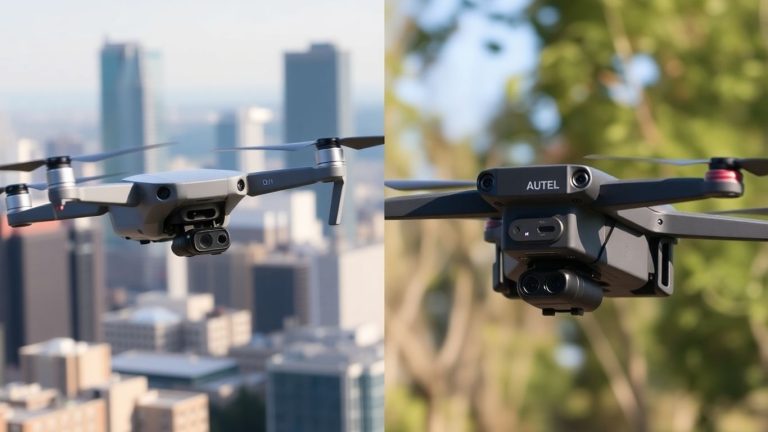
22. Autel Robotics
Autel Robotics has been making some serious waves in the drone world, and it’s easy to see why. They’ve managed to put out some really solid gear that appeals to both folks just getting into drones and the pros who need something reliable for work.
Their focus seems to be on packing advanced features into user-friendly packages. You know, like those fancy obstacle avoidance systems that stop you from bumping into things, and cameras that can spin all the way around. It makes flying a lot less stressful, especially if you’re not a seasoned pilot.
Some of their popular models, like the Evo Nano+ and Evo Lite+, are pretty well-regarded. The Nano+ is a good choice if you want something small that doesn’t need FAA registration, and it’s got sensors to help you avoid crashes from different directions. The Lite+ steps it up with a better camera sensor, which is great for anyone serious about getting good photos and videos.
Here’s a quick look at what makes some of their drones stand out:
- Camera Quality: Many Autel drones can shoot video in 4K and take photos up to 50MP. That’s pretty sharp for drone footage.
- Flight Time: You can expect a decent amount of time in the air. The Evo Lite+, for instance, can fly for about 40 minutes on a single charge, which is a good chunk of time for getting your shots.
- Ease of Use: They generally make their drones pretty intuitive to fly, which is a big plus for a lot of users.
Autel Robotics really hits a sweet spot by offering drones that are packed with technology but still feel accessible. They’re not just about specs; they seem to think about how people actually use these things day-to-day.
They’re definitely a company to keep an eye on as they continue to push out new models and features.
23. Skydio
Skydio has really made a name for itself by focusing on smart, autonomous flight. It’s not just about flying a drone anymore; it’s about what the drone can do on its own. Their machines are built with machine learning at their core, letting them handle complex missions without constant human input. This is a big deal for industries that need reliable data collection in tricky spots.
Think about public safety or defense work. Skydio’s drones can fly themselves into situations that might be too risky for people. They’ve got these impressive obstacle avoidance systems that work at high speeds, which is pretty cool. Plus, they build and support all their products right here in the USA, which is a point of pride for them and a security plus for many clients.
One of their standout products is the Skydio X10. It’s designed for commercial use and is pretty advanced. They also have the Skydio Dock, which works with their drones to allow for remote operations. This is super useful for things like monitoring critical infrastructure or responding to emergencies when you can’t be there in person. It’s like having a remote eye in the sky that can handle itself.
Skydio’s focus on making drones that can think for themselves is changing how we use this technology. It’s moving beyond just capturing video to performing actual tasks autonomously, which opens up a lot of new possibilities for businesses and government agencies.
It’s interesting to see how companies like Sunbelt Rentals are starting to offer these advanced drones for rent, making them more accessible. This means more people can try out this cutting-edge tech for their projects without a huge upfront investment. It’s a good sign for the wider adoption of these smart drones.
24. Delair
Delair, a French company that got its start back in 2011, is really focused on making drones that can fly for a long time and cover a lot of ground. They’re known for their fixed-wing drones, which are great for jobs where you need to survey or inspect large areas without constantly swapping batteries. Think of things like mapping out big construction sites or checking pipelines that stretch for miles.
They’ve got a few key models that people seem to like:
- UX11: This one’s a popular choice for detailed aerial surveying and mapping. It’s designed to be easy to use and collect high-quality data.
- DT26X LiDAR: If you need super precise measurements, this drone comes with LiDAR technology. It’s perfect for creating accurate 3D models of terrain or structures.
- DT46: This model is built for longer flights and can carry different sensors, making it versatile for various inspection tasks.
What sets Delair apart is their combination of hardware and software. They don’t just sell you a drone; they also provide analytics tools to help you make sense of all the data you collect. This means you can get insights for industries like oil and gas, transportation, and even agriculture. Their whole approach is about giving businesses the tools to gather extensive data from the air efficiently.
Delair’s focus on long-endurance, fixed-wing drones means they’re tackling big jobs that smaller, multi-rotor drones just can’t handle. This specialization allows them to serve industries that require broad coverage and detailed information over large geographical areas, making them a go-to for complex surveying and inspection projects.
25. Ehang and more
When we talk about the future of flight, especially in cities, EHang is a name that keeps popping up. They’re really pushing the envelope with their autonomous aerial vehicles, or AAVs as they call them. Think of them as self-flying taxis or delivery pods.
EHang’s focus is on making air travel safe, easy to use, and good for the environment. Their EHang 216, a passenger-carrying drone, has already gotten the green light from China’s aviation authority and is actually being used commercially there. That’s a pretty big deal.
But they’re not just stopping at passenger transport. EHang is also working on:
- Larger AAVs that can carry more people.
- Cargo drones, like the EHang 216L, which can haul a decent amount of weight.
- Drones for emergency services and getting medical supplies where they need to go quickly.
It’s clear they see drones doing a lot more than just taking cool aerial shots. They’re aiming for practical, everyday uses that could really change how we move things and people around.
The push towards autonomous flight systems, especially for urban environments, is gaining serious momentum. Companies like EHang are not just dreaming about this future; they’re actively building and testing the technology that could make it a reality in the coming years. It’s about rethinking transportation from the ground up, or rather, from the air down.
Beyond EHang, the drone landscape is packed with other innovators. Companies like Freefly are making waves in the cinematography world, while Delair is known for its long-range fixed-wing drones used in industries like oil and gas and agriculture. PowerVision has a quirky lineup, including underwater drones and an egg-shaped flyer. And we can’t forget Parrot, a long-time player with a solid range of professional drones, and Autel Robotics, which offers a good mix of consumer and professional options. Skydio, on the other hand, is all about smart, autonomous flight, particularly for public safety and enterprise use. It’s a diverse field, with each company bringing something unique to the table.
Looking Ahead: The Evolving Drone Landscape
So, what does all this mean for the drone world in 2025 and beyond? It’s clear the industry is still moving fast, with new tech popping up all the time. Companies are figuring out better ways to use drones, not just for cool shots anymore, but for real work like building things, farming, and getting stuff from point A to point B. Sure, there are still hurdles, especially with rules and getting enough money to grow. But the general feeling is pretty positive. People are seeing the benefits, like saving time and getting better results. It’s going to be interesting to see how companies keep up with the changes and figure out the best ways to use these flying machines. The drone market is definitely not standing still.
Frequently Asked Questions
What are the biggest problems drone companies face in 2025?
The main headaches for drone companies in 2025 are rules and getting enough money. Rules about flying drones are still tricky and take a lot of time and effort to sort out. Also, it’s getting harder to find people or businesses willing to use drone services, and getting more funding to run the business is a real challenge.
Why are companies using drones more now?
Companies are using drones mostly to save time on tasks. They also use them to get better quality results. While keeping workers safe is still important, it’s not the top reason anymore. Drones help get lots of information quickly, which is much faster than doing things by hand.
What are the most common ways drones are used?
The most popular ways to use drones are for making maps and doing surveys. Drones are also used a lot for checking things like buildings or power lines. Filming and taking pictures with drones is still done, but it’s becoming part of bigger jobs like mapping or inspections.
Are drones becoming more popular for deliveries?
Yes, using drones for deliveries is growing. More companies are finding them useful for dropping off packages. This means we’ll likely see more delivery drones in the sky in the coming years.
Which industries use drones the most?
Drones are used a lot in farming, building, and by energy companies. These industries find drones very helpful for collecting lots of data quickly and improving their work.
What’s the general feeling about the future of the drone industry?
Even with the challenges, most people in the drone business feel good about the future. They expect the industry to keep growing steadily. New technology and clearer rules are helping to make things better.