How to write proposals for drone clients
Landing new clients for your drone business can feel like a puzzle. You’ve got the skills, the gear, and the drive, but how do you get potential customers to see that? A big part of it is how you present yourself, and that’s where a good proposal comes in. Think of it as your handshake and your sales pitch all rolled into one. It needs to be clear, convincing, and professional. We’ll walk through how to put together a drone proposal that gets noticed and gets you hired.
Key Takeaways
- A solid drone business proposal template is your go-to tool for showing clients what you can do and why you’re the best choice. It helps you stand out.
- Your proposal needs to clearly explain your services, what problems you solve for the client, and the real benefits they’ll get from working with you.
- Be upfront about costs. Break down what everything includes, mention any extra options, and make sure everyone knows exactly what the project covers.
- Build trust by showing off your past successes, any official certifications you have, and how seriously you take safety.
- Make your proposal look good! A clean, modern design makes a difference, and having a clear next step for the client is a must.
Crafting Your Drone Business Proposal
So, you’ve got a drone business, and you’re ready to land some clients. That’s awesome! But how do you actually get them to say ‘yes’? It all starts with a solid proposal. Think of it as your handshake, your first real impression, and your chance to show them you’re the real deal. A good proposal isn’t just about listing what you do; it’s about showing them why you are the best choice for their specific needs. It’s your sales pitch on paper, or, more likely, on their screen.
Understanding The Purpose Of A Drone Proposal
At its core, a drone proposal is your formal offer to a potential client. It’s where you lay out exactly what you can do for them, how you’ll do it, and what it will cost. This document is your primary tool for communicating your value and convincing a client to hire you. It needs to be clear, concise, and persuasive. It’s not just a price list; it’s a solution to their problem. Whether they need stunning aerial photos for a real estate listing, detailed inspections of a bridge, or mapping data for a construction site, your proposal bridges the gap between their need and your service.
Key Components Of A Winning Drone Proposal
Putting together a proposal that actually wins business involves a few key pieces. You can’t just wing it. Here’s a breakdown of what usually needs to be in there:
- Executive Summary: A quick, high-level overview. Think of it as the elevator pitch for your proposal. Briefly state the client’s need and how you’ll meet it.
- Problem/Solution: Clearly define the challenge the client is facing and how your drone services provide the perfect answer.
- Scope of Work: Detail exactly what tasks you will perform. Be specific! This avoids confusion later.
- Deliverables: What will the client actually receive at the end? Photos, videos, data reports, maps? List them out.
- Timeline: Give them an idea of how long the project will take.
- Pricing: A clear breakdown of costs. No one likes surprises here.
- About Us/Qualifications: Why should they trust you? Highlight your experience, certifications, and any unique skills.
- Call to Action: What’s the next step? Schedule a call? Sign here?
A proposal isn’t just a document; it’s a conversation starter. It should invite questions and further discussion, not shut it down. Make it easy for them to see themselves working with you.
Tailoring Your Drone Proposal Template
Look, having a template is smart. It saves time and makes sure you don’t forget anything important. But here’s the catch: you can’t just send the same generic proposal to everyone. Each proposal needs to feel like it was written specifically for that client. That means doing a little homework. Understand their industry, their specific project goals, and any unique challenges they might have. Then, tweak your template. Use their company name, reference their specific project details, and adjust the language to match their tone. If they’re a big corporation, you might use more formal language. If they’re a small startup, you can be a bit more casual. This personalization shows you care and that you’ve put real thought into their project, not just sent out a mass email.
Showcasing Your Drone Services Effectively
When you’re putting together a proposal for a drone client, you really need to make it clear what you do and why they should care. It’s not enough to just list services; you’ve got to show them how those services solve their specific problems or help them reach their goals. Think of it as telling a story where your drone skills are the hero that saves the day for their business.
Clearly Outlining Your Service Offerings
This is where you get specific. Instead of saying ‘aerial photography,’ break it down. Are you doing high-resolution stills for real estate listings? Are you capturing cinematic video for a film project? Or perhaps you’re providing detailed orthomosaic maps for construction progress tracking? Be precise. Use bullet points to list out the exact deliverables and the types of data you can collect. This helps the client visualize exactly what they’re getting.
- Real Estate Marketing: High-resolution aerial photos and 4K video tours.
- Construction Monitoring: Weekly progress reports with 2D orthomosaic maps and 3D models.
- Agricultural Analysis: Crop health assessments using multispectral imaging.
- Infrastructure Inspection: Detailed visual and thermal imaging for bridges, towers, and power lines.
Highlighting Client Benefits And Solutions
This is the ‘so what?’ part of your proposal. For every service you list, explain the direct benefit to the client. How does your drone service save them time? Money? Reduce risk? Improve decision-making? Connect your technical capabilities to their business outcomes. For example, instead of just saying ‘we use thermal cameras,’ say ‘Our thermal imaging inspections can identify potential equipment failures before they cause costly downtime, saving you thousands in repairs and lost production.’
The goal here is to shift the focus from what you do to what the client gains. Frame your services as solutions to their pain points.
Demonstrating Value Through Case Studies
This is where you prove you can walk the walk. A good case study shows a real-world problem a past client had, how you used your drone services to solve it, and the measurable results you achieved. Numbers and concrete outcomes are your best friends here. If you saved a construction company 15% on their surveying costs or helped a solar farm identify faulty panels that were costing them energy, put that in there. It builds trust and shows potential clients that you’re not just making promises; you’re delivering results.
Here’s a quick look at how a case study might break down:
- The Challenge: Briefly describe the client’s problem. (e.g., ‘Client needed to assess damage to a large industrial facility after a storm, but traditional ground inspections were slow and dangerous.’)
- Our Solution: Explain how your drone services were applied. (e.g., ‘We deployed a drone equipped with high-resolution cameras and LiDAR to conduct a rapid, comprehensive aerial survey.’)
- The Results: Quantify the impact. (e.g., ‘Damage assessment completed in 2 days instead of 2 weeks, reducing inspection costs by 30% and providing a detailed 3D model for repair planning.’)
Presenting Pricing And Deliverables
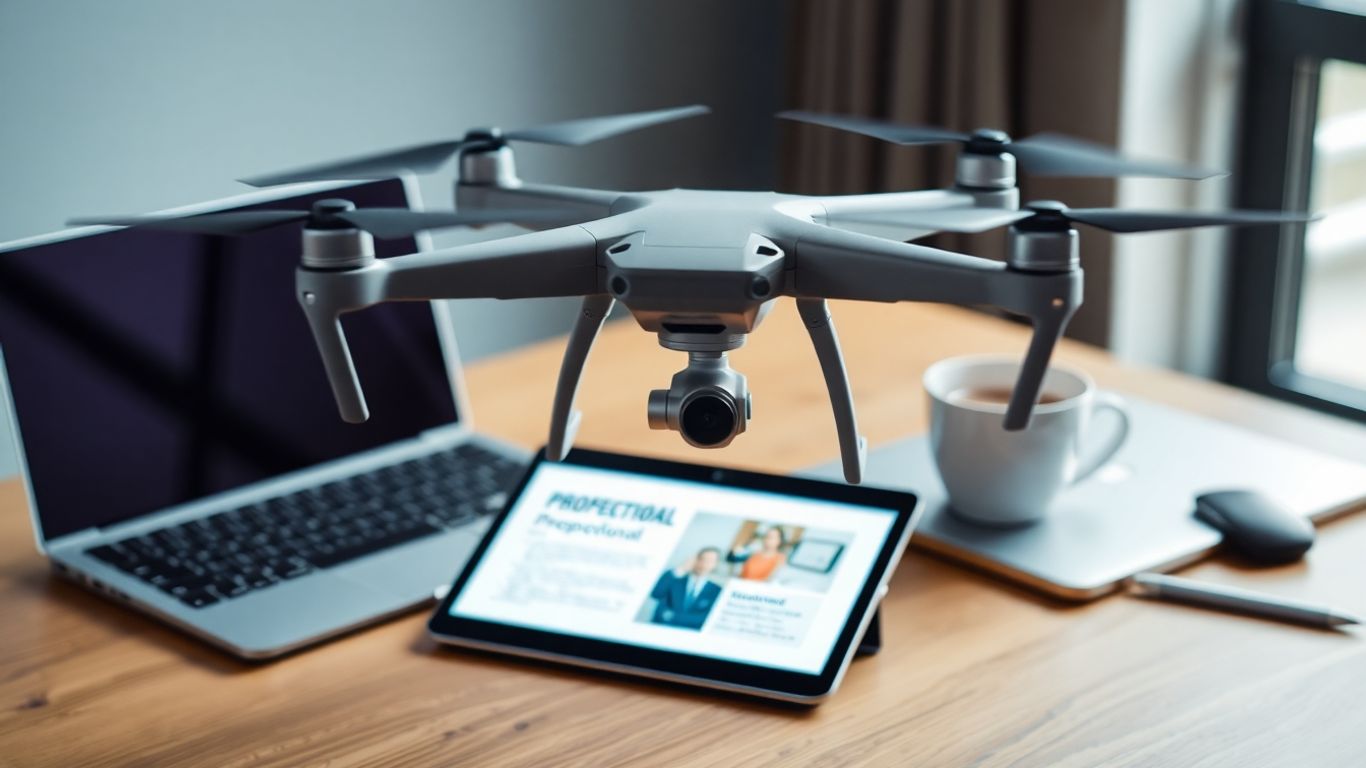
Okay, so you’ve got your client interested, they like what you do. Now comes the part where you lay out exactly what it’s going to cost them and what they’re actually going to get. This isn’t just about listing numbers; it’s about making it super clear and easy to understand. Nobody likes surprises when it comes to money, right?
Detailed Breakdown Of Drone Service Costs
This is where you show them the nitty-gritty of your pricing. Don’t just give a lump sum. Break it down so they can see where their money is going. This builds trust, you know? It shows you’re not hiding anything.
Here’s a typical way to lay it out:
| Service Component | Description | Cost per Unit | Quantity | Total Cost |
|---|---|---|---|---|
| Flight Time | Time spent actively piloting the drone for data collection | $150/hour | 5 hours | $750 |
| Data Processing | Software and labor for analyzing and preparing raw data | $500/project | 1 project | $500 |
| Report Generation | Creating the final client report with findings and recommendations | $75/report | 1 report | $75 |
| Travel Expenses | Mileage and per diem for on-site work | $0.65/mile | 100 miles | $65 |
The total project cost should be clearly stated at the end of this section.
Explaining Additional Fees And Packages
Sometimes, things come up, or clients want a bit more. This is the place to talk about that. You might have different packages, or maybe there are extra charges for things like rush jobs or specific data formats. Be upfront about it.
- Expedited Delivery: Need the report faster than usual? Add a 25% rush fee.
- Extended Data Storage: If they need you to hold onto the raw data for longer than 90 days, there’s a small monthly fee.
- Custom Report Formats: If they need the data in a super specific format not covered in the standard package, we can discuss custom formatting costs.
It’s always a good idea to have a section for potential add-ons or optional services. This way, clients can see the full range of what you can do and potentially upgrade their service if needed, without feeling like they’re being nickel-and-dimed later on.
Defining Project Scope And Deliverables
This is super important. What exactly are you going to give them at the end of the day? And what are you not going to do? Clearly defining the scope stops misunderstandings down the road. Think about the startup costs for drone pilots and how your pricing reflects the work involved.
Here’s what you can expect:
- Deliverables:
- High-resolution aerial photographs (minimum 50 images).
- A comprehensive video summary (3-5 minutes).
- A detailed written report outlining key findings and recommendations.
- Raw, unprocessed data files (if requested).
- Scope of Work:
- On-site drone flights for data acquisition.
- Data processing and analysis using industry-standard software.
- Client consultations to clarify project needs and review progress.
- Exclusions:
- Ground-based inspections not related to aerial data.
- Third-party software licensing or integration.
- Physical site modifications or repairs.
Building Credibility With Your Drone Proposal
So, you’ve got a great drone service, but how do you get clients to actually believe you can deliver? It’s all about showing them you’re the real deal. Think of your proposal as your chance to prove you’re not just another drone operator, but a reliable partner. This means going beyond just listing what you do and really demonstrating your competence and trustworthiness.
Leveraging Testimonials And Past Successes
People trust what other people say. When a potential client sees that you’ve successfully completed similar projects for others, it significantly reduces their risk. It’s like getting a recommendation from a friend. You want to make it easy for them to see that you’ve got a track record.
- Gather client feedback: After each project, ask your clients for a testimonial. A few sentences about their experience and the results you achieved can be gold.
- Showcase project highlights: Don’t just say you did a job; show it. Include brief summaries of past projects, focusing on the problem you solved and the positive outcome.
- Quantify achievements: If possible, use numbers. Did you save a client time? Money? Increase efficiency? Specific figures are much more convincing than general statements.
Past performance is often the best indicator of future results. Clients want to see concrete evidence that you can handle their specific needs and deliver on your promises. Highlighting successful projects and satisfied clients builds a bridge of trust.
Showcasing Relevant Certifications And Licenses
This is where you prove you’re operating legally and professionally. Depending on your location and the type of work you do, there are specific requirements. Not having these can be an immediate deal-breaker.
- FAA Certifications: For commercial drone operations in the US, Part 107 certification is usually a must. Mention it clearly.
- State/Local Licenses: Some areas have additional licensing requirements. Make sure you’re compliant and list any relevant permits.
- Industry-Specific Certifications: If you specialize in areas like construction or agriculture, there might be specific certifications that show you understand that industry’s unique needs and regulations.
Emphasizing Safety Protocols And Record
Safety is paramount in drone operations. Accidents can be costly and dangerous. Clients, especially those in industries like construction or infrastructure, will want to know you have a robust safety plan.
- Outline your safety procedures: Briefly describe your pre-flight checks, operational guidelines, and emergency protocols.
- Mention insurance: Having adequate liability insurance is non-negotiable. State the coverage you have.
- Highlight your safety record: If you have a history of incident-free operations, make that clear. This demonstrates your commitment to safe practices.
Designing A Professional Drone Proposal
So, you’ve got all the important stuff written down – your services, why they’re great for the client, and how much it’ll cost. Awesome. But honestly, if your proposal looks like it was put together in a rush, it can really turn people off. First impressions matter, and a slick-looking document shows you’re serious about your business. Think of it like this: you wouldn’t hire a contractor who shows up in ripped overalls, right? Same idea here.
The Importance Of A Modern And Appealing Design
Look, I get it. Design isn’t everyone’s strong suit. But a proposal that’s easy on the eyes and logically laid out makes a huge difference. It tells the client you’ve put thought into this, that you respect their time, and that you’re professional. A messy, text-heavy document? That just screams ‘I don’t really care’ or ‘I don’t know how to organize things.’ And for drone services, where visuals are often key, a visually appealing proposal just makes sense. It sets the tone for the quality of work you’ll deliver.
Utilizing Design Tools For Your Drone Proposal
Don’t freak out if you’re not a graphic designer. There are tons of tools out there that make this way easier. Think Canva, Adobe Express, or even some of the more advanced word processors. These platforms have templates you can tweak, or you can start from scratch with pre-made elements. You can easily add your logo, pick some decent fonts, and arrange things so they don’t look like a wall of text. It’s about making it readable and professional, not winning an art award.
Here are a few things to keep in mind when you’re putting it together:
- Branding Consistency: Make sure your logo, colors, and fonts match what you use elsewhere (website, social media). It builds recognition.
- White Space is Your Friend: Don’t cram everything together. Give the text and images room to breathe. It makes it less intimidating to read.
- Visual Hierarchy: Use headings, subheadings, and bullet points to guide the reader’s eye. They should be able to scan it and get the main points quickly.
- High-Quality Images (if applicable): If you’re showing examples of your work, use clear, sharp photos or graphics. Blurry images look bad.
Ensuring A Visually Engaging Client Experience
When a client opens your proposal, you want them to feel confident. A well-designed document helps with that. It should feel organized, clear, and professional. Imagine you’re comparing two options: one is a jumbled mess of text, the other is clean, well-structured, and uses visuals effectively. Which one makes you feel more comfortable trusting that company with your project? It’s usually the latter.
A proposal isn’t just a price quote; it’s a sales tool. How it looks directly impacts how the client perceives your business and the quality of your work. A little effort in design goes a long way in making a strong, positive impression that can help you win the job.
Think about breaking down complex information. For instance, if you have different service packages, a simple table can be way clearer than a long paragraph:
| Package Name | Description | Price |
|---|---|---|
| Basic Aerial Scan | Standard drone footage and basic editing | $500 |
| Advanced Mapping | High-resolution imagery, 3D modeling, and detailed reports | $1500 |
| Custom Project | Tailored to specific client needs | Contact Us |
Finalizing Your Drone Proposal For Submission
So, you’ve poured your heart and soul into crafting that killer drone proposal. It looks good, it sounds good, and you’re ready to send it off. But wait, hold up a sec. Before you hit that send button, there are a few more things to wrap up. Think of it like getting ready for a big presentation – you wouldn’t just walk in without a final check, right? Same goes for your proposal.
Including A Clear Call To Action
This is where you tell the client exactly what you want them to do next. Don’t leave them guessing. Are you asking them to sign the contract? Schedule a follow-up call to discuss details? Maybe you want them to simply reply with their approval? Whatever it is, make it super obvious. A good call to action is direct and easy to follow. It’s the final nudge that gets things moving.
Here are a few examples:
- "To proceed with this project, please sign and return the attached agreement by [Date]."
- "Let’s schedule a brief call next week to finalize the project details. Please reply with your availability."
- "We’re excited to get started! Click here to accept this proposal and begin our partnership."
Reviewing And Proofreading Your Proposal
Seriously, don’t skip this. Typos, grammatical errors, or even just a sentence that doesn’t quite make sense can make you look sloppy. It suggests you didn’t pay close attention to detail, and that’s not the impression you want to give when you’re offering professional drone services. Read it aloud. Have a friend or colleague read it. Use spell check, but don’t rely on it solely. Check that all the numbers add up, especially in your pricing section. Make sure client names and project details are correct. A polished proposal shows you’re serious and professional.
Streamlining The Submission Process
Think about how the client will receive your proposal. Is it easy for them to open and view? If you’re sending a large file, consider using a cloud storage link instead of a direct attachment. If you have a specific submission portal or method they need to use, make sure those instructions are crystal clear. The easier you make it for them to get your proposal, the more likely they are to actually review it without frustration. You want the focus to be on your amazing services, not on technical difficulties.
The final steps of submitting your proposal are just as important as the content itself. A smooth submission process, coupled with a clear call to action and a flawless final review, sets the stage for a successful client relationship and project kickoff. It’s the last impression you make before the real work begins, so make it count.
Wrapping It Up
So, putting together a good proposal for drone work isn’t some huge mystery. It’s really about showing clients you get what they need and that you can do the job right. Think of it like this: you’re not just selling drone services, you’re selling solutions. Make sure your proposal clearly explains what you’ll do, why you’re the best choice, and what it’ll cost. A little effort into making it look professional and easy to read goes a long way. Don’t forget to ask for their business at the end! It might seem like a lot of steps, but having a solid template and a clear plan makes it way easier to land those clients and keep your drone business flying high.
Frequently Asked Questions
What is a drone proposal and why do I need one?
A drone proposal is like a sales pitch on paper. It’s a document you give to a potential client to explain what drone services you can offer them, how you’ll do the job, and how much it will cost. You need one because it helps you look professional, clearly show clients what you can do for them, and convince them to hire you over other drone companies.
What are the most important parts of a drone proposal?
The most important parts include explaining exactly what services you offer, how those services will help the client solve a problem or reach a goal, showing proof of your past successes with case studies or testimonials, clearly listing all the costs involved, and telling them what they will get when the job is done. Don’t forget to make it easy for them to say ‘yes’!
How can I make my drone proposal stand out?
To make your proposal stand out, you should make it look good! Use a clean, modern design that’s easy to read. Also, always change your proposal to fit what each specific client needs. Show them you understand their unique situation and have a plan just for them. Using real examples of how you’ve helped others is also a big plus.
Should I include pricing details in my proposal?
Yes, absolutely! Clients need to know how much things cost. Break down all the prices clearly. Explain what’s included in the main price and list any extra costs or different packages they can choose from. Being upfront about pricing helps build trust and avoids surprises later.
How do I show that my drone business is trustworthy?
You can show you’re trustworthy by including good reviews from past clients (testimonials), showing off any special training or licenses your team has, and explaining your safety rules. Clients want to know you’re skilled, experienced, and will do the job safely and professionally.
What’s the best way to finish a drone proposal?
The best way to finish is with a clear ‘call to action.’ This means telling the client exactly what you want them to do next, like ‘Call us to discuss your project’ or ‘Sign here to get started.’ Make it super simple for them to take the next step. Always double-check everything for mistakes before you send it!