DJI vs Autel drones for business
Choosing between DJI and Autel drones for your business can feel like a big decision. Both companies make some pretty impressive flying cameras, but they’ve got their differences. We’re going to break down what sets them apart, from where they come from to how they perform in the air and what you get with their apps. It’s not always a simple choice, and what works for one person might not be the best fit for another. Let’s dive into the DJI vs Autel debate to help you figure out which one makes more sense for you.
Key Takeaways
- Both DJI and Autel are major drone manufacturers based in China, despite Autel’s efforts to highlight its U.S. operations. If your decision is based on avoiding Chinese-made products, neither brand might be the ideal choice.
- DJI drones generally come with a higher price tag, but they often offer more advanced features, a more polished user experience with their apps, and superior obstacle avoidance systems, suggesting better long-term value.
- Autel drones can be a more budget-friendly option, offering competitive camera quality and decent performance. They might be a good starting point if your budget is strictly limited, but they may show their age faster than newer DJI models.
- The DJI Fly app is typically considered more stable and user-friendly than the Autel Sky app, especially for tasks like transferring footage. DJI also offers more internal storage on many of its models.
- Market share trends suggest Autel is gaining ground, possibly due to pricing and fewer flight restrictions. However, DJI still holds a dominant position, particularly in areas requiring advanced flight intelligence and safety features.
Understanding The Origins: DJI vs Autel
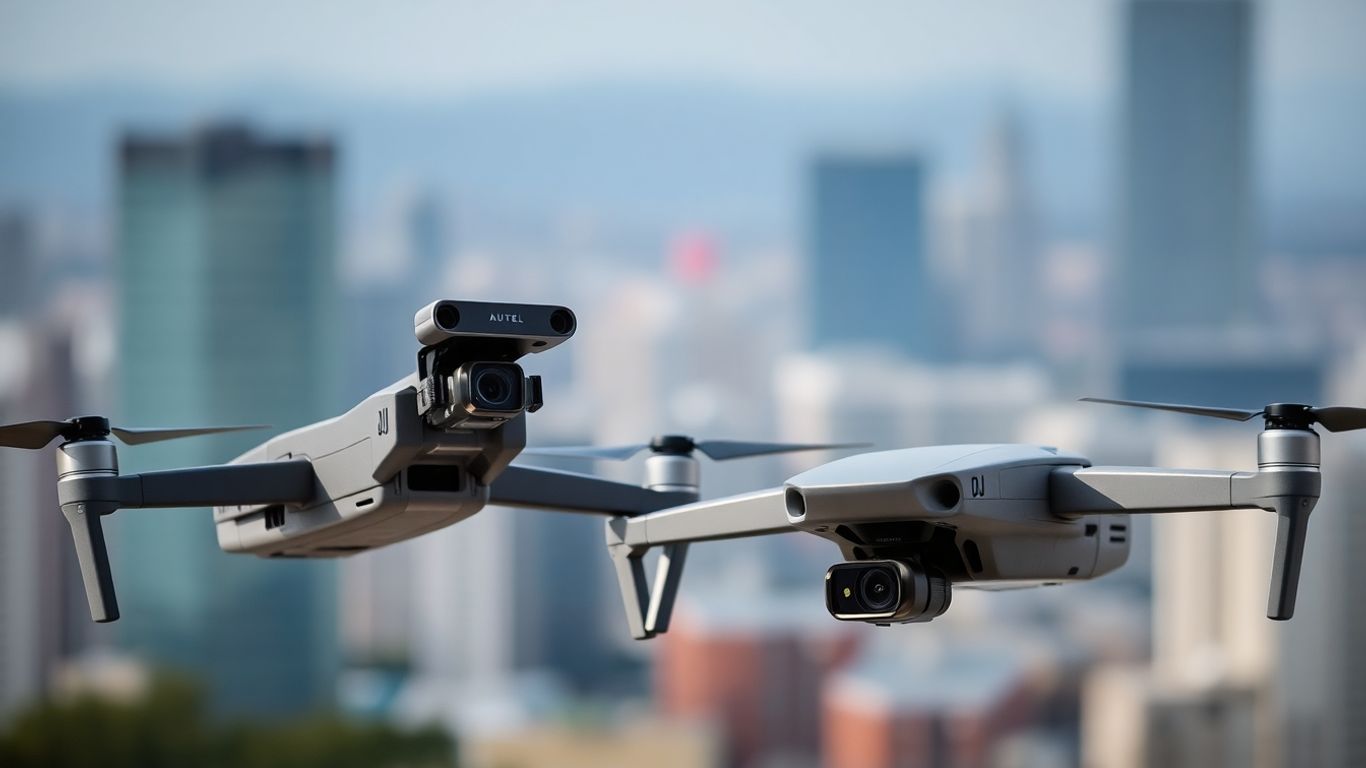
When you’re looking at drones for business, it’s easy to get caught up in the specs and features. But before we dive into all that, it’s worth taking a moment to understand where these two big players, DJI and Autel, come from. It’s not just about where they’re made, but also how they operate and the baggage they might carry.
DJI’s Global Presence and Market Dominance
DJI is a name that pretty much everyone knows in the drone world. They started up in China back in 2006 and have since become the biggest drone maker out there, hands down. You’ll find their headquarters in Shenzhen, which is like China’s Silicon Valley, but they’ve got offices all over the globe – think the US, Japan, Germany, and a bunch of other places. For a long time, they held a massive chunk of the market, like 70% of consumer drones. However, things have gotten a bit complicated. The US government has put some restrictions on using DJI drones, especially for government work, and there have been investment bans too. Because of all this, some folks think their market share might have dropped a bit, maybe down to around 54%.
Autel’s International Operations and R&D
Autel is another company that got its start in Shenzhen, China, but a bit later, in 2014. While they’re based in China, they’ve put a lot of effort into having research and development centers in places like Seattle, Silicon Valley, and even Munich, Germany. They also work with some pretty big universities around the world, like MIT and Carnegie Mellon. This international setup seems to have helped them avoid some of the political headaches that DJI has run into. Because of that, some people think Autel has been picking up more market share, maybe around 7% now, as businesses look for alternatives.
Navigating the ‘China Concern’ in Drone Technology
This is a big one for a lot of businesses. Because both DJI and Autel are Chinese companies, there’s a common question about where the technology comes from and what that means for data privacy or security. Some people think choosing Autel is a way to get around this ‘China concern’ because of their US offices. But here’s the thing: Autel’s drones are still developed in China, just like DJI’s. DJI also has US offices, they just don’t make a big deal about being an American company. It’s a bit of a tangled web. If you’re looking for a drone that’s strictly made in the USA, especially for under $1,000, you’re pretty much out of luck. The reality is, you’re likely choosing between two Chinese manufacturers.
The political landscape surrounding drone technology can be confusing. While some brands have a stronger international presence with R&D centers outside their home country, the core manufacturing and development often remain rooted in China. This means that for many businesses, the decision isn’t about avoiding Chinese-made products entirely, but rather about understanding the specific policies, privacy protocols, and market dynamics associated with each brand.
Performance and Capabilities Compared
When you’re looking at drones for business, how they actually perform in the field is super important. It’s not just about specs on paper; it’s about what they can do when you need them to. We’re going to break down the camera systems, how they handle obstacles, and how long they can stay in the air.
Camera Versatility and Sensor Advantages
Both DJI and Autel put a lot of effort into their cameras, but they go about it a little differently. DJI often packs a lot of capability into a single payload. For instance, their Matrice 30T has a really solid camera setup with optical and digital zoom that’s great for getting a closer look without getting too close. Autel, on the other hand, might offer a slightly different mix, perhaps with a high-resolution wide-angle and a separate zoom camera, like on their EVO Max 4T. This can be good for capturing a broad scene and then zooming in for details.
Here’s a quick look at some camera specs:
| Feature | DJI Matrice 30T | Autel EVO Max 4T |
|---|---|---|
| Main Sensor | 48MP 1/2” CMOS (Zoom Camera) | 50MP Wide-Angle, 48MP 1/2 CMOS (Zoom Camera) |
| Optical Zoom | 5x-16x | 10x |
| Digital Zoom | Up to 200x | Up to 160x |
| Thermal Accuracy | ±2°C or ±2% | Not specified (often less precise than DJI) |
Thermal imaging is a big deal for a lot of jobs, like firefighting or inspections. DJI’s thermal sensors tend to be a bit more precise, which can make a difference when you need exact temperature readings. Autel’s thermal is still very capable, but if pinpoint accuracy is your top priority, DJI might have a slight edge.
Obstacle Avoidance Systems: A Critical Difference
Safety is key, and how a drone avoids obstacles is a huge part of that. Both brands have systems to help prevent crashes, but the way they’re implemented can vary. DJI’s systems are generally very well-integrated and cover multiple directions, giving pilots a good sense of security. Autel also has robust obstacle avoidance, and sometimes they focus on specific types of detection or offer unique ways to manage avoidance.
The effectiveness of obstacle avoidance isn’t just about having sensors; it’s about how intelligently the drone uses that information to make flight decisions. This includes how it detects, tracks, and reacts to potential hazards in real-time.
For businesses, this means fewer accidents, less downtime, and more confidence when flying in complex environments. It’s worth looking into the specific coverage and responsiveness of each system for your typical operating areas.
Flight Time and Range Considerations
How long a drone can stay airborne and how far it can go before losing signal are practical limits on what you can accomplish. For many tasks, like surveying large areas or conducting long-term surveillance, every extra minute of flight time counts. DJI’s Matrice 30T can fly for around 41 minutes, which is pretty impressive. Autel’s EVO Max 4T often pushes this a bit further, sometimes reaching 42 minutes or more. That extra minute might not sound like much, but in the field, it can mean completing a job without needing to swap batteries or land prematurely.
When it comes to transmission range, both companies offer systems that can communicate with the drone over several miles. DJI’s range can vary based on conditions, but it’s generally very reliable. Autel also advertises impressive ranges, sometimes exceeding 12 miles. The choice here often comes down to your specific operational needs – are you flying in open areas or in environments with a lot of signal interference?
User Experience and Software Ecosystems
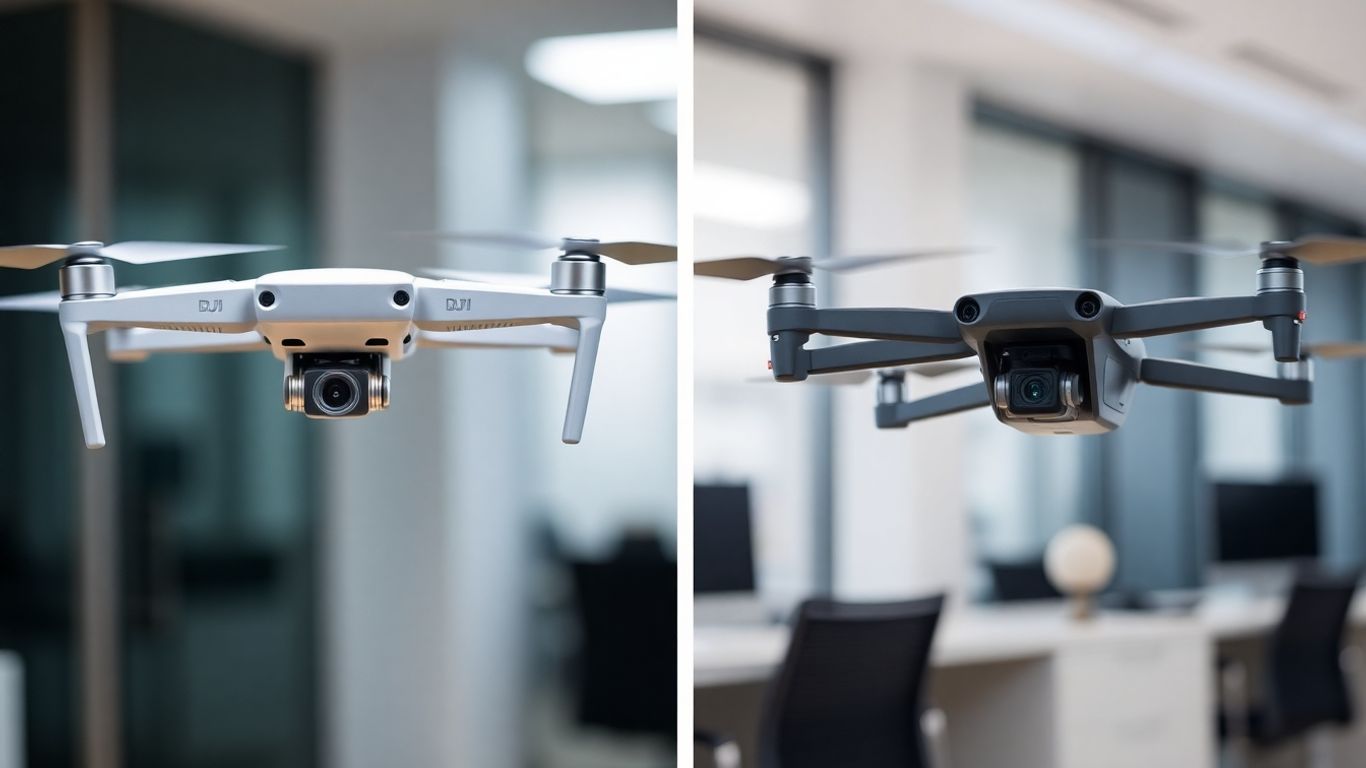
When you’re out in the field, the last thing you want is a complicated setup or a glitchy app. Both DJI and Autel have put a lot of thought into how you interact with their drones, but there are some noticeable differences.
DJI Fly App: Polished Interface and Features
DJI’s Fly app is generally considered the gold standard for user-friendliness. It’s got a really clean look and feels pretty intuitive, even if you’re new to drones. Everything is laid out logically, making it easy to find settings, start a flight, or review your footage. The integration with DJI’s hardware is usually very smooth, making the whole experience feel quite polished. It’s the kind of app that just works, letting you focus on flying and capturing great shots without a lot of fuss. Transferring files to your phone for quick edits or sharing is also a breeze with this app.
Autel Sky App: Stability and User Interface
Autel’s Sky app has improved a lot over the years, and for many users, it’s perfectly functional. It gets the job done, allowing you to control the drone and access its features. However, compared to DJI’s Fly app, it can sometimes feel a bit less refined. Some users have reported occasional stability issues or a less intuitive layout. While it’s gotten better, it might not offer that same ‘plug-and-play’ feel that DJI users often rave about. It’s solid, but maybe not quite as slick.
Internal Storage and Data Management
This is a big one for a lot of people, myself included. Constantly worrying about having the right SD card, or worse, having a card fail, can be a real headache. DJI has been generous with internal storage on many of its models. For instance, some DJI drones come with a decent chunk of built-in memory, sometimes enough that you might not even need an SD card for shorter flights or quick jobs. Autel drones also offer internal storage, but it’s often less than what you find on comparable DJI models. This can be a minor inconvenience if you’re frequently transferring large files or working on extended shoots.
Here’s a quick look at typical internal storage:
| Drone Model (Example) | Internal Storage |
|---|---|
| DJI Air 3S | 42 GB |
| Autel Evo Lite+ | 6 GB |
For business users, having ample internal storage can be a lifesaver. It means fewer interruptions, less chance of data loss from a faulty SD card, and a simpler workflow when you’re on a tight schedule. It’s one of those features that you don’t think about until you really need it.
Investment and Value Proposition
When you’re looking at drones for business, the price tag is obviously a big part of the picture. It’s not just about the initial cost, though. You’ve got to think about what you’re getting for your money and how that drone will help you make money down the road. This is where DJI and Autel really show their different approaches.
DJI’s Premium Pricing and Long-Term Value
DJI drones, especially their higher-end models, tend to come with a higher upfront cost. This isn’t just for the brand name, though. You’re often paying for a more refined user experience, advanced features, and a generally robust ecosystem. Think of it like buying a professional tool – it costs more, but it’s built to last and perform consistently. For businesses that need top-tier performance and reliability, this premium price can translate into better long-term value. The resale market for DJI drones is also pretty strong, which can help recoup some of your investment later on.
Autel’s Competitive Price Point
Autel often positions itself as a more budget-friendly alternative. You can get a lot of drone for your money with Autel, and they’ve been closing the gap in terms of features and performance. This makes them a really attractive option if you’re just starting out or if you have a tighter budget. Getting into the drone business doesn’t have to mean taking out a second mortgage. Autel lets you get your hands on capable technology without breaking the bank, which is a huge plus for many small businesses or individuals testing the waters.
Future-Proofing Your Drone Investment
Thinking about the future is key. What if your business needs change? What if new regulations come out? Both DJI and Autel are constantly updating their hardware and software, but their strategies differ. DJI’s vast ecosystem and frequent updates mean their drones often stay relevant for longer, with new accessories and software features rolling out. Autel, while perhaps not as rapid in its ecosystem expansion, is known for offering competitive specs at a lower price, which can be a smart move if you plan to upgrade more frequently. It’s a trade-off between a more integrated, potentially longer-lasting system versus a more adaptable, cost-effective approach. Ultimately, the best value depends on your specific business goals and how you plan to use the drone.
Here’s a quick look at how some models stack up, price-wise (note: prices can fluctuate):
| Drone Model | Typical Price Range (USD) | Key Features for Business | Notes |
|---|---|---|---|
| DJI Mavic 3 Pro | $2,000 – $3,000 | Triple camera system, 4K video | Premium option, excellent imaging quality |
| Autel EVO II Pro | $1,500 – $2,000 | 1-inch sensor, 6K video | Strong competitor, good value |
| DJI Phantom 4 Pro V2 | $1,500 – $1,800 | Mechanical shutter, 1-inch sensor | Still a workhorse for photogrammetry |
When considering your investment, think about:
- Initial Purchase Price: How much can you afford to spend upfront?
- Total Cost of Ownership: Factor in accessories, software subscriptions, insurance, and potential repairs.
- Return on Investment (ROI): How quickly will the drone pay for itself through your services?
- Scalability: Can the drone system grow with your business needs?
- Resale Value: How much might you get back if you decide to upgrade or sell later?
Specific Use Cases and Recommendations
Choosing the right drone for your business isn’t just about specs; it’s about matching the tool to the job. Both DJI and Autel have strong offerings, but they shine in slightly different areas. Let’s break down where each brand tends to fit best.
Ideal Scenarios for DJI Drones
DJI drones often hit the sweet spot for professionals who need a reliable, all-in-one solution with a polished user experience. They’re particularly strong when you need:
- Mapping and Photogrammetry: DJI’s ecosystem, including software like DJI Terra, works well for creating detailed 3D models and maps. Drones like the Mavic 3 Enterprise series offer excellent camera quality and stable flight for consistent data capture.
- General Inspections: For tasks like inspecting cell towers, bridges, or wind turbines, DJI’s robust build quality and advanced camera systems (including zoom capabilities) provide the detail needed without fuss.
- Filmmaking and Content Creation: While this article focuses on business, it’s worth noting DJI’s dominance here. Their smooth flight characteristics and high-quality video output are unmatched for promotional or documentation purposes.
- Integrated Solutions: If you’re looking for a system that works together, like the DJI Dock for automated flights or FlightHub 2 for fleet management, DJI’s integrated approach can save a lot of setup time.
DJI’s strength lies in its mature ecosystem and user-friendly interface. For many businesses, especially those new to drone operations, the familiarity and reliability of DJI can significantly lower the barrier to entry and reduce operational headaches.
When to Consider Autel Drones
Autel drones often appeal to users who value flexibility, fewer restrictions, and a potentially more competitive price point. They are a great choice for:
- Operations in Restricted Airspace: Autel’s lack of geofencing is a major draw for pilots who frequently operate in areas where DJI’s geofencing might cause issues. This is especially relevant for public safety or certain industrial sites.
- Customizable Sensor Needs: While DJI offers integrated payloads, Autel’s platform, particularly higher-end models, can sometimes offer more flexibility in swapping out different sensor types for specialized tasks, though this is less common than with enterprise-grade DJI models.
- Multi-Drone Coordination: Autel’s A-Mesh system allows for more advanced coordination between multiple drones, which could be beneficial for large-scale operations or complex surveillance tasks.
- Budget-Conscious Professionals: Autel often provides a strong feature set at a price that undercuts comparable DJI models, making it an attractive option for startups or businesses managing tighter budgets.
Enterprise-Level Drone Applications
For serious, heavy-duty commercial work, the conversation often shifts to more advanced platforms like the DJI Matrice series or Autel’s EVO Max series. These drones are built for demanding tasks:
- Public Safety (Police, Fire, EMS): Both brands offer thermal and zoom capabilities vital for search and rescue, accident scene reconstruction, and monitoring hazardous situations. The ability to quickly deploy and operate in various conditions is key.
- Infrastructure Inspection (Power Lines, Bridges, Buildings): High-resolution cameras, powerful zoom, and sometimes thermal sensors are necessary to spot defects from a safe distance. The M30T, for example, has a strong thermal payload for detecting heat anomalies.
- Mapping and Surveying (Large Scale): For extensive mapping projects, flight time, range, and sensor accuracy are paramount. Drones capable of carrying specialized mapping payloads are essential here.
- Industrial Monitoring: This can include anything from monitoring construction sites for progress to inspecting large industrial facilities. The ability to integrate specialized sensors or software is often a deciding factor.
Ultimately, the best drone is the one that gets the job done reliably and efficiently for your specific needs. It’s often wise to test-fly or rent models if possible before making a significant investment.
Market Dynamics and Future Outlook
The drone world is always buzzing, and things are definitely shifting. It feels like just yesterday DJI was the only name anyone talked about, but now, other companies are really making their mark. It’s a good time to look at what’s happening and where things might be headed.
Shifting Market Share Trends
DJI, which used to pretty much own the whole market, is seeing some changes. While they’re still a giant, other players are grabbing a bigger slice of the pie. Autel, for instance, has been doing pretty well, especially with businesses looking for alternatives. It’s not just them, either; you’ve got companies like Skydio and Parrot also gaining ground. This competition is actually pretty good for us users, as it pushes everyone to innovate and offer better gear.
Here’s a rough idea of how things might be shaking out:
- DJI: Still the biggest, but their share has dipped a bit.
- Autel: Growing steadily, picking up business clients.
- Others (Skydio, Parrot, etc.): Each holding smaller but significant portions.
The overall drone market is projected for serious growth, expected to jump from around $41.79 billion in 2025 to a whopping $89.70 billion by 2030. This means more drones, more features, and more opportunities for everyone involved.
Impact of Supply Chain and Distribution
Remember all those supply chain headaches we’ve been dealing with? They’ve hit the drone industry hard too. Getting parts and finished drones can sometimes take a while, and prices can fluctuate. Companies with good distribution networks, like those who stock up on popular models, can really help smooth things out for customers. It’s a reminder that even with great tech, getting it into your hands relies on a lot of behind-the-scenes work.
Dealing with supply chain issues means that sometimes you might have to wait a bit longer for your new drone, or the price might be a little different than you expected. It’s just part of the current global situation.
Technological Advancements in Drone Development
What’s next? Well, drones are getting smarter, more capable, and easier to use all the time. We’re seeing better cameras, longer flight times, and smarter obstacle avoidance systems becoming more common. Companies are also working on specialized drones for specific jobs, like industrial inspections or mapping. It’s exciting to think about what these machines will be able to do in the next few years. Keeping an eye on these developments is key if you want to make sure your drone investment stays relevant for a long time. You can find some great resources on drone technology to stay updated.
So, DJI or Autel for your business?
Alright, so we’ve looked at a bunch of stuff. When it comes down to it, picking between DJI and Autel for your business isn’t a simple choice. Both companies are actually based in China, so if you’re trying to avoid that, well, neither is a perfect fit. DJI often costs more upfront, but many folks find it’s worth the extra cash because the software is usually a bit smoother and the drones feel more advanced. Autel can be a good option if you’re really watching your budget, and some users report good experiences with their cameras and ease of use. It really boils down to what you need most: maybe it’s the latest tech and a polished app experience from DJI, or perhaps a more budget-friendly option with solid features from Autel. Think about what tasks you’ll be doing most often and what your wallet can handle. You can’t go too wrong with either, but one might just fit your specific needs a little better.
Frequently Asked Questions
Are Autel drones made in America to avoid issues with Chinese drones?
That’s a common thought, but Autel drones are actually developed in China, just like DJI drones. While Autel has offices in the U.S., their main development happens overseas. So, if you’re trying to avoid drones made in China, neither Autel nor DJI is a purely American option.
Is DJI more expensive than Autel, and is it worth the extra cost?
Yes, DJI drones often cost more upfront. For example, a DJI Air 3S might be around $200 more than an Autel Evo Lite+. However, many pilots find the DJI drone to be more advanced, reliable, and easier to use, making the extra cost a good investment for long-term value and fewer headaches.
Which drone has better cameras?
It depends on what you need. The Autel Evo Lite+ has a great sensor for low-light shots and adjustable aperture. But the DJI Air 3S offers more flexibility with its dual-camera system, giving you both wide and telephoto views, and its image processing is top-notch.
How do the obstacle avoidance systems compare?
DJI drones, like the Air 3S, usually have much better obstacle avoidance. They can sense things in all directions, making them safer to fly, especially in tricky spots. Autel drones often only have sensors in the front, back, and bottom, which can feel riskier.
Is the DJI app better than the Autel app?
Most users find the DJI app, called DJI Fly, to be more polished and user-friendly. It often has features that make transferring and sharing your videos easier. Autel’s app has improved, but it can sometimes feel less stable or polished compared to DJI’s.
Which drone is newer and more future-proof?
Drone technology changes quickly. The Autel Evo Lite+ came out in early 2022, which is quite a while ago in drone years. Newer DJI models, like the Air 3S released in late 2024, are generally more up-to-date with the latest features and technology, making them a better choice for the long run.