Best drones under $2,000 for business
Looking for a drone that can handle business tasks without breaking the bank? You’ve come to the right place. We’ve sifted through the options to find the best professional drone models that offer a good mix of features and affordability, all under $2,000. Whether you need it for aerial photography, inspections, or creating marketing content, there’s a drone out there that fits the bill. Let’s check out some top contenders.
Key Takeaways
- The DJI Mavic 3 Pro offers a versatile triple-camera system, making it a strong contender for professional aerial photography and videography needs.
- For a balance of portability and performance, the DJI Air 3 provides excellent imaging capabilities and smart flight features suitable for business applications.
- The DJI Inspire 3 is a high-end option for cinematic productions, featuring advanced camera systems and robust flight performance, though it sits at the higher end of the budget.
- The Autel EVO II Pro is recognized for its 1-inch sensor and strong flight performance, presenting a solid alternative for professional aerial imaging.
- The Parrot ANAFI USA is specifically designed for public safety and enterprise use, offering features like a powerful zoom and thermal imaging capabilities.
1. DJI Mavic 3 Pro
Alright, let’s talk about the DJI Mavic 3 Pro. This drone is pretty much a powerhouse for anyone serious about aerial photography or videography, especially if you’re working on business projects where image quality really matters. It’s not exactly a budget pick, but for what it offers, the price starts to make sense.
What really sets the Mavic 3 Pro apart is its camera system. It’s got this main wide-angle camera with a big Four Thirds sensor, which is great for low light and produces some really nice, true-to-life colors. Then there are two telephoto lenses – a medium one and a longer one – so you can get different perspectives without having to move the drone itself. This flexibility is a huge plus for getting that perfect shot for a client.
The drone’s ability to avoid obstacles is top-notch. It has sensors all around, so you can fly it through tricky spots with more confidence. It’ll give you warnings, both visual and audible, if something’s too close for comfort.
Here’s a quick look at some of its key features:
- Main Camera: Four Thirds sensor, shoots 5.1K video up to 50fps.
- Telephoto Cameras: Medium (70mm equivalent) and Long (166mm equivalent) for zoomed shots.
- Flight Time: Around 43 minutes on a single battery, which is pretty solid for getting a good amount of work done.
- Obstacle Sensing: Omnidirectional sensors for safer flying.
It’s a bit larger than some other drones, weighing in at about 2 pounds, but it’s still manageable to take with you. The battery life is impressive, giving you plenty of airtime to capture what you need. If you’re looking for a drone that can produce professional-grade footage and offers a lot of creative control, the Mavic 3 Pro is definitely worth considering for your business needs.
2. DJI Air 3
The DJI Air 3 really hits a sweet spot for a lot of users, especially those who are looking for something more capable than the smaller Mini series but don’t need the full-blown professional setup of the Mavic or Inspire lines. It’s a solid all-around performer that balances portability with features that make it genuinely useful for business applications.
One of the standout features is its dual-camera system. You get a wide-angle camera and a 3x telephoto lens. This setup is pretty handy because it gives you more flexibility when you’re out shooting. Need to capture a sweeping landscape? The wide-angle is perfect. Want to get a closer look at something without physically moving the drone, maybe to inspect a roof or get a better shot of a specific detail on a building? The telephoto lens is your friend here. It’s not just about having two cameras; it’s about how they work together to give you more creative options and practical utility.
The flight time is also a big win, clocking in at up to 45 minutes on a single battery. That’s a generous amount of time to get your shots, especially when you compare it to some other drones in its class. This means fewer battery swaps and more time actually flying and filming, which is a big deal when you’re on a job and time is money.
When it comes to flying, the Air 3 is pretty stable, even in moderate winds. It uses a combination of GPS and other satellite systems, along with its vision sensors, to keep itself steady and track its position accurately. This stability is key for getting smooth video footage, which is usually what businesses are after. Plus, the obstacle sensing system is quite good, helping to prevent those unfortunate mid-air collisions that can end a flight (and a project) prematurely.
Here’s a quick look at some of its key specs:
- Flight Time: Up to 45 minutes
- Camera System: Dual 48MP cameras (Wide-angle and 3x Telephoto)
- Video Resolution: Up to 4K/100fps
- Max Range: 12 km (FCC)
- Weight: 770g
- Internal Storage: 8GB (expandable via microSD)
It’s not the smallest drone out there, weighing in at 770g, which means it falls into a specific drone category in some regions with associated regulations. But for its size, it’s still quite portable, folding down neatly to fit into a backpack or larger camera bag. The controller is also reasonably compact.
The DJI Air 3 strikes a good balance between advanced features and user-friendliness. Its dual-camera system and long flight times make it a versatile tool for various business needs, from real estate photography to inspections. While it’s not the cheapest option, the capabilities it offers often justify the investment for professionals who need reliable aerial footage.
3. DJI Inspire 3
Alright, let’s talk about the DJI Inspire 3. This isn’t your average weekend flyer; this is a serious piece of kit aimed squarely at the professional filmmaking crowd. Think big movie sets and high-end commercial shoots. It’s built for serious cinematic work.
What sets it apart is its camera system. It boasts a full-frame 8K camera that can take different DJI or Sony lenses, which is pretty neat for flexibility. Plus, it can record in CinemaDNG and ProRes Raw, formats that give editors a lot of room to play with in post-production. The way the camera is mounted underneath, along with the retractable landing gear, means you can get some really smooth, complex camera movements that you just can’t do with drones where the camera is stuck on the front. It really opens up creative possibilities.
Here’s a quick look at some of its standout features:
- Full-Frame 8K Camera: For incredibly detailed footage.
- Interchangeable Lenses: Adapt to different shooting scenarios.
- Dual Video Recording: CinemaDNG and ProRes Raw support.
- Advanced Gimbal System: Enables unique camera movements.
- Retractable Landing Gear: For unobstructed shots.
While DJI makes other drones for specific industries like agriculture (Agras) or general enterprise (Matrice), the Inspire 3 is their flagship for aerial cinematography. It’s a step up from their more consumer-focused lines like the Mavic, offering professional-grade tools for demanding projects.
Now, this drone is definitely on the pricier side, and it’s bigger and heavier than most other drones out there. It’s not something you’d casually toss in a backpack for a hike. But if you’re in the business of creating top-tier video content, the capabilities it offers are hard to beat. It’s designed for professionals who need the best possible image quality and control.
4. DJI Mini 4 Pro
The DJI Mini 4 Pro is a really solid choice if you’re looking for a lightweight drone that packs a punch. It’s pretty much the top-tier option in the sub-250g category, which is great because it means you often don’t need to register it in many places. This drone builds on what made its predecessors good, but adds some neat improvements.
One of the standout features is the improved obstacle avoidance. It’s now omnidirectional, meaning it can sense things coming at it from pretty much any direction. This makes flying a lot less stressful, especially if you’re in tighter spots like flying around trees or indoors. Plus, the ActiveTrack 360° subject tracking is pretty slick; it makes it easy to keep your subject in frame, even if you’re not the most experienced pilot.
For content creators, the ability to shoot in D-Log M is a big deal. It gives you more flexibility when you’re editing your footage, letting you get that professional look without too much fuss. And if you’re into slow-motion, the 4K at 100fps is pretty sweet.
Here’s a quick look at some of its specs:
- Weight: 249g
- Max Flight Time: 34 minutes
- Video Resolution: 4K
- Obstacle Sensing: Omnidirectional
It’s not a massive leap from the Mini 3 Pro, so if you already have that, you might not need to rush out and buy this one. But if you’re new to the Mini series or upgrading from something older, the Mini 4 Pro is definitely worth considering. It’s a great blend of portability and professional features.
5. DJI Avata 2
If you’re looking to get into first-person view (FPV) flying without all the usual headaches, the DJI Avata 2 is a really solid option. It’s designed to be more forgiving than a lot of other FPV drones out there, which is great if you’re just starting out. You get that immersive flying feel, but with some safety nets built-in, like a return-to-home function. It feels pretty nimble in the air, and the camera does a good job capturing footage, even when the light isn’t perfect.
The Avata 2 strikes a good balance between the thrill of FPV and user-friendliness.
Here’s a quick look at what it offers:
- Flight Time: Up to 23 minutes on a single battery. That’s pretty decent for FPV, giving you a good amount of time to fly around.
- Camera: It shoots 4K video at up to 60 frames per second. The 1/1.3-inch sensor helps with image quality, especially in tricky lighting.
- Controller Options: You can use the simple Motion Controller 3 for easier flying, or the more traditional DJI Remote Controller 3 if you want more manual control.
- Durability: The drone is built to withstand some bumps and crashes, which is a big plus when you’re learning.
It’s not quite the same as flying a high-end cinematic drone; the footage has a more dynamic, sometimes jarring feel due to the FPV perspective and the single-axis gimbal. But for an engaging flight experience and good quality video, it’s a strong contender. If you’re curious about FPV, this is a good place to start, and you can find more information on DJI’s professional solutions at DJI Enterprise.
While it lacks the advanced obstacle avoidance found on some other DJI models, its sturdy design and beginner-friendly flight modes compensate for this. You’ll need to be a bit more mindful of your surroundings, but the overall experience is still quite accessible for newcomers to FPV.
6. DJI Phantom 4 Pro V2.0
The DJI Phantom 4 Pro V2.0 was a big deal when it first came out, and honestly, it still holds its own for a lot of business uses, especially if you can find one at a good price. It’s not the newest kid on the block, but it was built like a tank and had some really solid features that made it a go-to for professionals.
Think of it as the reliable workhorse. It’s got a great camera for its time, capable of shooting really clear 4K video, and the gimbal keeps things super smooth, even if there’s a bit of wind. This drone was one of the first to really nail that balance between professional-grade imaging and user-friendly operation.
Here’s a quick look at what made it stand out:
- Camera Quality: A 1-inch CMOS sensor that captured detailed 20MP stills and 4K video at up to 60fps. That was pretty impressive back then and still good for many applications.
- Flight Performance: It had excellent stability and a decent flight time, usually around 30 minutes, which was enough for most jobs.
- Obstacle Sensing: With forward, backward, and downward sensors, it offered a good level of safety, helping to prevent crashes.
- Controller: The controller had a built-in screen, which was a nice touch, making it easier to see what you were filming without needing to connect a phone or tablet.
It’s a bit bulkier than the newer, smaller drones, and the tech isn’t cutting-edge anymore, but for tasks like surveying, inspections, or even some basic real estate photography, the Phantom 4 Pro V2.0 can still be a smart buy if you’re watching your budget.
While newer models offer more advanced features and smaller form factors, the Phantom 4 Pro V2.0 remains a capable and robust option for professionals who prioritize reliability and image quality in a proven platform. Its established performance makes it a dependable choice for various commercial tasks.
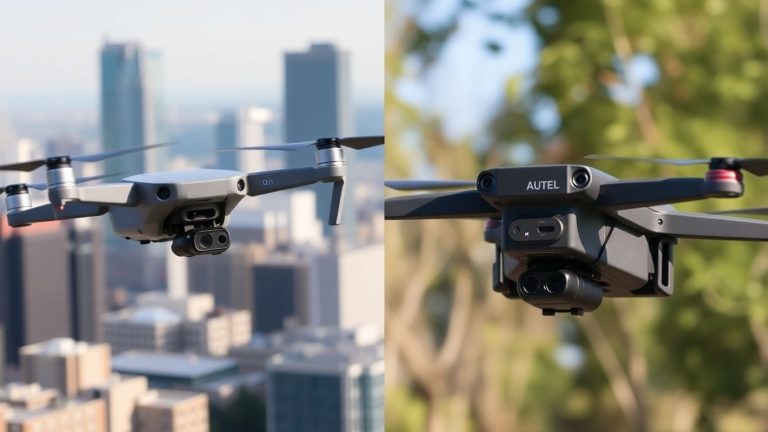
7. Autel EVO II Pro
The Autel EVO II Pro is a solid choice if you’re looking for a drone that can handle some serious aerial photography and videography without breaking the bank. It’s a step up from the smaller, more consumer-focused models, offering a bit more power and capability for professionals or serious hobbyists. This drone really shines with its camera system, which is designed to capture high-quality footage.
When you’re out in the field, having a drone that can keep up is important. The EVO II Pro offers a good balance of flight time and range, letting you get those expansive shots without constantly worrying about the battery. It’s also built to be pretty durable, which is a plus when you’re not flying in perfect conditions.
Here’s a quick look at some of its key specs:
- Camera: 1-inch CMOS sensor, capable of 6K video and 50MP stills.
- Flight Time: Around 40 minutes on a single battery, which is quite generous.
- Transmission Range: Up to 9 kilometers (5.5 miles), giving you plenty of room to explore.
- Obstacle Avoidance: Features 360-degree sensors to help prevent collisions.
While Autel has roots and operations in the US, it’s important to remember that the company is headquartered in China, similar to DJI. This doesn’t necessarily detract from the drone’s performance, but it’s a detail worth noting for those who prioritize domestic manufacturing.
One of the things I appreciate about the EVO II Pro is its user-friendly interface. The Autel Sky app is pretty intuitive, and it comes with several intelligent flight modes that can help you capture complex shots with ease. It’s not quite as simple as some of the entry-level drones, but it’s not overly complicated either. If you’re looking for a capable drone that offers a great camera and reliable performance, the Autel EVO II Pro is definitely worth considering. You can often find good deals on this model, making it a smart investment for your aerial needs. Check out the Autel EVO II Pro V3 for more details on its impressive range.
8. Autel EVO Lite+
If you’re looking to steer clear of DJI or want a drone with a 6K camera, the Autel EVO Lite+ is definitely worth a look. We’ve flown a few Autel drones over the years, and honestly, they’re about as easy to fly as their DJI competitors. Plus, the Autel Sky app is pretty slick and comes with a bunch of automated flight modes.
The EVO Lite+ packs a 20-megapixel camera with a 1-inch sensor that shoots in 6K. It’s a step up from some other drones, but in our tests, the colors from DJI drones just seemed a bit clearer overall. Still, the Lite+’s 40-minute battery life is pretty solid, giving you plenty of time to get your shots, especially with its 7.4-mile transmission range. It’s not quite as long as some top picks, but it’s more than enough for most people.
When it comes to avoiding crashes, the EVO Lite+ has sensors on the front, back, and bottom, which is good. It managed to spot and avoid a chain-link fence in our tests, so the sensors seem pretty reliable. And the controller? It’s a winner. It holds your phone up top, which is way more comfortable for keeping an eye on the screen without craning your neck.
One thing you might notice is how quiet it is. Compared to other drones we tested, the EVO Lite+ was noticeably less noisy. If you’re trying to be discreet, this is a big plus.
Here’s a quick rundown of its key features:
- Camera: 20MP, 1-inch sensor, 6K video
- Flight Time: Up to 40 minutes
- Transmission Range: 7.4 miles
- Obstacle Sensing: Front, back, bottom
- Zoom: 16x digital zoom
While Autel drones are often seen as DJI alternatives, it’s worth noting that Autel is headquartered in Shenzhen, China, the same city as DJI. However, they do maintain significant operations and R&D in the U.S. and other countries.
It’s a strong contender, especially if you appreciate its quieter operation and the slightly different approach to camera tech compared to the usual DJI offerings.
9. Skydio 2+
It’s a real shame that Skydio has exited the consumer drone market, because the Skydio 2+ was a pretty amazing piece of tech. If you can find one used, it’s definitely worth considering, especially if you’re looking for a drone made in the USA. The company really focused on making a drone that could avoid obstacles like nothing else, and they nailed it. This drone uses a bunch of cameras to see in every direction, making crashes pretty much a thing of the past.
Even though Skydio is no longer making new ones, the Skydio 2+ was a fantastic option for anyone who wanted a smart camera drone. It was great at following subjects and had 360-degree obstacle avoidance. Plus, it filmed in 4K at 60 frames per second with HDR, which is pretty sweet.
Here’s a quick look at some of its specs:
- Weight: 800 grams (with battery)
- Flight Time: 27 minutes
- Max Wind Resistance: 25 mph
- Max Speed: 36 mph
- Camera: Sony 1/2.3” 12.3MP CMOS with 13 stops of dynamic range
One of the coolest features was Skydio Keyframe. You could basically map out a flight path on your phone, and the drone’s AI would create a smooth camera movement between those points. It made getting cinematic shots way easier. It’s a bummer that you can’t buy a new one directly from Skydio anymore, but keep an eye out on the used market.
The Skydio 2+ was a testament to innovative American engineering in the drone space. Its advanced AI and sensor technology set it apart, offering a user experience focused on intelligent flight and creative capture, even for those less experienced with drone piloting.
10. Parrot ANAFI USA
The Parrot ANAFI USA is a drone that really leans into the enterprise and professional market. It’s not your typical drone you’d pick up for casual weekend flights. This thing was actually designed with the U.S. Army in mind, so it’s built to meet some pretty strict government standards, including being Blue sUAS program approved and NDAA & TAA compliant. That means it’s cleared for government use, which is a big deal if you’re working with public sector clients or need that level of security.
What’s cool about the ANAFI USA is its camera setup. It’s got two 1/2.4″ sensors on a three-axis gimbal. One is a wide-angle lens, and the other is a telephoto lens. You can shoot 4K video and take high-res photos. Plus, it boasts a 32x zoom, which is pretty wild – you can spot things from over a mile away. The flight time is also solid at 32 minutes per battery.
Here’s a quick look at some of its specs:
- Camera: Dual 4K sensors (wide and telephoto)
- Zoom: 32x digital zoom
- Flight Time: Up to 32 minutes
- Gimbal: 3-axis stabilization
- Compliance: NDAA & TAA compliant, Blue sUAS approved
Security is a big focus for Parrot with this drone. The software is digitally signed, so you know updates are legit and haven’t been messed with. It also has some serious security features to keep the drone’s operating system locked down, preventing unauthorized access.
While the ANAFI USA is a robust tool for professionals, its price point is significantly higher than many other drones on this list. This is largely due to its specialized features, particularly the optional thermal camera. If your work doesn’t specifically require advanced thermal imaging or the stringent security protocols for government contracts, there might be more budget-friendly options available for general aerial photography or videography.
If you’re looking for a drone that’s secure, has a great zoom capability, and is built for serious professional work, the Parrot ANAFI USA is definitely worth a look. It’s a step up from consumer drones and really designed for specific, demanding tasks.
11. Freefly Alta X
Okay, so the Freefly Alta X isn’t exactly what you’d call a ‘budget’ drone, not by a long shot. We’re talking serious professional gear here, with a price tag that reflects its capabilities. This is a drone built for heavy lifting and cinematic shots that demand the absolute best.
What makes the Alta X stand out is its sheer power and modularity. It’s designed to carry payloads up to a whopping 35 pounds. Think about that – you can attach professional cinema cameras, advanced mapping equipment, or other specialized gear. Even with that kind of weight, it maintains a solid trust ratio, meaning it can handle the load efficiently. This makes it a go-to for high-end film productions or complex industrial tasks.
Here’s a quick look at what it brings to the table:
- Payload Capacity: Up to 35 lbs (15.8 kg).
- Flight Time: Can reach up to 50 minutes with no payload, and around 10-11 minutes with a full 35 lb payload.
- Build Quality: Designed and assembled in the USA, it’s built to last and perform in demanding environments.
- Blue UAS Listed: This means it’s been vetted by the U.S. government for specific applications.
While the cost is substantial, the Freefly Alta X offers a level of performance and payload capability that few other drones can match. It’s a specialized tool for professionals who need to carry significant weight for aerial cinematography or other demanding tasks.
If you’re in the market for a drone that can handle serious weight and deliver top-tier aerial footage, the Alta X is definitely worth considering, though it might stretch the definition of ‘under $2,000’ quite a bit. It’s a powerhouse for those who need that extra lifting capability.
12. Potensic Atom SE
Alright, let’s talk about the Potensic Atom SE. If you’re looking for a drone that won’t break the bank but still gets you some decent aerial footage, this one is worth a look. It’s pretty lightweight, tipping the scales at under 250 grams, which is nice because it means you generally don’t have to worry about registering it with the FAA. That’s a big plus for casual users or those just starting out.
The camera on the Atom SE shoots 4K video at 30 frames per second, and it’s mounted on a two-axis gimbal. Now, a two-axis gimbal isn’t quite as smooth as the three-axis ones you find on more expensive drones, but Potensic does use some digital stabilization to help smooth things out. It’s not going to compete with the top-tier DJI models for super-steady shots, especially in windy conditions, but for the price, the video quality is pretty respectable. It also captures 12-megapixel stills.
Here’s a quick rundown of what you get:
- Camera: 4K video at 30fps, 12MP stills.
- Gimbal: Two-axis stabilization with electronic image stabilization.
- Weight: Under 250 grams (no registration usually required).
- Flight Time: Around 31 minutes on a single battery.
- Range: Up to 4 kilometers (about 2.5 miles).
One thing to note is that while the controller feels pretty solid for the price point, the lack of a three-axis gimbal is the main compromise here. If you’re planning on doing a lot of professional work or need the absolute smoothest footage possible, you might want to consider stepping up to a drone with a three-axis gimbal, like its sibling, the Potensic Atom (without the ‘SE’).
The Potensic Atom SE is a solid choice for beginners who want a drone that’s easy to fly and doesn’t require registration. While its camera stabilization isn’t top-of-the-line, it offers good value for the money, especially if you’re just looking to capture some fun aerial shots without a huge investment.
13. DJI Mini 2 SE
If you’re looking for a drone that won’t break the bank but still gives you some pretty decent features, the DJI Mini 2 SE is worth a look. It’s definitely on the more affordable side, especially when you compare it to some of the higher-end models out there. This drone is a solid choice for beginners or anyone who just wants to get some cool aerial shots without a huge investment.
It shoots video in 2.7K at 30 frames per second, which is pretty good for most social media stuff or just casual viewing. Photos come in at 12 megapixels. It’s also super light, weighing in at just 249 grams, so you usually don’t have to worry about registering it with the FAA, which is a nice perk.
Here’s a quick rundown of what it offers:
- Video Quality: 2.7K at 30fps
- Photo Quality: 12MP stills
- Flight Time: Around 30 minutes per battery
- Range: Up to 10km (that’s about 6.2 miles)
- Weight: Under 249g
One of the best things about the Mini 2 SE is how easy it is to fly. It’s got GPS, which helps it stay stable, and it can handle winds up to Level 5, so you can take it out on a breezy day. Plus, it has those ‘QuickShot’ modes that let the drone do all the fancy flying for you to get cinematic clips. It’s not going to have all the bells and whistles of the super expensive drones, like advanced obstacle avoidance, but for the price, it’s a really capable little flyer.
Keep in mind that while the Mini 2 SE is a great budget option, DJI has newer models like the Mini 4K that offer 4K video if that’s a must-have for you. But if 2.7K is good enough and you’re trying to save some cash, the Mini 2 SE is still a strong contender.
14. BETAFPV Cetus Lite
If you’re looking to dip your toes into the world of FPV (First-Person View) flying without breaking the bank, the BETAFPV Cetus Lite is a pretty neat option. It’s designed to be a beginner-friendly FPV kit, meaning it comes with most of what you need to get started. Think of it as a fun, immersive way to experience flying a drone from a pilot’s perspective, almost like you’re inside the drone itself.
One of the coolest things about the Cetus Lite is its design. It’s a ‘whoop’ style drone, which basically means the propellers are completely covered by a plastic frame. This is super handy because, let’s be honest, when you’re learning FPV, you’re going to bump into things. This protective frame helps absorb those little crashes and keeps the props from getting damaged too easily. It also makes it a bit safer for indoor flying, which is a big plus.
This kit usually comes with the drone, a controller, and even FPV goggles. It’s a bundle deal, so you don’t have to hunt around for compatible parts. The drone itself is really light, which is good for maneuverability, and it has a basic camera that sends a live feed to the goggles. You won’t be shooting Hollywood movies with this, but for learning FPV, it’s more than enough.
The BETAFPV Cetus Lite is a great entry point for anyone curious about FPV drone flying.
Here’s a quick rundown of what to expect:
- Immersive FPV Experience: Fly as if you’re in the cockpit, with a live video feed sent to the included goggles.
- Durable Design: The whoop-style frame protects the propellers, making it more resilient to minor crashes.
- Beginner-Focused: Features like a hover function help with stability, making it easier to learn.
- All-in-One Kit: Typically includes the drone, controller, and FPV goggles, so you can start flying quickly.
It’s important to know that this drone is all about the flying experience, not about taking amazing photos or videos. The camera is basic, and the flight time is quite short, usually around 4-5 minutes per battery. You’ll likely want to get extra batteries if you plan on flying for more than a few minutes at a time. Also, FPV flying can take some getting used to, and it’s not for everyone, especially if you’re prone to motion sickness.
While it’s not designed for professional aerial photography or long-range exploration, the BETAFPV Cetus Lite excels at providing an accessible and fun introduction to the thrilling world of FPV flight. Its robust design and bundled accessories make it a compelling choice for hobbyists looking to experience drone piloting from a unique perspective without a steep learning curve or a high price tag.
15. HoverAir X1
Okay, so the HoverAir X1. This little guy is pretty interesting, especially if you’re not really into the whole drone pilot thing but still want some cool aerial shots. It’s basically designed to be a super-easy selfie drone that takes off right from your hand. Think of it like a smart camera that flies itself. You don’t need to mess with controllers or complicated setups; it uses AI to follow you and record video. It’s really small and light, weighing in at just 125 grams, so it’s easy to carry around. Plus, the rotors are all tucked inside a safety cage, which is a nice touch, especially if you’re flying it around people or in tighter spaces.
It’s got a few neat tricks up its sleeve:
- Automated Subject Tracking: It uses AI to keep you right in the middle of the frame, whether you’re walking, biking, or just hanging out.
- Gesture Control: You can actually control some of its functions with hand gestures, which feels pretty futuristic.
- Palm Takeoff and Landing: It can launch and land right from your hand, making it super convenient.
- Built-in Safety Cage: The enclosed propellers mean it’s safer to use around yourself and others.
Now, it’s not going to win any races. The flight time is pretty short, usually under 10 minutes, and the range isn’t huge either, maybe around 100 meters max because it uses Wi-Fi. You also need your phone to get it set up the first time. It records in 2.7K, which is decent, but don’t expect Hollywood-level footage. It’s more about getting those quick, shareable clips without any fuss.
If you’re looking for a drone that’s incredibly simple to use and can capture great aerial selfies without any prior experience, the HoverAir X1 is a solid choice. It removes a lot of the complexity that usually comes with flying drones, making it accessible for almost anyone who wants to try out aerial photography or videography for personal use or social media.
Compared to some other options out there, it’s a bit pricier than some basic beginner drones, but you’re paying for that advanced AI and ease of use. If you’re a seasoned drone pilot looking for performance, this probably isn’t it. But for the average person who just wants cool shots of themselves and their adventures with minimal effort, it’s a pretty neat gadget.
16. GoPro Karma
The GoPro Karma was an interesting entry into the drone market, especially for those already invested in the GoPro ecosystem. It aimed to be a user-friendly drone that could capture great footage, fitting right in with GoPro’s action camera identity. It featured a foldable design, making it pretty portable for its time.
When it first came out, the Karma came with a built-in camera that could shoot 4K video and take 48-megapixel photos. It also had a three-axis gimbal that kept the footage nice and steady, which was a big deal for smooth aerial shots. You could control it using a dedicated controller that had a screen, or through a smartphone app. The live video feed was usually at 1080p, giving you a good view of what the drone was seeing.
Here’s a quick look at some of its specs:
- Video Resolution: 4K
- Megapixels: 48 MP
- Live Video Feed: 1080p
- Storage: microSD card support
- Flight Time: Up to 31 minutes
One of the neat things about the Karma was its stabilizer, which could actually be detached and used as a handheld grip. That was a pretty cool bonus feature, letting you get smooth shots both in the air and on the ground without needing extra gear. It also had some basic obstacle sensing, mostly looking forward and down, to help avoid bumps.
While the GoPro Karma had some good ideas, like its portability and the detachable stabilizer, it faced a tough market. Early issues and competition from other brands meant it didn’t stick around for too long. Still, for a while, it was a solid option for GoPro users wanting to get into aerial photography and videography.
17. 3D Robotics Solo
Ah, the 3D Robotics Solo. This one’s a bit of a ghost story in the drone world, honestly. It was supposed to be a big deal, a real contender, but it never quite lived up to the hype. Remember when everyone was buzzing about it? Yeah, that buzz faded pretty fast.
The Solo was meant to be a smart, user-friendly drone for aerial photography and videography. It had some neat ideas, like a focus on a smooth flight experience and integration with cameras. But the reality was a bit different. There were delays, and then when it finally showed up, some of the parts were a bit buggy. It felt like they were trying to do too much, too soon, and it just didn’t quite come together.
Here’s a quick look at some of its specs, though keep in mind this is a drone you’re unlikely to find new anymore:
| Feature | Specification |
|---|---|
| Dimensions | 2.4 x 3.5 x 5.7 inches |
| Weight | 8.8 oz |
| Rotors | 4 |
| Camera Integration | Integrated with Gimbal |
| Video Resolution | 4K |
| Megapixels | 12 MP |
| Media Format | microSDXC |
It’s a shame, really. 3D Robotics had a lot of promise, but they ended up burning through a lot of money before shutting down their manufacturing. It’s a good reminder that even with a great idea, execution is everything in this fast-paced tech world.
The journey of the 3D Robotics Solo serves as a cautionary tale in the drone industry. Despite ambitious goals and significant investment, the product faced challenges that prevented it from achieving widespread success. This highlights the complexities of bringing advanced technology to market, where not only innovation but also reliable execution and timely delivery are key factors for survival.
18. Mota Lily
Ah, the Mota Lily. This one’s a bit of a story, and not necessarily a happy one for drone enthusiasts. You might remember the original Lily drone from its big Kickstarter splash. It promised this amazing ability to fly itself, even launching from your hand. Sounds pretty cool, right? Well, it never quite materialized. The company behind it took a lot of pre-orders, millions of dollars actually, but ended up shutting down without delivering the product.
Later on, Mota, a company that makes electronics, bought the Lily brand. They tried to bring their own version of the drone to life. Unfortunately, this iteration also didn’t really hit the mark with users. It faced its own set of problems and didn’t gain much traction. It’s a tough reminder that sometimes, even with a good idea and a known brand name, bringing a complex product like a drone to market successfully is a real challenge.
Here’s a quick look at what was intended, though it’s important to note this is based on the attempted Mota version, not a widely successful product:
- Camera: Aimed for decent aerial shots, but performance was often criticized.
- Flight: Designed for ease of use, but stability and reliability were issues.
- Launch: The idea was a simple, hand-launched takeoff, a feature that proved difficult to perfect.
The drone market is littered with ambitious projects that just couldn’t overcome the hurdles of development and manufacturing. The Mota Lily is a prime example of a brand trying to revive a concept that had already faced significant setbacks, ultimately struggling to find its footing.
19. Teal Sport
The Teal Sport drone was an interesting concept, aiming to offer a capable drone at a more accessible price point. Based in the US, Teal initially positioned itself as a company focused on modularity and versatility, with models that could handle racing, photography, and even some industrial tasks. The Teal Sport, specifically, was marketed as a budget-friendly option, coming in at around $500. It was designed to be a more pared-down version of their higher-end Teal One.
However, the story of Teal Sport, like many ambitious drone projects, is a bit complicated. The company eventually ceased production of both the Teal One and Teal Sport. After a period of quiet, Teal shifted its focus entirely towards military-grade drones, developing products like the Golden Eagle and the Teal 2 for reconnaissance and situational awareness.
While the Teal Sport itself is no longer available and the company has moved into a different market segment, its brief existence highlights the challenges and shifts within the consumer drone industry. It represented an effort to bring domestic drone manufacturing to a lower price point, a goal that proved difficult to sustain.
It’s worth noting that the drone industry is constantly evolving, and companies often pivot based on market demands and technological advancements. Teal’s journey from a consumer-focused drone to a military contractor is a prime example of this dynamic landscape.
20. DJI Neo
The DJI Neo is a really interesting little drone, especially if you’re just starting out or want something super portable. It’s one of the smallest and lightest drones DJI makes, which is a big plus for just tossing it in a bag. It even has this cool feature where you can take off and land right from your palm, which feels pretty futuristic.
For basic aerial shots, like quick selfies or sweeping landscape videos, it does a decent job. The video quality is okay for social media, though don’t expect professional-grade footage. It shoots smooth, stabilized video, which is nice.
Here’s a quick look at some of its specs:
- Weight: Around 4.8 oz (that’s super light!)
- Flight Time: Roughly 18 minutes per battery charge.
- Video Resolution: Shoots 4K video.
- Controls: Can be flown with a smartphone app or a separate remote control.
One thing to note is that if you want the best range and speed, you’ll need to get that separate remote control. Flying it just with your phone is a bit more limited. It also doesn’t have Remote ID, which is something licensed pilots or those with monetized YouTube channels need to be aware of. For casual fun, though, it’s a pretty neat gadget.
This drone is really aimed at beginners or people who just want a fun, easy-to-use device for casual flying. It’s not really built for serious professional work, but for capturing everyday moments from a new perspective, it’s quite capable. The palm takeoff and landing is a definite showstopper.
It’s also pretty affordable, which makes it a good entry point into the world of drones without breaking the bank. Just keep in mind its limitations, especially regarding range and the need for that optional controller for better performance.
21. Potensic A20
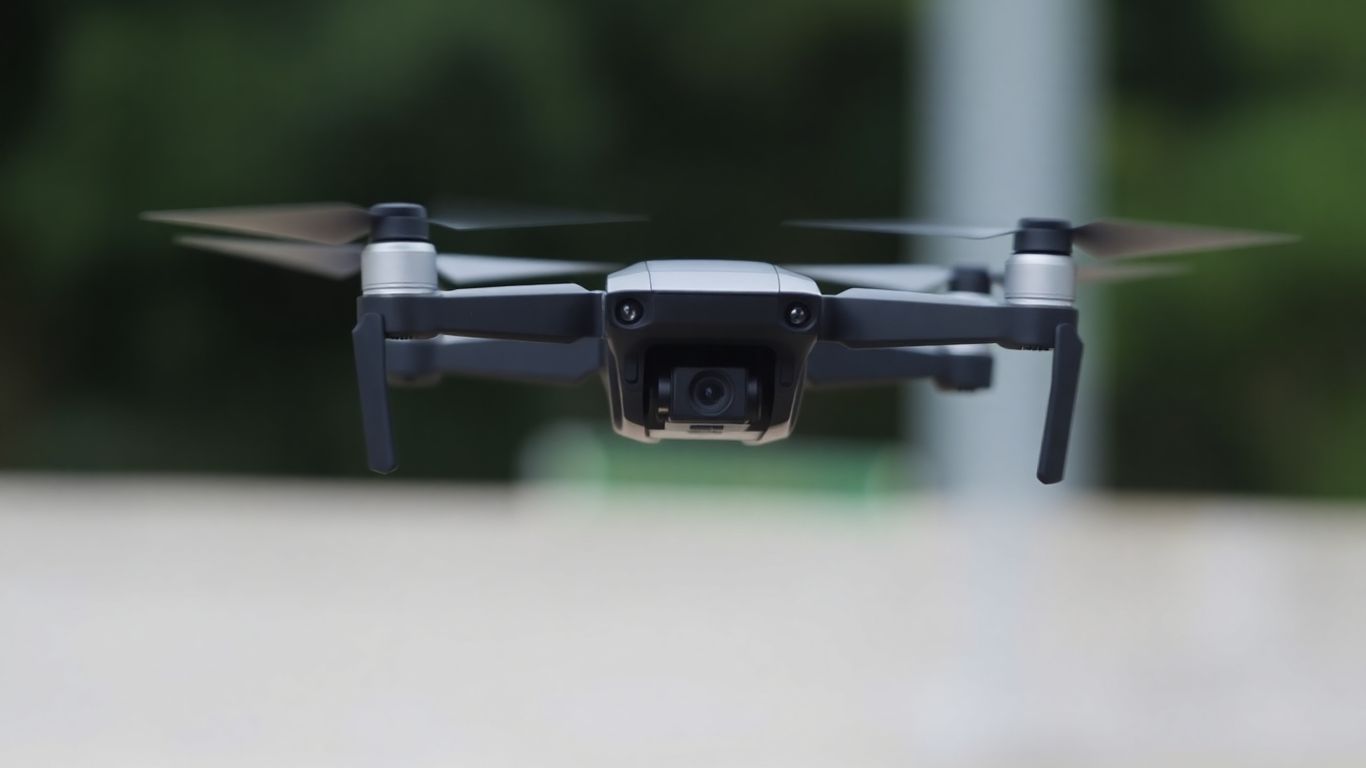
Alright, let’s talk about the Potensic A20. If you’re just dipping your toes into the drone world and don’t want to spend a fortune, this little guy might be worth a look. It’s definitely on the simpler side of things, which can be a good thing when you’re just learning the ropes. It’s designed to be super easy to fly, making it a solid choice for absolute beginners.
When you’re starting out, you don’t need all the bells and whistles. What you really want is something that’s stable, easy to control, and won’t break the bank if you happen to have a minor mishap. The A20 fits that bill pretty well.
Here’s a quick rundown of what you get:
- Simple Controls: Designed with ease of use in mind, so you can focus on flying rather than complex button combinations.
- Decent Flight Time: For its size and price, it offers a reasonable amount of time in the air, usually around 7-10 minutes per battery. You’ll likely want to grab a few extra batteries if you plan on flying for a while.
- Basic Camera: It does have a camera, so you can capture some aerial photos and videos. Don’t expect professional-grade footage, but it’s good enough for casual snaps and getting a feel for aerial photography.
- Durable Build: It’s built to withstand a few bumps and tumbles, which is pretty important when you’re still getting the hang of landing.
The Potensic A20 is one of those drones that just gets the job done for someone who’s never flown before. It’s not going to win any awards for its camera or flight performance, but it’s a forgiving platform that lets you learn without a lot of stress. Think of it as a training drone that happens to have a camera.
It’s not going to compete with the bigger, more expensive drones out there, but that’s not really the point. If your goal is to get comfortable with drone controls and see what it’s like to fly, the A20 is a budget-friendly way to do it. Just keep your expectations in check regarding video quality and advanced features.
22. DJI Flip
If you’re just getting into drones or need a solid, no-fuss option for capturing video, the DJI Flip is a pretty good shout. It comes in at under 249 grams, which means you don’t have to worry about registering it with the FAA, a nice perk for hobbyists. Plus, it’s got these built-in propeller guards and forward obstacle sensors, which are great for keeping things safe, especially if you’re still getting the hang of flying. You can control it with the included remote, your phone, or even directly on the drone itself.
The camera on this thing is surprisingly good for its price point. It shoots 4K video at 60 frames per second and can snap 48-megapixel photos. It even offers 10-bit color and a log profile option if you’re looking to do some serious color grading in post-production. It’s not quite the same as the fancier DJI models, as it lacks that vertical camera flip feature, but for the money, it’s a strong contender.
Here’s a quick look at what it offers:
- Camera: 4K60 HDR video, 48MP stills
- Weight: Under 249g (no registration needed in the US)
- Safety: Integrated prop guards and forward obstacle detection
- Control: Remote, smartphone app, or on-drone controls
- Color: 10-bit color with log profile option
It’s a solid choice for beginners and anyone wanting good aerial footage without breaking the bank. However, it’s worth noting that it doesn’t support Remote ID, so if you’re a licensed professional pilot needing to comply with those regulations, you’ll probably want to look elsewhere.
This drone is a good middle-ground option. It’s got more features than the super-basic models but doesn’t come with the hefty price tag of the professional-grade machines. It’s easy to fly and the video quality is more than good enough for social media or personal projects.
23. DJI O4 Air Unit Pro
The DJI O4 Air Unit Pro isn’t a drone you fly yourself, but rather a component that helps other drones fly better. Think of it as a super-powered communication system for your aircraft. It’s designed to give you a really clear and stable video feed from your drone, even when you’re pretty far away. This is a big deal for anyone using drones for serious work, like inspections or surveying, where you need to see exactly what the drone is seeing without any lag or fuzzy pictures.
This system is all about giving you a reliable connection between the drone and your controller. It uses advanced transmission technology to cut through interference and keep that video stream smooth. For professionals, this means more confidence when flying further out or in tricky environments.
Here’s what makes the O4 Air Unit Pro stand out:
- Extended Range: It’s built to handle longer distances, so you can explore more without losing signal.
- Low Latency: The video feed is almost real-time, which is super important for precise control.
- High-Definition Video: It supports high-resolution video transmission, so you don’t miss any details.
- Interference Resistance: It’s designed to work well even when there are other signals around, like in busy urban areas.
While you won’t be holding this in your hand like a typical drone, its importance for business applications cannot be overstated. It’s the backbone of a stable, high-quality aerial operation, allowing for more complex missions and better data capture. If you’re serious about professional drone use, a robust transmission system like this is a must-have piece of the puzzle.
It’s not the flashiest piece of tech, but for businesses relying on drones, the O4 Air Unit Pro is a workhorse that makes everything else possible. It’s the kind of upgrade that might not seem exciting at first, but it makes a huge difference in day-to-day operations.
24. Antigravity A1
Antigravity is a new player in the drone scene, spun off from Insta360. Their A1 drone is slated for a 2026 release, and it’s aiming for a unique spot in the market. It features dual fisheye cameras, designed to capture a full 360-degree view, much like their X5 action camera. This drone is also designed to be lightweight, coming in at just 249g, which means it won’t require FAA registration in the US. It’s also packing built-in Remote ID, a controller that can be operated with one hand, and FPV goggles for an immersive flying experience.
While it’s not out yet, the specs suggest it could be an interesting option for those looking for a compact drone with a wide field of view. It’s definitely one to keep an eye on if you’re into creative aerial photography or videography.
The Antigravity A1 is shaping up to be a drone that blends action camera versatility with drone flight. Its focus on 360-degree capture and a lightweight design could make it a standout choice for specific types of content creation.
25. Golden Eagle Drones and more
When you start looking at drones that are made in the USA, especially for serious business applications, the price tag can jump up pretty quickly. Most American companies focus on enterprise stuff, like drones for inspections or mapping, rather than just taking pretty pictures. That’s where something like the Golden Eagle drone comes in. It’s not exactly a budget-friendly option, but it’s built for specific jobs, often in defense and training.
While the term "Made in America" can be a bit fuzzy, companies like Teal Drones are making an effort to design and build their products in the U.S. for specific markets.
These aren’t your typical camera drones you’d buy for casual flying. They’re more about tactical training and reconnaissance. For instance, the Teal Golden Eagle is designed for short-range situational awareness. It’s a step up from consumer models, and you’re paying for that specialized design and manufacturing.
- Built for specific missions: Not general-purpose, but designed for tasks like defense training.
- Higher price point: Expect to invest more compared to consumer drones.
- U.S. based manufacturing: Focus on domestic production for specialized needs.
If you’re looking for a drone that’s part of a training package, the Teal Golden Eagle is often mentioned. It’s a good example of how American drone companies are carving out niches in the market, often focusing on government or military contracts rather than the open consumer market. For those needing a drone with a U.S. origin for specific professional uses, exploring options like these is key, even if they fall outside the typical sub-$2,000 bracket. You might find that for certain applications, the investment is justified for the capabilities and origin. For more on specialized drones, check out Teal Drones.
Wrapping Up Your Drone Search
So, you’ve looked through the options, and maybe you’re feeling a bit overwhelmed. That’s totally normal! Finding the right drone for your business, especially when you’re aiming for something under $2,000, means balancing features, price, and what you actually need to get done. Remember, the most expensive drone isn’t always the best fit. Think about what tasks you’ll be using it for most – is it aerial photography, inspections, or something else entirely? We’ve seen that while American-made options exist, they often come at a higher price point or are geared towards very specific industrial uses. For many businesses, especially those just starting out with drone technology, focusing on reliable, feature-rich models from established brands, even if they aren’t made domestically, might be the most practical route. Do your homework, consider your budget, and pick the drone that will help your business take flight.
Frequently Asked Questions
What’s the main reason why American-made drones are often more expensive than drones from other countries?
It’s a bit like comparing a handmade item to something mass-produced. Drones made in countries with lower costs for workers and materials, like China, tend to be cheaper. America has higher labor costs and different access to manufacturing tools and supplies, which makes building drones here more costly.
Are there any good American-made camera drones for under $1,000?
Sadly, no. Companies like GoPro and 3D Robotics have tried to make camera drones in this price range, but they’re no longer being made or sold. It’s tough for American companies to compete on price for consumer camera drones in that category right now.
Why do some people prefer American-made drones even if they cost more?
Some people choose American-made products because they want to support businesses in the U.S., which they see as patriotic. Others might be concerned about security or need to follow rules that require using drones made in America for their work.
What does ‘ITAR compliant’ mean for a drone?
ITAR stands for International Traffic in Arms Regulations. If a drone is ITAR compliant, it means it meets strict U.S. government rules about exporting defense-related technology. These drones can be shipped to most countries, but not to those with specific trade restrictions.
What’s the most important thing to consider when buying my first drone?
For legal reasons, the weight of the drone is super important. Drones over a certain weight (usually 250 grams) need to be registered. Beyond that, think about how long it can fly (battery life) and if it has GPS, which makes it much easier and safer to fly, especially outdoors.
Which drone brand is generally considered the best right now?
DJI is currently leading the pack. Their drones are known for being reliable, having great cameras that can take amazing photos and videos, and they offer models at many different prices. They’re often seen as the standard that other drone companies are measured against.