Best drones for wedding videography
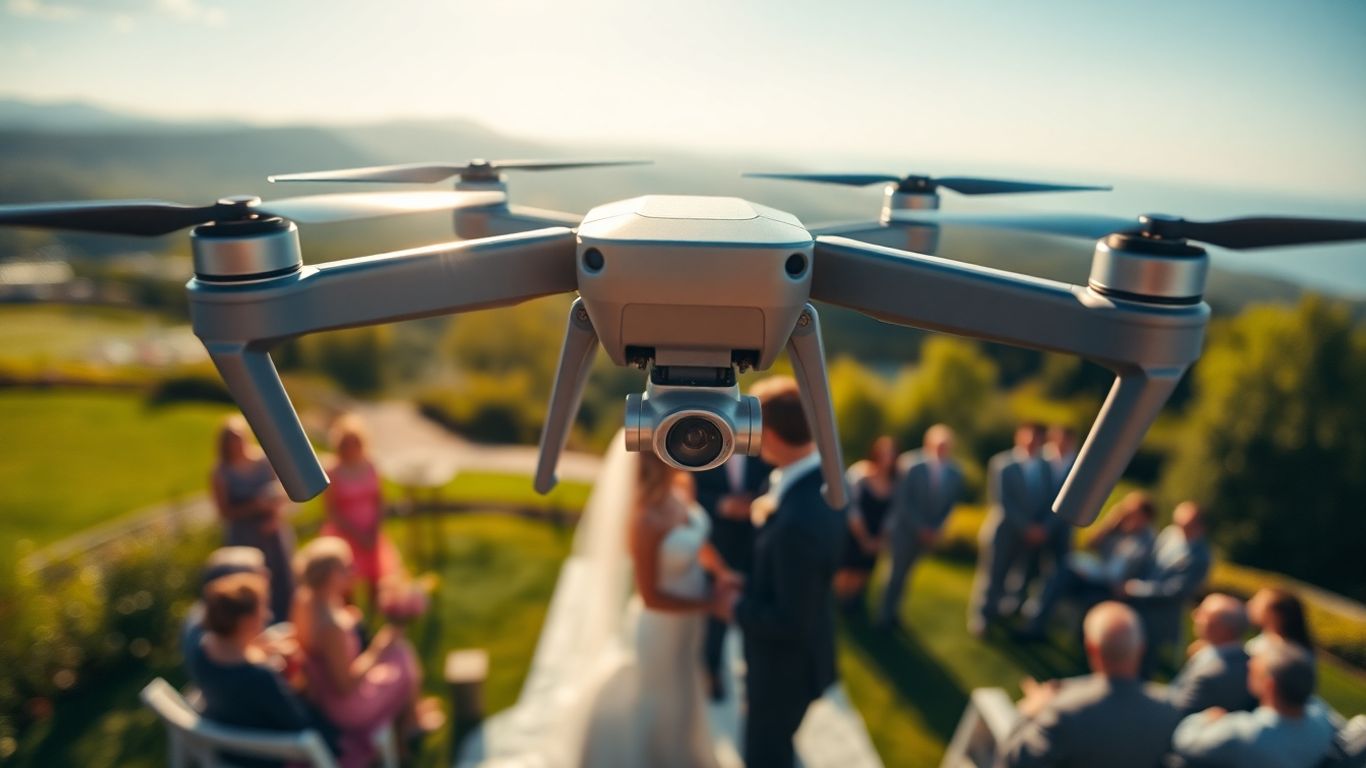
Planning a wedding and want to capture it from a whole new angle? Drones can add some seriously cool aerial shots to your wedding video, making it stand out. But with so many options out there, picking the right one for wedding drone videography can feel a bit overwhelming. We’ve checked out some of the top contenders to help you find the perfect drone to film your big day.
Key Takeaways
- For top-tier wedding drone videography, the DJI Mavic 3 Pro offers a versatile triple-camera system and long flight time, making it a strong all-around choice.
- The DJI Air 3 provides a great balance of features and price, with a dual-camera setup that’s good for capturing various wedding moments.
- If budget is a concern, the DJI Air 2S is a capable option that still delivers good quality footage for wedding drone videography.
- For professionals seeking the absolute highest quality and advanced features, the DJI Mavic 3 Pro Cine and DJI Inspire 3 are premium options, though they come with a higher price tag.
- When selecting a drone for wedding drone videography, consider zoom capabilities, low noise operation, RAW format support, flight time, and internal storage to ensure you get the best shots without disruption.
1. DJI Mavic 3 Pro
When you’re trying to capture those once-in-a-lifetime wedding moments, having the right gear makes all the difference. The DJI Mavic 3 Pro really steps up to the plate here, especially if you’re looking for top-notch aerial footage without a super complicated setup. It’s like having a professional film crew in your pocket, but way cooler.
What sets this drone apart is its triple-camera system. You get a main Hasselblad camera with a big Four Thirds sensor, which is fantastic for low light – think those dimmer reception halls or sunset ceremonies. Then there are two telephoto lenses, a medium one and a longer one, letting you zoom in for close-ups without having to fly the drone right over your guests’ heads. This flexibility is a game-changer for wedding videography.
Here’s a quick look at what you get:
- Main Camera: Hasselblad wide-angle with a large Four Thirds sensor for amazing detail and color.
- Medium Tele Camera: Offers a 70mm equivalent focal length for tighter shots.
- Tele Camera: Provides a 166mm equivalent focal length for significant zoom.
Flying it feels pretty smooth, too. It’s got these omnidirectional sensors that help it avoid obstacles, which is a huge relief when you’re trying to focus on getting the perfect shot and not crashing into a tree or, you know, the venue’s chandelier. The controller gives you clear warnings if you’re getting too close to something, making it easier to steer.
Battery life is another strong point. You can expect around 43 minutes of flight time on a single charge. That’s usually plenty of time to get a good chunk of footage before you need to swap batteries. It’s not the absolute longest flight time out there, but it’s definitely in the top tier and more than enough for most wedding day needs.
While the Mavic 3 Pro is a significant investment, its versatile camera setup and reliable performance make it a strong contender for wedding videographers who want professional-quality results. The ability to capture stunning aerial shots from multiple perspectives without disturbing the event is invaluable.
It does come with a price tag, so it’s not exactly an impulse buy. But if you’re serious about wedding videography and want a drone that can deliver consistently great results, the Mavic 3 Pro is definitely worth considering. It’s a powerful tool that can really make your wedding films stand out.
2. DJI Air 3
The DJI Air 3 is a solid choice for wedding videographers looking for a good balance of features and portability. It’s not the absolute top-tier, but it gets you a lot of bang for your buck, which is always nice when you’re juggling a wedding budget.
One of the standout features here is the dual-camera system. You get a wide-angle lens and a telephoto lens, giving you more creative options without having to physically move the drone. This is super handy for capturing different perspectives quickly during a busy wedding day. The ability to switch between these lenses adds a professional touch to your shots.
Here’s a quick look at what makes it tick:
- Dual Cameras: A 24mm wide-angle and a 70mm telephoto lens.
- Flight Time: Up to 46 minutes on a single battery, which is pretty impressive and means less downtime swapping batteries.
- Obstacle Sensing: All-around sensors help prevent those dreaded mid-air collisions.
- Video Quality: Shoots up to 4K at 100fps for some nice slow-motion effects.
It’s also pretty compact, making it easy to pack and carry between venues. You can slip it into a camera bag without much fuss, which is a big win when you’re on the move all day. While it’s not the lightest drone out there, its size is manageable for most videographers. You can find more details about its portability and design on pages like this one.
The DJI Air 3 is a drone that really hits a sweet spot. It offers advanced features that used to be reserved for much more expensive models, but it brings them down to a more accessible price point. This makes it a compelling option for anyone who wants professional-looking footage without breaking the bank.
If you’re in the US and looking for the absolute latest, you might find the Air 3S a bit easier to get directly from DJI, but the Air 3 is still a fantastic drone that’s widely available and performs exceptionally well for wedding shoots.
3. DJI Mavic 3 Pro Cine
Alright, so you’re looking at the DJI Mavic 3 Pro Cine. This is basically the souped-up version of the already fantastic Mavic 3 Pro, aimed squarely at folks who need the absolute best for their video work, especially in a professional setting like weddings.
The big deal here is its support for Apple ProRes 422 recording. If you’re into video editing, you know this codec is a game-changer. It captures a ton of detail and color information, making your footage much more flexible when you get to post-production. Think smoother color grading and less worry about losing quality. Plus, it comes with a massive 1TB SSD built right in. No more scrambling for SD cards or worrying about them failing – though it still takes microSD cards if you want to use them.
Here’s a quick rundown of what makes it stand out:
- ProRes 422 Codec: For top-tier editing flexibility.
- 1TB Internal SSD: Plenty of space for high-quality footage.
- Triple Camera System: Hasselblad wide-angle, medium tele, and tele lenses give you creative freedom.
- Long Flight Time: Around 43 minutes, which is pretty solid for getting all the shots you need.
- Advanced Obstacle Sensing: Flies through tricky spots with ease.
This drone is definitely an investment, and it’s priced accordingly. Most wedding videographers might find the standard Mavic 3 Pro more than enough. But if you’re running a high-end operation and need that extra bit of polish and data for your clients, the Cine version is where it’s at. It’s built for serious professionals who demand the highest quality footage possible.
While the standard Mavic 3 Pro is already a powerhouse, the Cine model takes things up a notch for those who really need that professional edge. It’s a serious piece of kit for serious filmmakers. You can check out the DJI Mavic 3 Pro drone for a comparison, but if you’re aiming for the absolute pinnacle of drone videography for weddings, the Cine version is worth a close look.
4. DJI Inspire 3
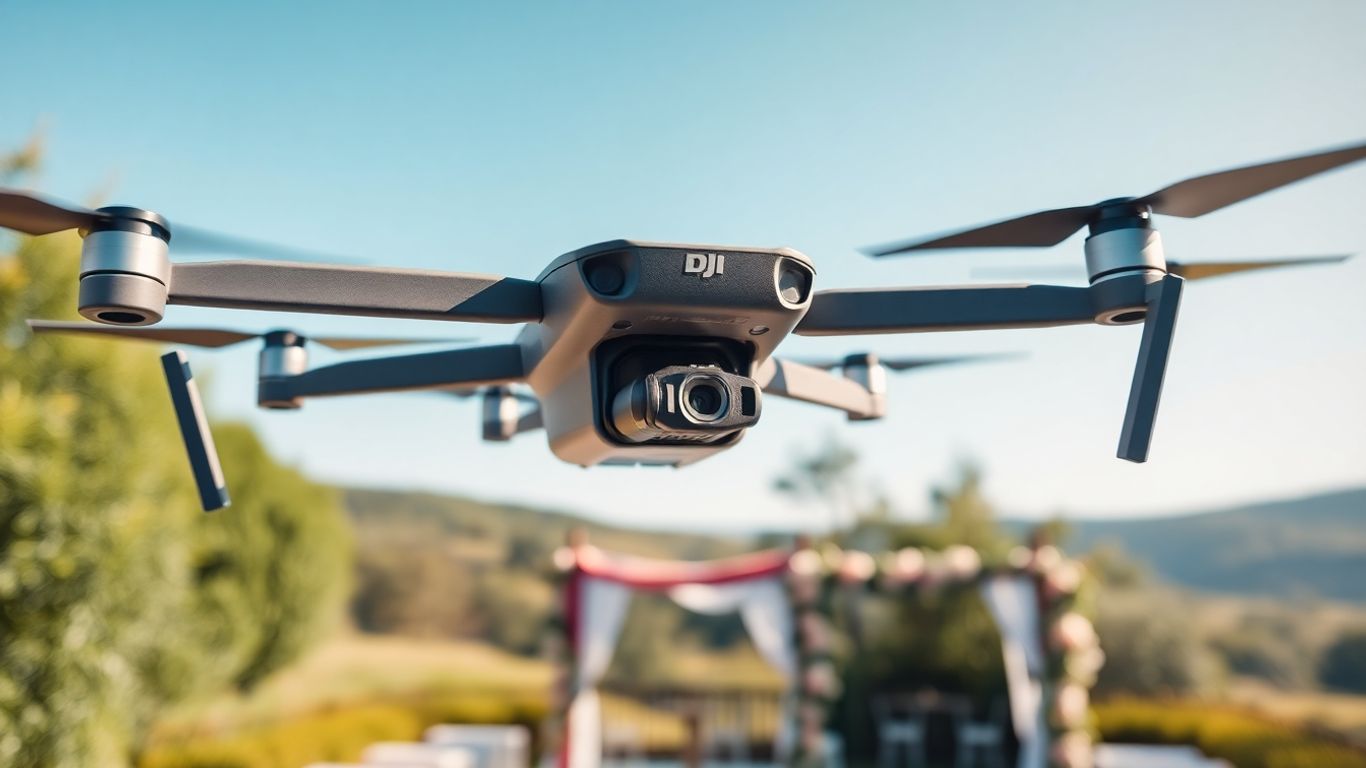
Alright, let’s talk about the DJI Inspire 3. This isn’t your average drone; it’s a serious piece of kit for professionals, and you’ll know it the moment you see the price tag. It’s built for filmmakers who need top-tier cinematic quality and control.
What makes it stand out? Well, for starters, it’s got this amazing 8K camera system. You can even swap out lenses, which is a big deal if you’re used to traditional filmmaking. Plus, it has these cool dual configurations called Tilt Boost and 360° Pan, letting you get some really dynamic shots. And if you’ve got a crew, you can have a separate operator just for the camera, which is pretty neat for complex scenes.
Now, it’s not exactly a pocket-sized drone. The Inspire 3 is pretty big and bulky, so you’ll need to think about how you’ll transport it between wedding venues. It’s definitely more of a production tool than something you just toss in a backpack.
Here’s a quick look at some of its specs:
- Video Resolution: 8,192×4,320 px / 8K @ 75fps
- Camera Resolution: 8,192×5,456 px (44.6MP)
- Battery Life: Around 28 minutes per battery (it uses two)
- Max Range: Up to 15km (that’s about 8 miles)
- Weight: Roughly 4kg, depending on the lens you attach
This drone is a significant investment, but for those who demand broadcast-quality footage and the flexibility of interchangeable lenses, it can actually be more cost-effective than renting traditional cinema equipment. The precision offered by its RTK positioning for repeatable flight paths is also a huge plus for complex, planned shots.
If you’re looking for the absolute best in aerial cinematography and have the budget to match, the Inspire 3 is definitely worth considering. It’s a professional tool that can capture stunning visuals for high-end wedding films.
5. DJI Air 2S
The DJI Air 2S is a solid choice if you’re looking for a drone that packs a punch without breaking the bank. It’s not the newest kid on the block, but it still holds its own, especially for wedding videography.
One of the standout features is its camera. It shoots 5.4K video, which is pretty impressive, giving you a lot of detail to work with in post-production. Plus, it has a decent 1-inch sensor, which helps a lot when you’re shooting in less-than-ideal lighting conditions – think indoor receptions or those golden hour shots.
Here’s a quick look at some of its specs:
| Feature | Specification |
|---|---|
| Max Video Resolution | 5.4K @ 30fps, 4K @ 60fps |
| Sensor | 1-inch CMOS |
| Max Flight Time | Approx. 31 minutes |
| Max Range | 12 km (FCC) |
| Weight | 595g |
It’s also got that all-around obstacle sensing, which is a big deal when you’re trying to get those sweeping shots around a venue without worrying about hitting anything. The ActiveTrack 4.0 is pretty good at keeping your subject in frame, though it’s not always perfect, especially with fast-moving things.
While it might not have all the bells and whistles of the absolute latest models, the Air 2S offers a fantastic balance of image quality, flight performance, and ease of use. It’s a drone that can genuinely help you capture beautiful, cinematic footage for a wedding day.
If you’re on a budget but still want professional-looking results, the DJI Air 2S is definitely worth considering. It’s a reliable workhorse that can get the job done.
6. Autel Evo Lite+
If you’re looking for a solid drone that isn’t from DJI, the Autel Evo Lite+ is definitely worth a look. It’s a pretty capable flyer, and honestly, it’s just as easy to get going as the DJI models. The Autel Sky app is well-designed and gives you access to a bunch of cool automatic flight modes, which is nice.
One of the standout features here is the camera. It shoots in 6K and has a 20-megapixel sensor that’s a full inch. That’s a step up from some other drones, though I’ve found DJI’s colors tend to pop a bit more straight out of the camera. Still, the Evo Lite+ gives you a lot of flexibility, especially with its adjustable aperture, ranging from f/2.8 to f/11. This is a big deal if you like to have more control over your depth of field and exposure, something you don’t always get with other drones.
Battery life is pretty good too, clocking in at around 40 minutes. That’s a bit less than some of the top-tier DJI drones, but it’s still plenty of time to get the shots you need for a wedding. Plus, with a transmission range of up to 7.4 miles, you can really take advantage of that full 40 minutes if you’re exploring.
When it comes to safety, the Evo Lite+ has sensors on the front, back, and bottom to help avoid obstacles. I tested them out, and they were good enough to spot and avoid a chain-link fence, which is reassuring.
And get this, it’s surprisingly quiet. Compared to some other drones, the Evo Lite+ is noticeably less noisy. If you’re trying to be discreet during a ceremony or reception, this can actually make a difference.
Here’s a quick rundown of what it offers:
- Camera: 20MP, 1-inch sensor, 6K video, adjustable aperture (f/2.8-f/11)
- Flight Time: Up to 40 minutes
- Obstacle Sensing: Front, back, bottom
- Transmission Range: Up to 7.4 miles
- Controller: Comfortable design with phone mount above the controller
While the Evo Lite+ offers some impressive specs, like its 6K video and adjustable aperture, it’s important to note that its subject tracking isn’t quite as refined as DJI’s top models. Also, the 29mm lens might feel a little narrow if you’re used to wider drone shots.
Overall, the Autel Evo Lite+ is a strong contender, especially if you want an alternative to DJI and appreciate the creative control its camera offers. It’s a good choice for wedding videographers who want a balance of features and ease of use.
7. DJI Mini 4 Pro
If you’re looking for a drone that’s super portable and still packs a punch for wedding videography, the DJI Mini 4 Pro is a solid choice. It’s really light, tipping the scales at under 250 grams, which is a big deal because it means you often don’t need to register it in many places. This makes it way easier to just grab and go for those spontaneous shots.
This drone is a fantastic option for discreet, candid wedding shots, especially if you’re new to flying. It’s got this neat omnidirectional obstacle sensing, meaning it can see things coming from pretty much any direction. That’s a huge relief when you’re trying to focus on capturing the moment and not on crashing into a tree or, worse, a guest.
Here’s a quick rundown of what makes it stand out:
- Camera Capabilities: It shoots in 4K at up to 100 frames per second, which is great for smooth footage and even some cool slow-motion effects. Plus, it can shoot in 10-bit D-Log M, giving you a lot more flexibility when you’re editing the footage later to get that perfect look.
- Flight Time: You get about 34 minutes of flight time on a single battery, which is pretty decent. If you get the bigger batteries (though be mindful of that weight limit!), you can push it even further, maybe over 40 minutes, depending on how you’re flying.
- Range and Control: The updated O4 transmission system gives you a theoretical range of up to 20 kilometers. While you won’t likely fly it that far at a wedding, it means the connection is super stable and reliable at normal distances.
- Smart Features: It has some really useful AI tracking features that can follow subjects, and the camera can even switch to an optical portrait mode for nice, focused shots of people.
While the Mini 4 Pro is incredibly capable, especially for its size, it does come with a price tag that’s closer to some of DJI’s more advanced models. You’re paying for that combination of portability and professional features. If budget is a major concern, you might look at older models, but for the convenience and features, it’s hard to beat.
It’s a drone that really tries to give you a lot of power without making you feel like you need a pilot’s license. For capturing those special wedding moments without being intrusive, the DJI Mini 4 Pro is definitely worth considering.
8. DJI Air 3S
Alright, let’s talk about the DJI Air 3S. This drone is pretty much a sweet spot for a lot of wedding videographers. It’s not quite the top-tier Mavic 3 Pro, but it’s a solid step up from the smaller Mini series. The dual-camera system is where it really shines for event work. You get a wide-angle lens for those sweeping establishing shots of the venue, and then a telephoto lens that’s perfect for getting closer to the couple during the ceremony or capturing candid moments without being intrusive. It’s like having two drones in one, really.
When it comes to flying, this thing is stable. Even if there’s a bit of wind, say around 14 mph, it holds its own. It uses a bunch of satellite systems, plus its cameras, to keep track of where it is, so you get steady footage. And the battery life? It’s good. You can expect up to 45 minutes of flight time, which is plenty to get a good chunk of footage and still have juice to get back home. Plus, it comes with 42GB of internal storage, which is nice if you forget your microSD card, though you’ll probably still want one for longer shoots.
Here’s a quick look at some of its specs:
- Weight: 724g
- Video Resolution: 4K @ 60fps
- Battery Life: Up to 45 minutes
- Max Range: 12.4 miles
- Internal Storage: 42GB
DJI’s automated flight modes are also pretty handy. ActiveTrack can follow a walking subject pretty well, and QuickShots lets you do those cool cinematic moves like circling around people. It’s not perfect for super-fast action, but for the kind of shots you need at a wedding, it’s usually more than enough. It’s also pretty compact when folded, about the size of a big coffee thermos, so it’s easy to pack and travel with. If you’re looking for a drone that balances features, performance, and price for wedding videography, the Air 3S is definitely worth a look. It’s a great all-rounder that offers a lot of creative flexibility, especially with that dual-camera setup. You can find more details about the DJI Air 3 and its capabilities on DJI’s site.
One thing to keep in mind is that while the Air 3S is a fantastic drone, getting your hands on one in the US might mean ordering directly from DJI. Sometimes, depending on availability, you might have to opt for the slightly older Air 3 model, which is still a very capable drone, just without a few of the latest upgrades.
It’s a step up from the Mini series, offering better image quality and more advanced features without the hefty price tag of the top-end Mavic models. For capturing those special wedding moments, it provides a great blend of professional features and user-friendliness.
9. HoverAir X1
The HoverAir X1 is a pretty interesting drone, especially if you’re someone who often films yourself. It’s designed to be super easy to use, almost like it flies itself. You can get it to follow you around using its AI, which is pretty neat for capturing action shots without needing a second person to pilot the drone. It folds up like a book, making it quite portable, and it’s got a camera that can shoot in 8K. That’s a lot of detail!
One of the cool things is that it has its rotors inside a safety cage. This makes it feel a lot safer to use, especially if you’re new to drones or flying around people. It also comes with a brilliant folding design that’s been improved from earlier models.
However, it’s not all perfect. The battery life is on the shorter side, only about 16 minutes, so you’ll probably want to get an extra battery if you plan on doing any longer shoots. The range isn’t massive either, topping out around 500 meters with the optional controller.
While the 8K camera sounds impressive and it does a good job of following you, this drone is really built for those quick, fun shots of yourself or for people who can’t easily get a DJI drone. It’s not really meant for super long, demanding professional filming sessions.
Here’s a quick look at what it offers:
- Follows you automatically using AI
- 8K video recording
- Compact, foldable design
- Rotors are safely enclosed
It’s a fun drone, for sure, and it does a good job at what it’s designed for. Just be aware of its limitations, especially if you’re comparing it to some of the more professional, higher-end options out there.
10. DJI Flip
So, DJI has this new drone called the Flip. It looks a bit like the Mini 4 Pro, but it’s got these built-in propeller guards, which is kind of neat. DJI seems to be pushing this one for flying indoors or in really tight spots where you might not have much room to maneuver. It’s designed to be super easy to use, even for beginners.
One of the cool things is that it’s under 250 grams. This is a big deal in a lot of places because it means you usually don’t need a special license to fly it, and you can take it to more locations. The camera quality is actually pretty decent for how small it is, and it can even rotate 90 degrees for those true vertical shots you see on social media. Plus, it charges up pretty fast, which is always a plus when you’re out shooting.
However, it’s not perfect. Because it’s so light, it can get a bit wobbly in windy conditions. If it’s really gusty, you might end up with blurry photos or shaky video, and the battery drains faster. The camera sensor is only 12 megapixels, so don’t expect to be printing huge photos from it. Also, if you’re in Europe, they don’t sell the bigger batteries because that would push it over the 250-gram limit, which is a bit of a bummer.
The DJI Flip is a good option if you want something small, easy to fly, and legal in most places. It’s great for quick shots and indoor flying, but maybe not the best choice if you’re often dealing with strong winds or need super high-resolution images for large prints.
Here’s a quick rundown of what to expect:
- Camera: Capable of 4K video at 100fps, with AI tracking options and RAW photo capability.
- Gimbal: A 3-axis gimbal that does a good job keeping the camera steady, even in breezy weather.
- Storage: Comes with 2GB of onboard storage, handy if you forget your memory card.
- Ease of Use: Can be flown with a traditional controller or using just AI, making it accessible for almost anyone.
- Portability: Small and light, easy to pack in a bag.
Wrapping Up Your Aerial Wedding Storytelling
So, you’ve seen the options out there for drones that can really make your wedding videos pop. Whether you’re looking for something super high-end like the DJI Inspire 3 for that cinematic feel, or a more budget-friendly but still capable choice like the DJI Air 2S, there’s a drone that fits the bill. Remember to think about what’s most important for your style – zoom, flight time, or maybe how quiet it is. Don’t forget the practical stuff too, like getting the right license and insurance. Adding a drone to your wedding videography toolkit can seriously change the game, giving you those unique shots that guests and couples will remember forever. Happy flying and happy shooting!
Frequently Asked Questions
What makes a drone good for wedding videos?
For wedding videos, you’ll want a drone that can zoom well so you can get close-up shots without getting in the way of the ceremony. It should also be quiet so it doesn’t disturb anyone. Being able to record in RAW format is a big plus because it gives you more options when editing your video later, especially if the lighting isn’t perfect. Also, a long flight time means you won’t miss any important moments while waiting for the drone to recharge.
Do I need a special license to fly a drone for a wedding?
Yes, if you’re getting paid to fly a drone for a wedding, it’s considered commercial use. In the U.S., you’ll need to get a drone pilot license, often called a ‘Part 107 license.’ This involves passing a written test.
Is drone insurance necessary for weddings?
While it’s not always required by law, some wedding venues might ask you to have drone insurance. It’s a good idea to check with the venue beforehand and consider getting insurance to cover any unexpected events.
Can I fly a drone anywhere for a wedding?
Not always. You need to be aware of where you can legally fly. Some places, like areas near airports or national parks, have restrictions on drone use. Always check the rules for the specific location of the wedding.
What’s the difference between a regular drone and a ‘Pro Cine’ drone?
A ‘Pro Cine’ drone, like the DJI Mavic 3 Pro Cine, is usually for serious professionals. It often has better video recording features, like Apple ProRes, which creates high-quality video files that are easier to edit. It might also come with more storage, like a built-in SSD, so you don’t have to worry as much about memory cards.
Are there good drone options that aren’t DJI?
Yes, there are! Brands like Autel offer good alternatives. For example, the Autel Evo Lite+ is a solid choice if you’re looking for a capable drone that isn’t from DJI. It offers good features and flight time at a competitive price.