Best drones for real estate photography
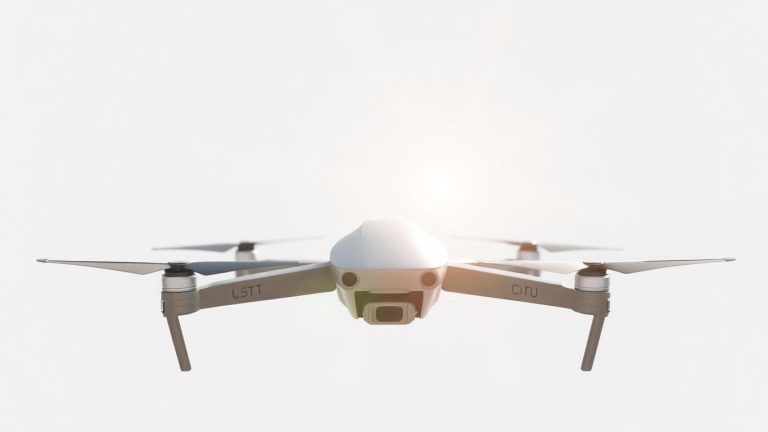
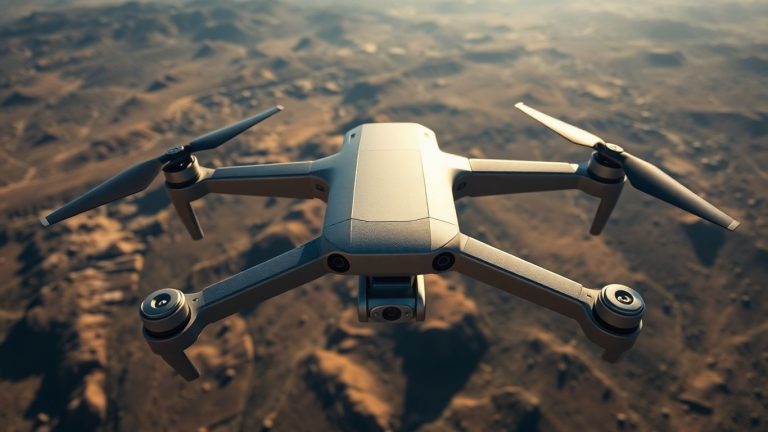
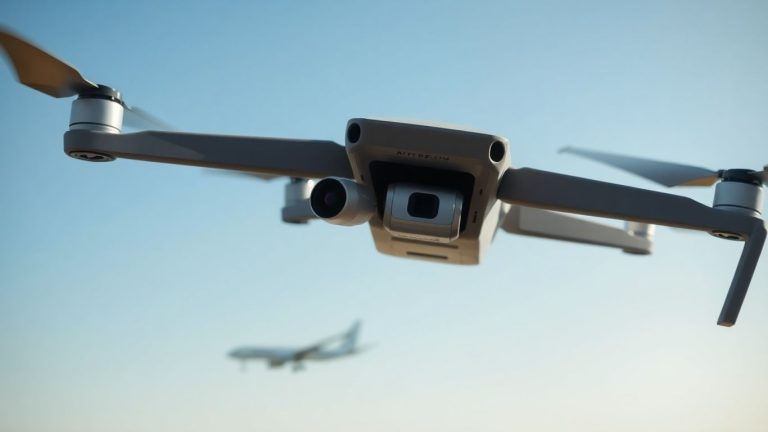
Looking to make your real estate listings pop? Drones are becoming a must-have tool for agents wanting to showcase properties from a new angle. Getting the right real estate drone photography can really grab attention and help sell homes faster. It might seem a bit technical at first, but picking the best drone for the job is easier than you think. We’ve checked out some top options that can help you get those amazing aerial shots.
Key Takeaways
- Using drone footage in your real estate listings can make them stand out and attract more potential buyers.
- To fly drones for business, you’ll need an FAA Part 107 Remote Pilot Certificate.
- Choosing the right drone and getting comfortable with flying it will really help your marketing.
- Learning basic photo and video editing is useful, or you can hire someone to do it for you.
- Drones help show off a property’s layout and its surroundings, giving buyers a better feel for the area and lifestyle.
1. DJI Mini 4 Pro
When it comes to snagging aerial shots for real estate listings, the DJI Mini 4 Pro really hits a sweet spot. It’s not the absolute cheapest option out there, but for what you get, it’s a solid deal, especially if you’re just starting out or need something reliable without breaking the bank. This drone is a fantastic all-rounder for property photography.
One of the biggest perks is its weight. It clocks in at under 249 grams, which is a big deal because it means you don’t have to worry about registering it with the FAA in most places. That alone saves a bunch of hassle. Plus, it makes it super easy to fly in more locations without a second thought.
Camera Capabilities
The camera on the Mini 4 Pro is pretty impressive for its size. It can shoot video in 4K at 60 frames per second, and even offers 4x digital zoom in HDR. If you’re shooting in low light, like twilight or early morning, it has special ‘Night Shots’ that help keep the footage clear and less grainy. It also shoots in D-Log, which gives you more flexibility when you’re editing the colors later on. For social media, it can even shoot vertically, which is handy.
Flight and Handling
This drone is pretty stable in the air, though it’s not a fan of really strong winds. If it’s gusty, you might notice the footage getting a bit shaky, and the battery drains faster. It’s definitely better suited for calmer days. The batteries themselves give you about 30 minutes of flight time each, and if you get the Fly More Combo, you’ll have multiple batteries to keep you going for a whole day of shooting.
Key Features
- Under 249g Weight: No registration needed in many regions.
- 4K/60fps Video: High-quality footage for listings.
- Night Shots: Improved low-light performance.
- Vertical Shooting: Perfect for social media.
- D-Log Recording: Offers more color grading options.
- Obstacle Sensing: Helps avoid collisions.
While the Mini 4 Pro feels pretty sturdy for its size, its plastic build means you should still be careful. Using the included case and gimbal protector is a good idea to keep it safe from bumps and drops. You also might want to keep an eye out for birds, as they can sometimes be a nuisance or even a threat to smaller drones.
Overall, the DJI Mini 4 Pro is a really sensible choice for real estate agents or photographers who want good quality footage without a huge investment or a lot of complicated setup. It’s easy to fly, captures great shots, and the weight advantage is a real bonus.
2. DJI Air 3S
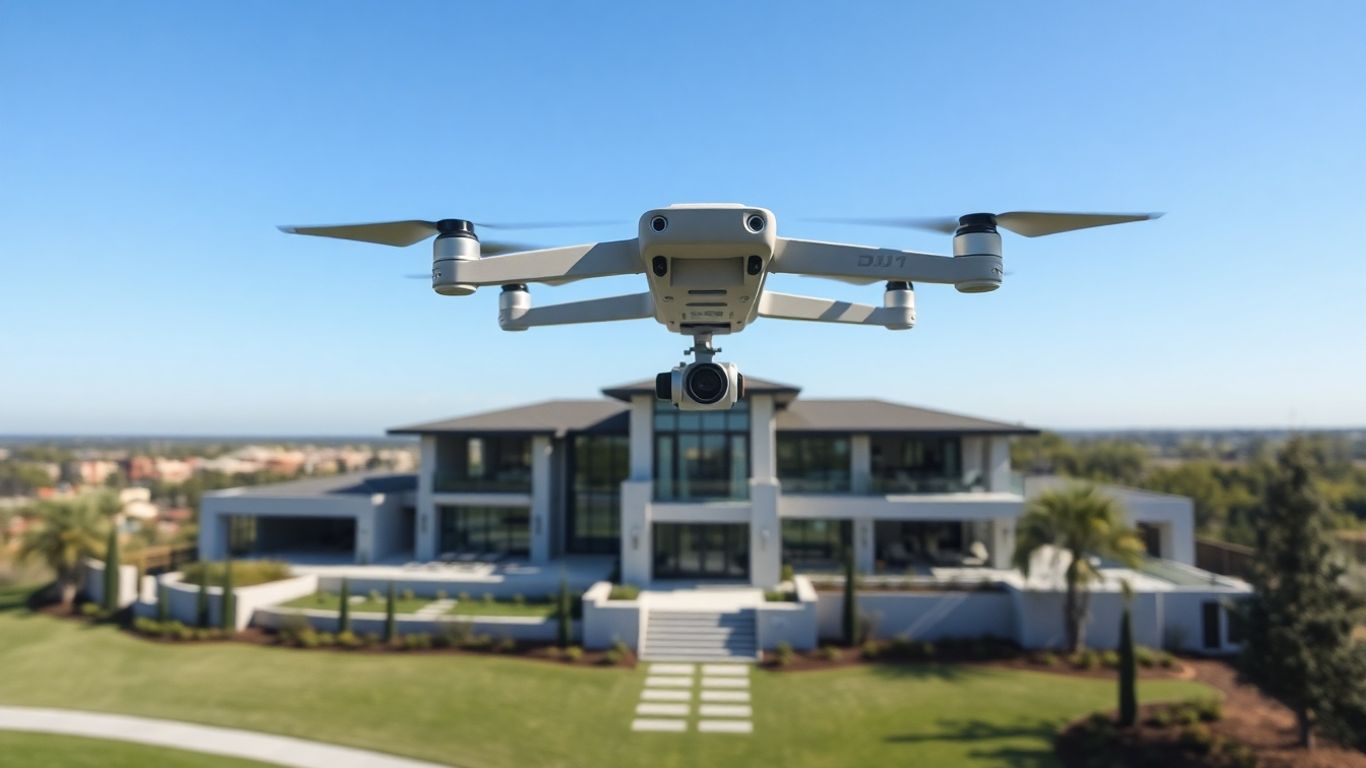
The DJI Air 3S is a solid choice if you’re looking for a drone that balances portability with professional-grade features for real estate photography. It’s not the smallest drone out there, but it’s definitely manageable and packs a punch when it comes to camera quality and flight performance.
This drone really shines with its dual-camera system. You get a wide-angle lens and a telephoto lens, which gives you a lot of flexibility when framing shots of properties. Imagine capturing the entire facade of a house with the wide lens, then zooming in with the telephoto to highlight architectural details – all without having to move the drone. That kind of versatility is a huge time-saver during shoots.
Here’s a quick look at some of its key specs:
- Flight Time: Around 46 minutes per battery. This is fantastic because it means you can get a lot more done on a single outing without constantly swapping batteries.
- Camera: Features a 1/1.3-inch CMOS sensor, capable of shooting 4K video at up to 100fps. It also has a 3x optical zoom telephoto lens.
- Transmission System: DJI’s O4 transmission offers a stable, long-range connection, which is super important when you’re flying around larger properties or in areas with potential signal interference.
- Weight: While it’s heavier than the Mini series, it’s still under 600 grams, meaning you might not need to register it depending on your local regulations.
The Air 3S is a great middle-ground option. It offers more advanced features than the entry-level drones but is still more affordable and easier to handle than the top-tier Mavic series. It’s built for those who need reliable performance and high-quality footage without breaking the bank or needing a pilot’s license for every flight.
One of the standout features is its obstacle sensing. It has sensors in all directions, which really helps prevent accidental bumps and crashes, especially when you’re flying indoors or in complex outdoor environments. This gives you a lot more confidence when you’re trying to get those tricky shots around trees or close to the house.
3. DJI Mavic 3 Pro
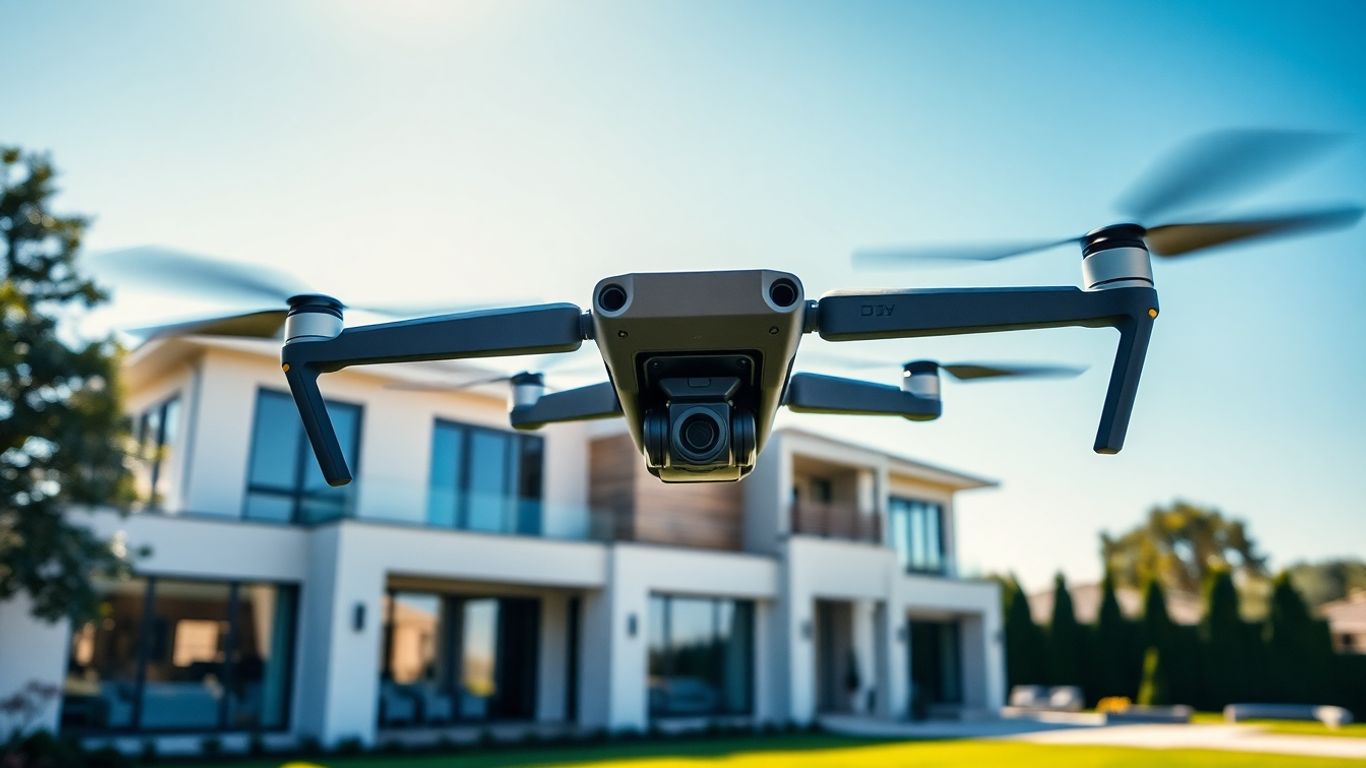
The DJI Mavic 3 Pro is a serious step up for anyone looking to capture truly professional-grade aerial footage for real estate listings. While it’s definitely an investment, the quality you get is hard to beat. This drone is built for those who demand the best in image quality and flight performance.
When you’re out shooting properties, especially larger or more complex ones, having a drone that can handle various lighting conditions and provide smooth, stable shots is key. The Mavic 3 Pro excels here, offering advanced camera systems that can capture stunning detail. Think about getting those sweeping exterior shots that showcase the entire property and its surroundings, or smooth interior fly-throughs that make potential buyers feel like they’re already there.
Here’s a quick look at what makes it stand out:
- Triple Camera System: It features three different lenses – a wide-angle, a medium telephoto, and a telephoto – giving you incredible flexibility to frame your shots perfectly. This means you can get wide property overviews and then zoom in on specific features without losing quality.
- Exceptional Image Quality: Expect crisp 4K video at up to 120fps and high-resolution photos. The larger sensor size means better performance in lower light, which is a lifesaver for those overcast days or twilight shots.
- Extended Flight Time: With up to 46 minutes of flight time per battery, you can cover more ground and get all the necessary shots without constantly worrying about landing to swap batteries.
- Advanced Obstacle Sensing: It has omnidirectional obstacle sensing, which is a big deal when you’re flying around houses with trees, power lines, or other potential hazards. It helps keep the drone safe and your footage smooth.
For real estate, the Mavic 3 Pro isn’t just a tool; it’s an investment in presentation. The ability to capture cinematic-quality video and detailed stills directly from the air allows you to present properties in a way that static photos and ground-level video simply can’t match. It helps listings stand out and can attract more serious buyers.
While it’s a larger drone and requires registration with the FAA, its capabilities for professional real estate photography are undeniable. If you’re aiming for the highest quality and have the budget, the Mavic 3 Pro is a top-tier choice.
4. Potensic Atom 2
The Potensic Atom 2 is a drone that’s been getting some attention, and for good reason. It’s a solid choice if you’re looking for something that can handle real estate photography without breaking the bank. DJI has been the go-to for a while, but options like this one show you don’t always need to spend top dollar for decent results.
When you’re picking out a drone, it’s not just about the numbers on the spec sheet. Think about things like customer service, how easy it is to get replacement parts, and what the rules are where you plan to fly. Your skill level matters too, of course. Making sure you consider all these things will help make sure your drone stays useful as your work grows.
Here’s a quick look at what it offers:
- Flight Time: You can expect around 34 minutes of flight per battery. If you get the Fly More Combo, you’re looking at over an hour and a half of total flight time, which is pretty good for shooting multiple properties in a day.
- Transmission Range: Potensic claims a range of up to 20 km. While I haven’t pushed it that far myself, it’s good to know it has that capability.
- Quick Shot Modes: This drone comes with several automated shooting modes like Dronie, Rocket, Circle, Helix, Boomerang, Asteroid, and Dolly Zoom. These can help you get some dynamic shots with minimal effort.
While ActiveTrack is a neat feature for following moving subjects, it’s not something you’ll likely use much for real estate. The focus for property photography is usually on stable, sweeping shots of the location itself, not tracking a person or vehicle.
Overall, the Potensic Atom 2 seems like a capable drone that offers a good balance of features and price for real estate photographers.
5. DJI Avata 2
The DJI Avata 2 is a pretty neat drone, especially if you’re looking to shoot interiors for real estate. It’s got this cinewhoop design, which basically means the propellers are protected. This is a big plus for flying around furniture and tight corners without worrying too much about bumping into things. It feels really intuitive to fly, especially if you’re using the FPV (First-Person View) setup. You get this really immersive feeling, almost like you’re in the cockpit.
The camera on the Avata 2 is quite capable, shooting 4K video at a smooth 60 frames per second. It also handles low light pretty well, which is handy for those dimmer rooms in older houses. Plus, features like Rocksteady and Horizonsteady do a good job of keeping the footage stable and cinematic, even if you’re moving around a bit. It’s a step up from the original Avata, offering a better overall experience.
Here’s a quick look at some of its specs:
- Flight Time: Around 23 minutes per battery. It’s not the longest, but it’s decent for getting through a few rooms.
- Internal Storage: 46 GB. This should be enough for a good amount of footage before you need to transfer it.
- Camera: A 1/1.3-inch CMOS sensor with a super-wide 12MP camera. It can shoot 4K at 60fps and even slow-motion at 2.7K.
- Field of View: Up to 155 degrees, which is really wide and great for capturing a lot of space.
- Color Mode: 10-bit D-Log M. This gives you more flexibility when editing colors later on.
While it’s fantastic for indoor work, its outdoor capabilities are more limited compared to some other drones. It’s really built for those close-quarters shots where its protected propellers and agile handling shine.
6. DJI Neo
Alright, let’s talk about the DJI Neo. This little guy is definitely aimed at a specific kind of user, and for real estate, that means it’s mostly for those who want to be in their own video tours. Think of it as a selfie drone for your properties. You can set it up to follow you around as you walk through a house, which is pretty neat if you’re going for that personal touch in your listings.
However, if you’re planning on flying it yourself to get those sweeping exterior shots or just want more control, the price starts to feel a bit different. The drone itself is listed at $199, which sounds good, but here’s the catch: the controller isn’t included. You’ll need to shell out an extra $200 for the FPV Remote Controller 3. So, what starts as a $200 drone quickly becomes a $400 setup. At that price point, you might want to look at some of DJI’s other options that offer more flexibility for outdoor filming.
The DJI Neo is best suited for indoor use and personal video tours.
Here’s a quick rundown of what you get:
- Camera: Shoots 4K video, which is decent for the price.
- Flight Time: Around 18 minutes per battery, so you’ll want spares.
- Controller: Sold separately for an additional $200.
- Wind Resistance: It can handle light breezes, but don’t expect it to perform well in strong winds.
While the DJI Neo is a budget-friendly option for indoor flights and self-filming tours, its limitations become apparent when you consider outdoor use or the need for a separate controller. For real estate professionals looking for a more versatile tool, exploring other DJI models might be a better investment.
It’s a fun little drone for specific tasks, but for general real estate photography that involves a lot of outdoor property shots, you’ll probably find yourself wanting something a bit more robust.
7. Flywoo Explorer
For those looking for a true FPV experience with top-notch video quality, the Flywoo Explorer is a serious contender. This isn’t your average drone; it’s built for pilots who want to get up close and personal with their shots, offering a unique perspective that can be fantastic for real estate tours. You’ll likely need to pair it with a separate camera, and the Flywoo Naked GoPro 10 Action Camera is a popular choice. It’s essentially a stripped-down GoPro Hero 10, made lighter for FPV flight, and it really makes a difference.
This setup provides an ultimate FPV drone kit for high-quality, truly mind-blowing FPV footage. The drone itself comes with some pretty good components, like a DJI O3 FPV Air Unit and antenna, which means you’re getting a solid transmission system for that first-person view.
Here’s a quick look at what you might be getting into:
- Drone Size: Around 4 inches, making it relatively compact and quieter than larger drones.
- Flight Time: Expect up to 30 minutes without any extra camera attached, though this will decrease with a payload.
- Camera Pairing: Best used with a lightweight action camera like the Flywoo Naked GoPro 10.
- Video Quality: When paired with a good camera, it can capture incredibly detailed footage.
While the Flywoo Explorer offers an exciting FPV perspective, it’s important to remember that it’s geared towards a more experienced pilot. It requires a bit more skill to operate compared to some of the more beginner-friendly options, and you’ll be managing two separate pieces of tech – the drone and the camera.
The combined cost of the drone and a specialized camera can put this setup over the $1,000 mark, so it’s definitely an investment. But if you’re after that immersive FPV feel and want to capture unique, dynamic shots for real estate, it’s worth considering.
8. DJI Osmo Pocket 3
Sometimes, you need those smooth, cinematic shots, but a full-sized drone just isn’t practical. Maybe you’re shooting indoors, or perhaps you just can’t get a drone into a tight spot. That’s where the DJI Osmo Pocket 3 really shines. It’s basically a handheld gimbal camera that gives you that signature drone-like smoothness, but you hold it in your hand. It’s a neat way to get ground-level shots that still have that floating, professional feel.
This little gadget packs a 4K camera with a 1-inch CMOS sensor, which is pretty impressive for its size. It also supports D-Log M and 10-bit color, giving you a lot of flexibility if you like to edit your footage later. You can shoot video up to 4K at 120 frames per second, and it even has 4x and 8x slow-motion capabilities.
Here’s a quick look at what it offers:
- Camera Sensor: 1-inch CMOS
- Max Video Resolution: 4K at 120fps
- Color Depth: 10-bit
- Slow Motion: 4x and 8x
- Price Point: Around $500
It’s a really accessible option if you want that high-quality, steady footage without the hassle of flying a drone. It’s a great way to supplement your drone shots or even replace them entirely for certain interior shots. You can find out more about the DJI Osmo Pocket 3 on Amazon.com.
The Osmo Pocket 3 is a fantastic tool for capturing smooth, stable footage that mimics the look of drone shots, making it ideal for interior real estate photography or when drone flight isn’t feasible. Its compact size and advanced camera features allow for professional-looking results without needing to pilot an aircraft.
If you’re looking for a way to get those polished, steady shots without learning to fly, this is definitely worth considering. It’s a solid choice for adding that extra layer of quality to your real estate media.
9. DJI Mini 3
The DJI Mini 3 is a solid choice if you’re just starting out with drone photography for real estate, or even just for fun. It’s a bit older now, but it still packs a punch for its price point. It’s a great option for indoor shots because it’s so small and easy to maneuver through doorways.
When you’re looking at drones, especially for property tours, size really matters. The Mini 3 is just over 14 inches wide when unfolded, propellers and all. That means it can easily zip through standard interior doorways, which is a big plus for getting those interior shots without any hassle. It’s also pretty affordable, often coming in under $500, which is way less than some of the newer models.
Here’s a quick rundown of what you get:
- Camera: It’s got a 1/1.3-inch CMOS sensor with 12 effective megapixels. While not the highest resolution out there, it still captures pretty good images and video for its class.
- Flight Time: You can expect around 20-30 minutes of flight time per battery, which is decent for shorter shoots.
- Weight: It stays under the 249-gram mark, meaning you usually don’t have to worry about registering it with the FAA, which is a nice bit of freedom.
What you miss out on compared to its pricier siblings are things like advanced obstacle sensing (forward, backward, and downward vision systems) and the newer DJI O3 transmission. So, you’ll need to be a bit more careful when you’re flying, especially in tighter spaces. But hey, for the price, it’s a really good way to get started with aerial real estate photos. You can find out more about this beginner-friendly drone here.
Flying indoors with the Mini 3 is pretty straightforward. Its compact size means you don’t have to worry as much about bumping into walls or furniture. Just be mindful of your surroundings and practice a bit before you try to capture those perfect shots.
10. DJI FPV Drone
The DJI FPV drone was DJI’s first attempt at an FPV (First Person View) style drone. It’s a bit of a hybrid, trying to blend the capabilities of a photography drone with the speed and agility of a racing drone. For real estate, it offers a larger, better lens than many FPV drones, which means you get sharper images with good contrast. It can shoot video at 4K/60fps, which is pretty high for an FPV model, and it even has a 4x slow-motion option. Plus, it has a stabilization system called RockSteady to keep your footage from getting too shaky.
However, it’s important to know that this drone is heavier and larger than newer models like the DJI Avata 2. This makes it a bit more awkward to handle and potentially trickier to fly through tight spaces, like doorways inside a house. While it’s a step up from basic FPV drones in terms of camera quality, it’s generally surpassed by more recent DJI offerings.
It’s a decent option if you’re specifically looking for that FPV feel and need better-than-average video quality for an FPV drone, but it’s not the most practical choice for typical real estate work.
Here’s a quick look at some of its features:
- Camera: Shoots 4K/60fps video at 120 Mbps.
- Slow Motion: Offers 4x slow motion at 1080p/120 fps.
- Stabilization: Features RockSteady for smoother footage.
- Size: It’s over a foot wide, which can be a consideration for indoor flights.
When considering drones for real estate, think about the environment you’ll be flying in. For tight indoor spaces, smaller and more agile drones are usually a better fit. The DJI FPV drone, while capable, might be a bit too bulky for some of those scenarios.
If you’re interested in exploring other high-performance drones, the DJI Mavic 4 Pro offers a versatile triple-camera system for advanced aerial photography.
Wrapping It Up
So, we’ve talked a lot about drones for real estate, from what makes a good camera to how to actually fly the thing. Picking the right drone really comes down to what you can spend and what you need it for. Even the cheaper options can get you some really great shots that make listings pop. Don’t forget, though, it’s not just about the drone itself. Knowing how to fly it well, getting the best light, and maybe even doing a little editing can make a huge difference. If flying yourself seems like too much, hiring someone is totally an option too. Either way, using drones is a smart move to make your properties stand out and sell faster. It’s a tool that can really help you get ahead in this business.
Frequently Asked Questions
What makes a drone good for real estate photos and videos?
For real estate, you want a drone with a really good camera that can shoot clear pictures and videos, ideally in 4K or even better. It should also be able to fly for a good amount of time, like over 30 minutes, so you can get all the shots you need without stopping to change batteries. A stable camera on a gimbal is super important to keep your footage smooth, and having sensors to avoid bumping into things helps keep the drone safe around houses and trees.
Do I need a special license to fly a drone for real estate work?
Yes, if you’re flying a drone to make money, like for real estate photos, you generally need a special license. In the U.S., this is called an FAA Part 107 Remote Pilot Certificate. It means you’ve passed a test and know the rules for flying drones safely and legally for commercial purposes.
What’s the best time of day to fly a drone for real estate photos?
The best light for real estate drone shots is usually during the ‘golden hours.’ This is the time shortly after the sun comes up or just before it sets. The light is softer and warmer then, which makes houses and their surroundings look really nice. Avoid flying in the middle of the day when the sun is harsh, as it can cause glare and make your pictures look flat.
Can I fly a drone inside a house for real estate tours?
Yes, you can! Drones are becoming popular for showing the inside of homes. You’ll want a smaller, more nimble drone, sometimes called an FPV (First Person View) drone, that can fly carefully through rooms. Drones like the DJI Avata 2 or DJI Mini 4 Pro are good options because they are easier to control indoors and have features to help avoid crashing into walls or furniture.
How much do drones for real estate photography usually cost?
The price can really vary. You can find good beginner drones for around $500 to $1,000, like the DJI Mini 4 Pro. If you want more advanced features, like multiple cameras or longer flight times, mid-range drones might cost between $1,000 and $2,500. Professional-grade drones with top-of-the-line cameras can cost $2,500 or more.
Besides the drone, what else do I need for real estate drone photography?
Besides the drone itself, you’ll need spare batteries so you can keep flying. A good controller is important for precise flying. You’ll also want to think about editing software, like Adobe Lightroom or Premiere Pro, to make your photos and videos look their best. If editing isn’t your thing, you might consider hiring someone to do it for you.