Best drones for construction site inspections
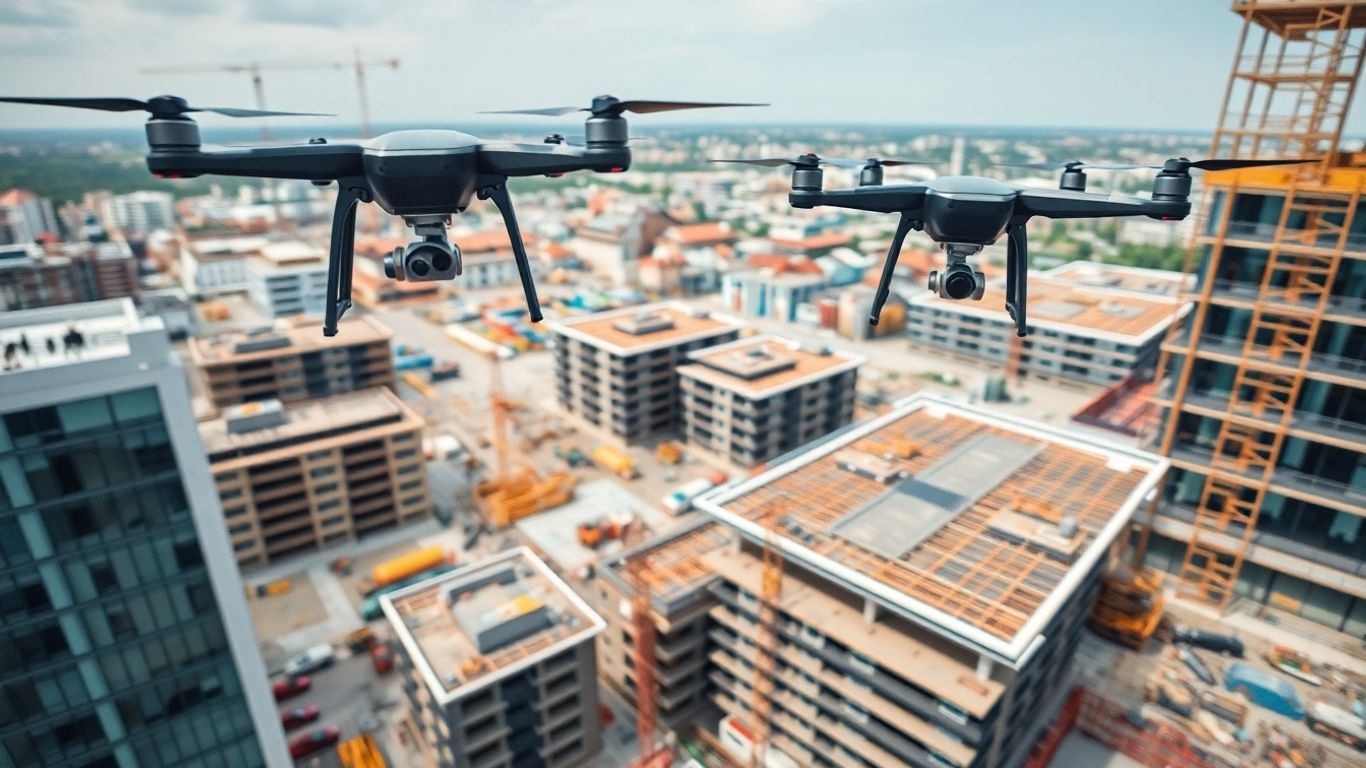
Inspecting construction sites used to be a real hassle. Think ladders, scaffolding, and maybe even some risky climbs. But now, things have changed a lot. Drones, or unmanned aerial vehicles (UAVs), are making these jobs way safer, quicker, and more accurate. If you’re looking for a solid construction drone to help out on your projects, you’ve come to the right spot. We’ve checked out some of the top options out there that can really make a difference on the job site.
Key Takeaways
- Drones offer a safer, faster, and more accurate way to inspect construction sites compared to traditional methods.
- Key features to consider in a construction drone include camera quality, flight time, thermal imaging, and mapping capabilities.
- Drones can help reduce costly rework by identifying issues early through frequent site monitoring.
- Autonomous flight features can streamline workflows, allowing for pre-scheduled site assessments without constant piloting.
- The construction drone market is growing, with various models suited for different needs, from detailed mapping to thermal analysis.
1. DJI Mavic 3 Thermal
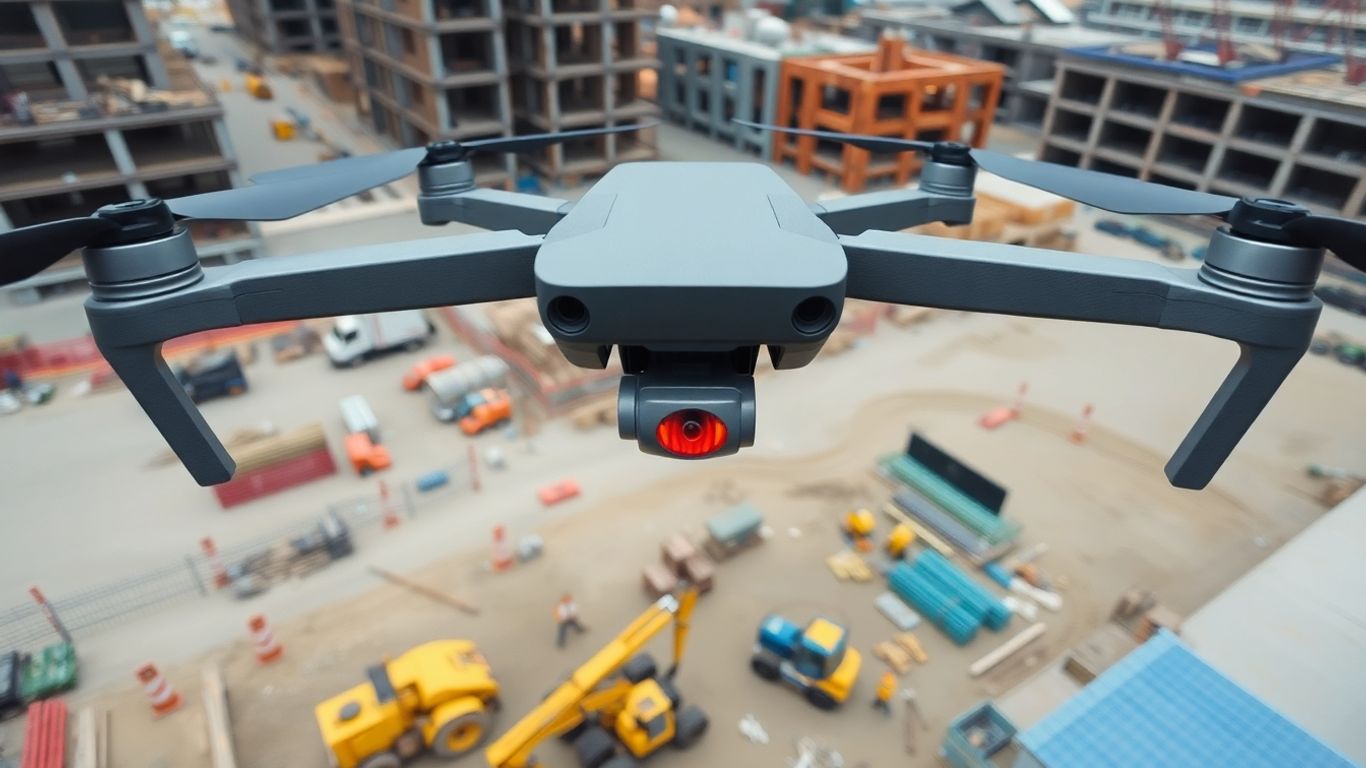
When you need to get a close look at things without getting too close yourself, the DJI Mavic 3 Thermal is a pretty solid choice for construction site inspections. It’s not the biggest drone out there, which is actually a good thing for getting into tighter spots or just for easier transport. Its main draw is the thermal camera, which is super useful for spotting things like heat leaks, moisture issues, or even electrical problems that you can’t see with a regular camera.
This drone is pretty portable, weighing in at just under a kilogram. That makes it easy to carry around a job site. It also has a decent zoom capability, so you can get detailed shots from a safe distance. For inspections, especially on roofs or complex structures, this can save a lot of time and hassle compared to traditional methods.
Here’s a quick look at what makes it stand out:
- Thermal Imaging: Detects temperature differences, great for finding hidden issues.
- Portability: Lightweight and easy to deploy.
- Zoom Capability: Get clear, detailed images from afar.
- Night Operations: The thermal camera works even when it’s dark.
Using a drone like the Mavic 3 Thermal means you can inspect areas that are difficult or dangerous to reach. This not only makes the inspection process safer but also much quicker. You can cover more ground and identify potential problems early on, which can save a lot of money down the line.
While it’s not the cheapest option, the capabilities it brings to the table, especially the thermal imaging, make it a strong contender for many construction inspection tasks.
2. DJI Matrice 350 RTK
The DJI Matrice 350 RTK is pretty much the top-tier option if you’re looking for a drone that can handle some serious work on a construction site. It’s like the heavy-duty truck of the drone world. This thing is built tough, with good weather resistance, so you don’t have to worry too much about a little rain or wind messing things up. It’s designed to carry a bunch of different cameras and sensors, which is a big deal because it means you can really customize it for what you need to inspect.
Here’s a quick rundown of what makes it stand out:
- Long Flight Times: You can get up to 55 minutes of flight time on a single battery. That’s a lot of time to cover a big site without having to swap batteries constantly.
- Payload Versatility: It can handle a wide range of DJI’s Zenmuse payloads. This includes high-resolution cameras for detailed photos and even LiDAR sensors for creating super accurate 3D models of the site.
- Advanced Obstacle Sensing: With sensing in six directions, it’s pretty good at avoiding crashes, which is always a plus when you’re flying around structures.
- RTK Positioning: The RTK (Real-Time Kinematic) system gives it very precise location data. This is important for mapping and making sure everything lines up perfectly with your plans.
It’s definitely not a cheap drone, costing over $11,000 just for the drone itself, not even counting the fancy cameras you’ll want to attach. But if you need the best performance for large-scale projects, mapping, or complex inspections, this is the drone that gets the job done.
When you’re dealing with massive construction projects, having a drone that can fly for a long time, carry advanced sensors, and provide pinpoint accuracy is not just a convenience, it’s a necessity. The Matrice 350 RTK fits that bill perfectly, making those big jobs feel a lot more manageable.
3. Parrot ANAFI USA
When you need a drone that’s ready to go in a flash, the Parrot ANAFI USA is a solid choice. Seriously, it can be airborne in under a minute, which is pretty neat if you’re on a tight schedule. It’s built in the USA, which some folks might find reassuring.
This drone is pretty good at getting into those tricky spots that are hard to reach otherwise. It’s got a 32x zoom camera that lets you get a close look without actually having to get too close. Plus, it has a thermal camera that can spot temperature differences from pretty high up, which is handy for finding things like leaks or electrical issues.
The ANAFI USA is designed with security and ease of use in mind for professional users. Its data encryption and secure flight protocols are meant to protect sensitive information gathered during inspections.
Here’s a quick rundown of what makes it stand out:
- Quick Deployment: Ready for flight in just 55 seconds.
- Versatile Imaging: Combines a high-resolution visual camera with a 32x zoom and a thermal sensor.
- Portability: Compact and easy to transport to any site.
- Upward Tilt: The 90° upward tilt on its camera is great for inspecting undersides of structures like bridges.
It also plays nice with popular mapping software, so processing your inspection data should be pretty straightforward. If you’re looking for a reliable tool for detailed site analysis, the Parrot ANAFI USA is definitely worth a look.
4. Skydio X10
The Skydio X10 is a pretty interesting drone, especially if you’re dealing with construction sites that are, let’s say, a bit chaotic. It’s built to fly itself through complex areas, which is a big deal when you’re trying to inspect a site without a human pilot constantly worrying about hitting something. Launched not too long ago, it packs some serious camera tech and is surprisingly light for what it can do. Plus, it’s one of the few options out there that’s actually made in the USA, which might matter to some folks.
What really sets the X10 apart is its smart flying. It uses a bunch of cameras to see its surroundings and can fly even when there’s no GPS signal or if someone’s trying to mess with its signal. This means it can get into tight spots or fly in tricky conditions where other drones might struggle or just give up.
Here’s a quick look at some of its main features:
- Multiple Cameras: It’s got a high-res zoom camera, a wide-angle camera, and a thermal camera. This gives you a lot of options for seeing different details on the site.
- NightSense: This software lets the drone fly autonomously even when it’s completely dark. Super handy for inspections that need to happen at odd hours or in areas with poor lighting.
- Tough Build: It’s rated for weather resistance (IP54), meaning it can handle some dust and splashes. It’s also modular, so you can swap out parts or add different gear if needed.
- Jamming Resistance: The Skydio Connect system uses a special radio setup to help it stay connected and fly even in environments where signals might be blocked or interfered with.
This drone isn’t cheap, and it’s definitely more than you’d need for just simple aerial photos. But if your construction site is full of obstacles, has dark corners, or you just need a drone that can handle itself without constant supervision, the Skydio X10 is a strong contender. It’s also a good choice if having a drone made in the US is a priority for your project.
The Skydio X10 is designed to take the guesswork out of flying. Its AI handles the tricky parts, letting you focus on what you need to inspect. This makes it easier to get consistent, high-quality data, even if the person flying it is new to drones.
It’s worth noting that the cost is a significant factor. You’re paying for that advanced autonomous capability and the robust build. For straightforward mapping jobs, it might be overkill, but for complex, dynamic construction environments, it really shines.
5. DJI Mavic 3E
Alright, let’s talk about the DJI Mavic 3E. This drone has really made a name for itself, especially if you’re into mapping and creating 3D models of your construction sites. It’s like the go-to for a lot of folks doing reality capture, and honestly, for good reason. It manages to pack a lot of serious tech into a package that’s not completely out of reach for smaller operations.
One of the standout features is its RTK module. If you’re not familiar, RTK stands for Real-Time Kinematic, and it’s a big deal for getting super precise measurements – we’re talking centimeter-level accuracy. This is pretty important when you’re trying to build accurate models of a site. It also plays nice with different RTK services, which is handy.
Here’s a quick rundown of what makes it tick:
- Flight Time: Expect around 36-42 minutes, with a max of 45 minutes. That’s a decent chunk of time to get your work done.
- Camera: It’s got a 20MP wide camera with a 4/3 CMOS sensor and a mechanical shutter. Plus, there’s a tele zoom camera that can magnify things quite a bit, up to 56x.
- Obstacle Avoidance: DJI’s APAS 5.0 system is pretty good at helping the drone navigate around things automatically.
- Charging: It supports 100W fast charging, and you can get a station that charges three batteries.
The DJI Mavic 3E is a fantastic all-around choice for detailed site inspections and mapping. It really hits a sweet spot between performance and price, making it accessible for many construction projects.
Now, it’s not perfect. The biggest thing people talk about is the DJI name itself, given some of the political discussions around drones made in China. Also, while it’s great for mapping, it doesn’t have thermal imaging built-in like some other models (though there is a thermal version, the Mavic 3T, if that’s what you need). For its price point, though, it’s hard to beat if your main goal is accurate data collection. It’s a solid drone that can really speed up how you inspect infrastructure, turning days of work into just a few hours. Drone technology significantly reduces inspection times.
When you look at what you get for the money, the Mavic 3E is a really strong contender. It’s got features that used to be only on much more expensive drones, making advanced aerial surveying more attainable. It’s a smart investment for companies looking to improve their site monitoring and data gathering processes.
6. DJI Phantom 4
Alright, let’s talk about the DJI Phantom 4. This drone is kind of a veteran in the game, first showing up way back in 2016. Even though it’s older, it’s still a solid choice, especially if you’re looking to get into photogrammetry without breaking the bank. It’s often considered the best budget pick for this kind of work.
One of the cool things about the Phantom 4 is its mechanical shutter. This is a big deal because it really helps cut down on motion blur, which is super annoying when you’re trying to get clear shots, particularly on cloudy days. It also comes with a decent camera, featuring a 1-inch 20MP sensor, and it has obstacle sensing in five directions. That was pretty cutting-edge when it first came out!
While the Phantom 4’s obstacle sensing was a huge step forward in 2016, newer drones now offer more advanced, omnidirectional sensors that are much better at avoiding obstacles. It’s still functional, but it’s not quite as sophisticated as what you find on the latest models.
When it comes to software, DJI has kept things updated. You can use it with DJI Terra, which is their own software for creating 3D models. They’ve even added features like DJI Modify, which lets you edit those 3D models. It’s nice that DJI continues to support older hardware with their software updates, showing their commitment to DJI Enterprise solutions.
Here’s a quick rundown of some key specs:
- Camera: 1-inch 20MP sensor
- Obstacle Sensing: Five directions
- Flight Time: Around 30 minutes
- Video: Supports H.264 4K at 60fps or H.265 4K at 30fps
Now, it’s not all perfect. Because it’s an older model, you might find it hard to get your hands on one, as it’s often out of stock. Also, its flight time is a bit shorter compared to newer drones, and the obstacle avoidance, while good for its time, isn’t as advanced as what’s available today. Still, for the price and its photogrammetry capabilities, the Phantom 4 remains a compelling option for many.
7. Teledyne FLIR SIRAS
The Teledyne FLIR SIRAS is a pretty interesting drone for site inspections, especially because it packs two cameras. You get a regular high-resolution visual camera, which is great for just seeing what’s going on, but the real star is the thermal camera. This thing can spot temperature differences, which is super handy for finding things like insulation problems, water leaks, or even electrical hot spots that you wouldn’t see with your eyes alone.
It’s designed to be pretty user-friendly, which is a big plus when you’re out on a busy construction site. You don’t want to be fiddling with complicated controls when you’re trying to get a job done.
Here’s a quick look at what makes it stand out:
- Dual-Camera System: Combines a high-res visual camera with a powerful thermal imager.
- Easy to Operate: Built for straightforward use, even for those who aren’t drone experts.
- Versatile Payload Options: Can be equipped with different sensors for various inspection needs.
- Robust Design: Made to handle tough conditions you might find on a job site.
When you’re looking at a building, especially a large one, it’s easy to miss things. The SIRAS helps you get a much clearer picture, not just of what things look like, but how they’re performing thermally. This can save a lot of time and headaches down the road by catching issues early.
While it might not have all the bells and whistles of some of the super high-end industrial drones, the SIRAS hits a sweet spot for many inspection tasks. It gives you that thermal insight without being overly complicated or breaking the bank. It’s a solid choice if you need to see more than just the surface.
8. Inspired Flight IF800
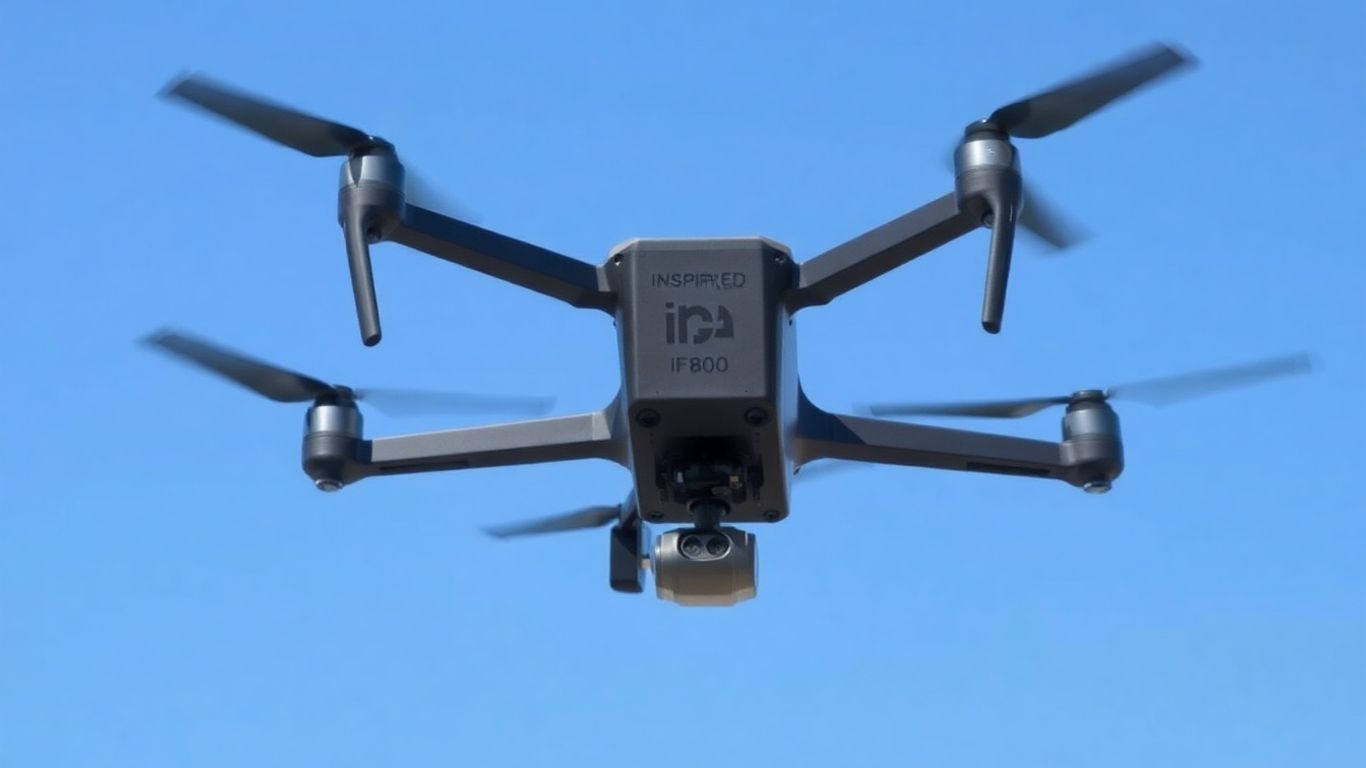
The Inspired Flight IF800 is a drone that’s built for serious work, and that includes checking out construction sites. It’s not some toy; it’s designed to carry different kinds of cameras and sensors, which is pretty important when you need to see things up close or in ways a normal camera can’t. Think about needing to spot tiny cracks or check temperatures on a roof – this drone can handle that.
One of the big pluses is its stability. It’s made to fly smoothly even when there’s a bit of wind, which is common on open construction sites. This means you get clearer pictures and video, making it easier to see what’s going on.
- It’s built tough: Designed to handle the rigors of job sites.
- Carries good gear: Can be fitted with advanced cameras and sensors for detailed inspections.
- Stable flight: Flies reliably, even in less-than-perfect weather conditions.
When you’re looking at a big project, you need tools you can count on. The IF800 is one of those tools. It’s made to be dependable, so you can focus on the inspection itself rather than worrying about the drone.
While it might not have all the bells and whistles of some of the super high-end models, the IF800 offers a solid balance of performance and practicality for construction inspections. It gets the job done without unnecessary complexity.
9. Autel EVO II 640T
The Autel EVO II 640T is a pretty solid choice if you’re looking for a drone that can handle inspections, especially when you need to see things that aren’t visible to the naked eye. It comes with a 640×512 thermal camera, which is great for spotting heat differences. This can be super useful on a construction site for finding things like insulation gaps, water leaks, or even checking electrical components that might be overheating.
It’s not just about the thermal camera, though. The regular camera is pretty decent too, capturing clear images that you can use for standard visual inspections. Plus, it’s got a good flight time, so you can cover a decent amount of ground without having to land and swap batteries too often. That’s always a win when you’re out on a big site.
Here’s a quick look at some of its specs:
| Feature | Specification |
|---|---|
| Thermal Camera | 640×512 resolution |
| Flight Time | Up to 40 minutes |
| Max Speed | 45 mph (in Ludicrous Mode) |
| Obstacle Sensing | Omnidirectional (19 sensors) |
| Max Transmission | 9 km (FCC) / 5 km (CE) |
When you’re out there, you want a drone that’s easy to fly and reliable. The EVO II 640T generally fits the bill. It’s got sensors all around it, which helps avoid bumping into things, a big plus when you’re flying around structures. It’s also pretty portable, so getting it to the site and set up isn’t a huge hassle.
For inspections where identifying temperature anomalies is key, like checking for energy loss or potential fire hazards, the thermal capabilities of the Autel EVO II 640T really shine. It provides an extra layer of data that standard visual cameras just can’t offer, making your inspection reports more thorough and informative.
Overall, it’s a good all-around drone for construction inspections, especially if you need that thermal imaging capability without breaking the bank on the most high-end models. It strikes a nice balance between features, performance, and cost.
10. Sony Airpeak S1
The Sony Airpeak S1 is an interesting drone, especially if you’re already invested in Sony’s Alpha camera system. Originally aimed at filmmakers, it’s found a solid place in construction for detailed mapping. The big draw here is that you can use your existing Sony Alpha cameras, like the a7C, instead of buying a whole new sensor. This can save a good chunk of change, and your camera can do double duty.
It’s built tough, handling winds up to about 45 mph, which is pretty impressive. For planning out your flights, it works well with AirData UAV software, which helps manage your drone data and missions.
- Can use your existing Sony Alpha cameras
- Handles winds up to 44.7 mph
- RTK GNSS system for precise positioning
- Obstacle avoidance and braking
One thing to really think about with the Airpeak S1 is the total cost. The drone itself is around $9,000, but you still need to buy a camera, a lens, and potentially a gimbal. Add all that up, and you’re easily looking at $20,000 or more. It’s a significant investment.
Battery life is another area where it’s not the strongest. Even with their upgraded battery, you’re looking at about 30 minutes of flight time without any extra gear. If you’re flying with a typical payload for mapping, expect that to drop to around 20 minutes. So, for really large sites, you might need to plan for battery swaps or multiple flights.
Wrapping Up Your Drone Inspection Journey
So, we’ve looked at some pretty cool drones that can really change how you inspect construction sites. Gone are the days of risky climbs and slow manual checks. These flying gadgets, with their sharp cameras and smart tech, make getting the details you need way faster and safer. Whether you need super-precise mapping or just a quick look at a tricky spot, there’s a drone out there for the job. Picking the right one means thinking about what you’ll be doing most – mapping, thermal checks, or just getting eyes on hard-to-reach places. But no matter your choice, using drones is a smart move for keeping projects on track and making sure everything’s built right.
Frequently Asked Questions
Why are drones good for checking construction sites?
Drones are like flying cameras that can get to places people can’t easily or safely reach. They can take super clear pictures and videos of buildings and construction areas. This helps people see if everything is built correctly, spot problems early, and keep track of how the project is going, all without risking anyone’s safety.
What makes a drone good for inspecting buildings?
A good inspection drone needs a really good camera, sometimes even one that can see heat (thermal camera) to find leaks or bad insulation. It also needs to fly for a decent amount of time and be stable in the air. Some drones can also make very accurate maps, which is helpful for checking plans.
How do drones help save money on construction sites?
Using drones means you don’t need as many people climbing around on ladders or using expensive equipment like cherry pickers. Drones can do the job much faster, and by finding problems early, they help avoid costly mistakes and repairs later on.
Can drones fly in bad weather or at night?
Some drones are built to handle wind and light rain, but most are best used in clear weather. Drones with thermal cameras can see in the dark, which is great for checking things like heat loss or finding people in emergencies, even when it’s nighttime.
Do I need to be an expert pilot to fly these drones?
Many modern drones are designed to be easy to fly. Some even have special features that help them avoid crashing into things all by themselves. While a little practice helps, you don’t usually need years of experience to operate them for basic inspections.
What kind of information can I get from a drone inspection?
You can get detailed photos and videos of the entire site, including roofs, walls, and hard-to-reach spots. Drones can also create 3D models of the site and provide measurements, helping you compare what’s built to the original plans and track progress accurately.