Best drones for agriculture and crop monitoring
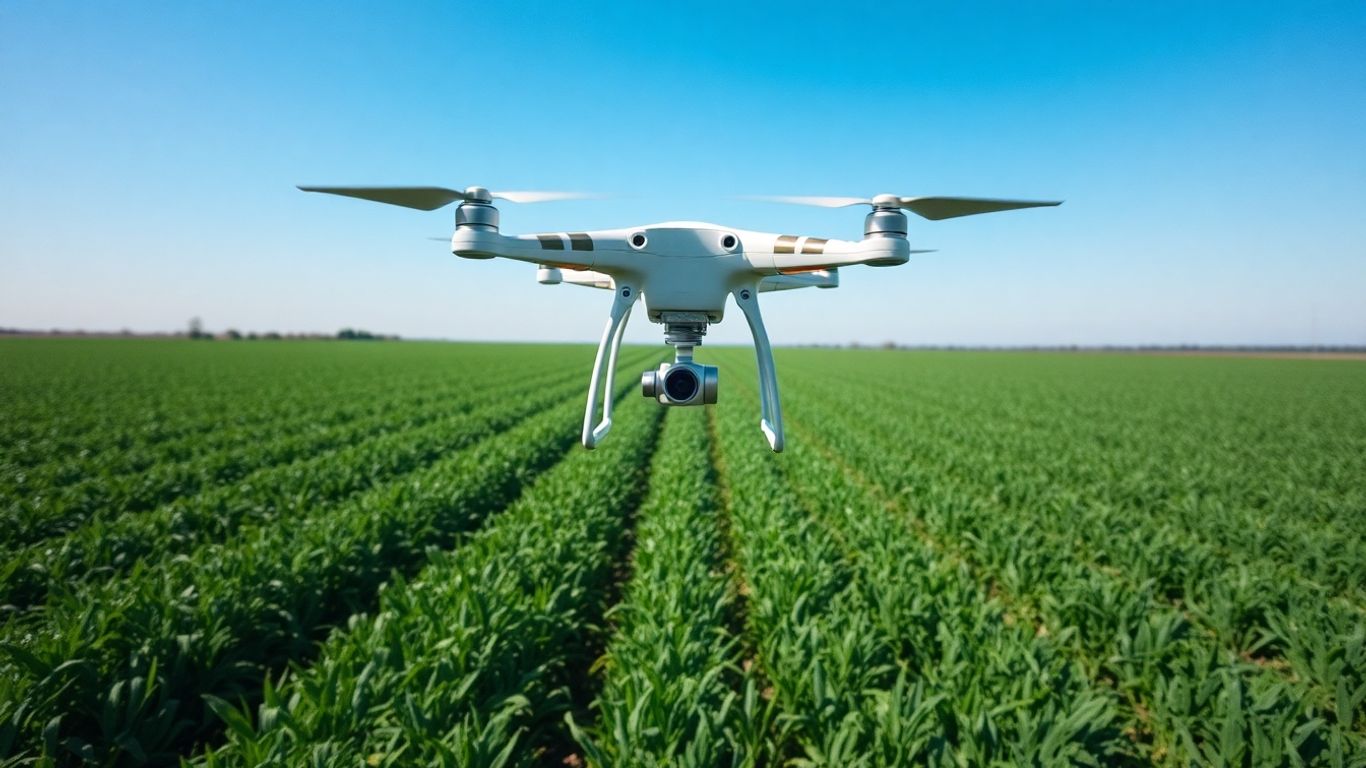
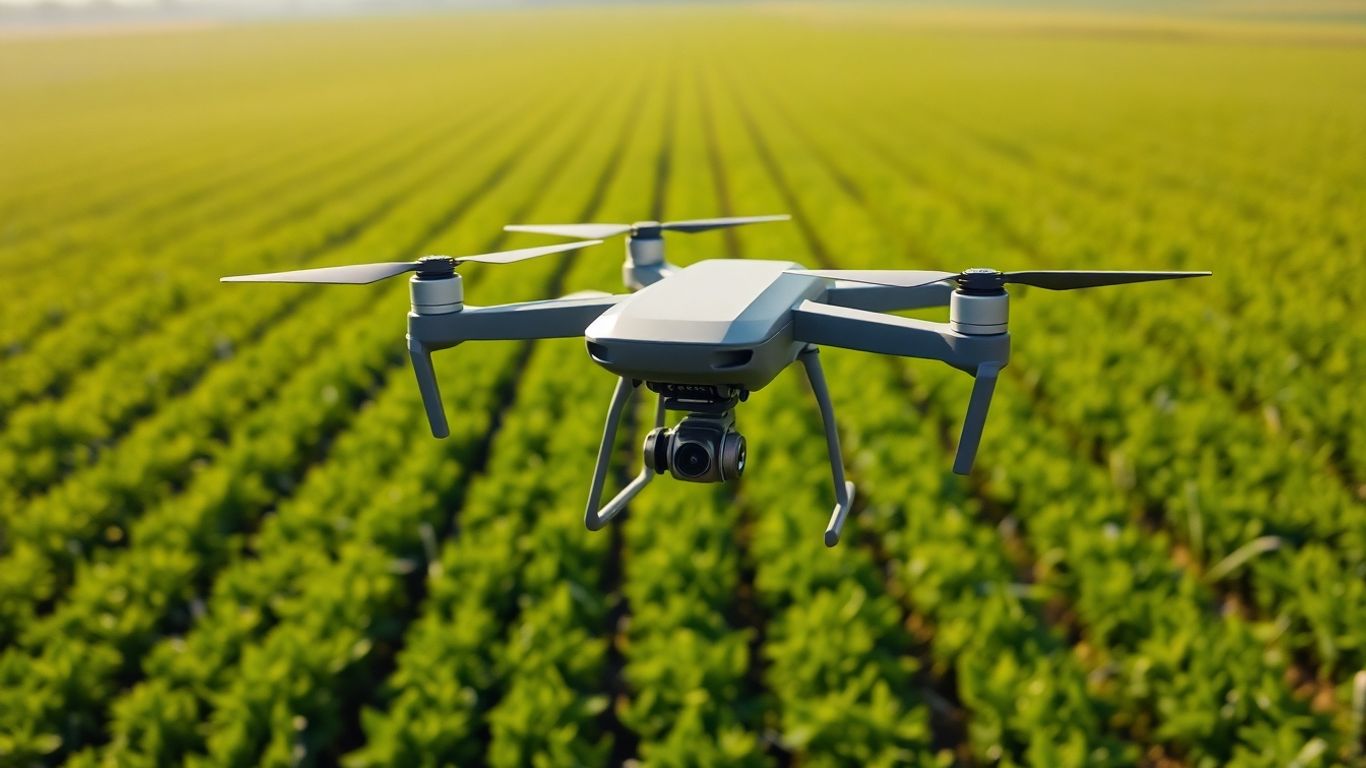
Farming has changed a lot, and drones are a big part of that. These flying gadgets help farmers keep a close eye on their crops, figure out what plants need, and spot problems early. It’s all about making smart choices to get the best harvest possible. If you’re looking to get into this, picking the right agriculture drone is key. We’ve put together a list of some of the top options out there to help you get started.
Key Takeaways
- The DJI Matrice 350 RTK is a top choice for industrial-scale farming, offering long flight times and precise positioning.
- For detailed crop analysis, the DJI Mavic 3M combines RGB and multispectral cameras for comprehensive data.
- The AgEagle eBee X stands out with its impressive 90-minute flight time, ideal for covering large areas efficiently.
- Parrot’s Bluegrass Fields offers a more budget-friendly option for smaller farms needing multispectral imaging.
- The SenseFly eBee Ag is another strong contender for large farms, known for its extended flight capabilities and sensor options.
1. DJI Matrice 350 RTK
When you’re dealing with serious agricultural operations, you need a drone that can handle the heavy lifting, and that’s where the DJI Matrice 350 RTK comes in. This thing is built tough, designed for industrial use, meaning it’s not just for hobbyists. One of its best features is the hot-swappable battery system. You know how frustrating it is when a drone dies mid-flight, especially when you’re covering a huge field? Well, with this, you can just swap out the battery and keep going. No downtime, just continuous work.
It also has this really precise RTK module. Think centimeter-level accuracy. This is super important for mapping out fields or checking on specific areas of your crops. You get data you can really trust.
The Matrice 350 RTK is a workhorse, built for professionals who need reliability and precision over large areas. Its robust design means it can handle different weather conditions, which is a big plus when you’re out in the field.
Here’s a quick look at what it offers:
- Extended Flight Time: You can get up to 55 minutes of flight on a single charge, which is pretty impressive for a drone this size. This means you can cover more ground in one go.
- Modular Payload System: You can attach different sensors or cameras depending on what you need to do. This makes it really versatile for different tasks.
- High-Precision Positioning: The RTK module gives you that centimeter-level accuracy for detailed mapping and data collection.
- Weather Resistance: It’s built to withstand various weather conditions, so you don’t have to worry as much about the elements.
This drone is a serious investment for large-scale farming operations that demand accuracy and continuous operation. While it’s definitely on the pricier side and might need some professional training to get the most out of it, the capabilities it brings to the table for industrial crop monitoring are hard to beat.
2. DJI Mavic 3M
The DJI Mavic 3M is a pretty neat drone for anyone serious about precision agriculture. It packs a 20MP RGB camera alongside a multispectral one, which means it can see way more than just what our eyes can. This lets you get a really detailed look at how your crops are doing, checking on their health and spotting problems early.
It’s designed to be super portable, folding up nicely, making it easy to take from one field to another. Plus, it has this RTK module that helps it know its exact location down to the centimeter. This is a big deal for making accurate maps of your fields.
Here’s a quick look at what it offers:
- Flight Time: Up to 43 minutes, which is pretty good for covering a decent area.
- Camera System: Combines a 20MP RGB camera with a multispectral camera for detailed analysis.
- Positioning: Features an RTK module for centimeter-level accuracy.
- Portability: Compact and foldable design for easy transport.
It’s a solid choice for monitoring crop health, checking soil conditions, and figuring out the best way to use your resources like water and fertilizer. It’s not the cheapest option out there, but for the detailed data it provides, it’s a worthwhile investment for many farms.
This drone really helps bridge the gap between what you can see with the naked eye and the detailed information needed for modern farming. It makes complex data collection much more accessible.
3. AgEagle eBee X
The AgEagle eBee X is a serious piece of kit for anyone looking to do some advanced mapping in agriculture. It’s a fixed-wing drone, which means it flies more like a plane than a helicopter, and that’s a big deal when you’re trying to cover a lot of ground efficiently. This drone is built for serious acreage, capable of surveying up to 1,200 acres in a single go.
What really sets the eBee X apart is its flight time. We’re talking a solid 90 minutes in the air. That’s a huge advantage if you’ve got a massive farm or you’re doing research across a wide area. It means less downtime and more data collected in one go.
It’s also super versatile when it comes to cameras. You can swap out the payload to use different types, like multispectral, thermal, or high-resolution RGB cameras. This flexibility lets you gather all sorts of data depending on what you need to check – plant health, water stress, you name it.
While it’s a powerful tool, the eBee X does come with a higher initial cost and will likely require some dedicated training to get the most out of its advanced features. It’s definitely geared towards professionals and larger operations.
Here’s a quick look at some of its specs:
- Flight Time: Up to 90 minutes
- Camera Options: Interchangeable (Multispectral, RGB, Thermal)
- Max Range: 12 km
- Wind Resistance: Up to 10 m/s
- Payload Capacity: 800 g
It’s a robust option for large-scale farming and agricultural research where detailed aerial data is key.
4. Parrot Bluegrass Fields
When you’re looking for a solid drone for keeping an eye on your crops without emptying your wallet, the Parrot Bluegrass Fields is definitely worth a look. It’s built for farmers who need to get a handle on crop health but don’t necessarily need all the bells and whistles of the super high-end models.
This drone comes with the Parrot Sequoia multispectral sensor. What that means is it can snap pictures not just in the regular colors we see, but also in near-infrared. This lets you see things about your plants that aren’t obvious to the naked eye, like how stressed they might be or if they’re getting enough nutrients.
It’s a good fit for smaller to medium-sized farms. You can use the data it collects to figure out if your crops need more water, if there’s a nutrient problem, or just generally how healthy everything is. Plus, the software that comes with it is pretty straightforward, so even if you’re new to using drones for farming, you should be able to get useful reports without too much fuss.
The Bluegrass Fields hits a sweet spot between doing a good job and being affordable. It’s a great starting point for anyone getting into precision agriculture.
Here’s a quick rundown of what it offers:
- Flight Time: Around 25 minutes, which is decent for smaller fields.
- Camera: Uses the Parrot Sequoia multispectral sensor for detailed plant analysis.
- Range: Can cover up to 3 km, good for many farm sizes.
- Ease of Use: Known for its user-friendly software, making data processing simpler.
It’s a cost-effective way to get advanced crop insights. While its flight time might be shorter than some competitors, its affordability and the quality of its multispectral imaging make it a strong contender for budget-conscious farmers.
5. SenseFly eBee Ag
The SenseFly eBee Ag is a fixed-wing drone built for covering a lot of ground when you’re monitoring crops. Because it’s a fixed-wing design, it’s pretty efficient with its battery, letting you survey large fields without needing to swap batteries constantly. It comes with the Parrot Sequoia+ multispectral camera, which is good for seeing how healthy your plants are.
This drone is a solid choice for anyone managing big farms and needing to map out large areas quickly.
Here’s a quick look at what it offers:
- Flight Time: Up to 55 minutes, which is great for covering lots of land.
- Camera: Parrot Sequoia+ Multispectral sensor for detailed crop health data.
- Range: Can cover up to 8 km, so you can map extensive areas.
- Wind Resistance: Handles winds up to 10 m/s.
It’s good for spotting things like crop stress and figuring out where to put fertilizer. However, remember that fixed-wing drones need a bit more space to take off compared to the quadcopter types, and there’s a bit of a learning curve to get the most out of it.
While it’s designed for efficiency and covering large areas, be prepared for a slightly steeper learning curve than some other drones. Also, launching a fixed-wing drone requires a bit more open space.
6. DJI Phantom 4 Multispectral
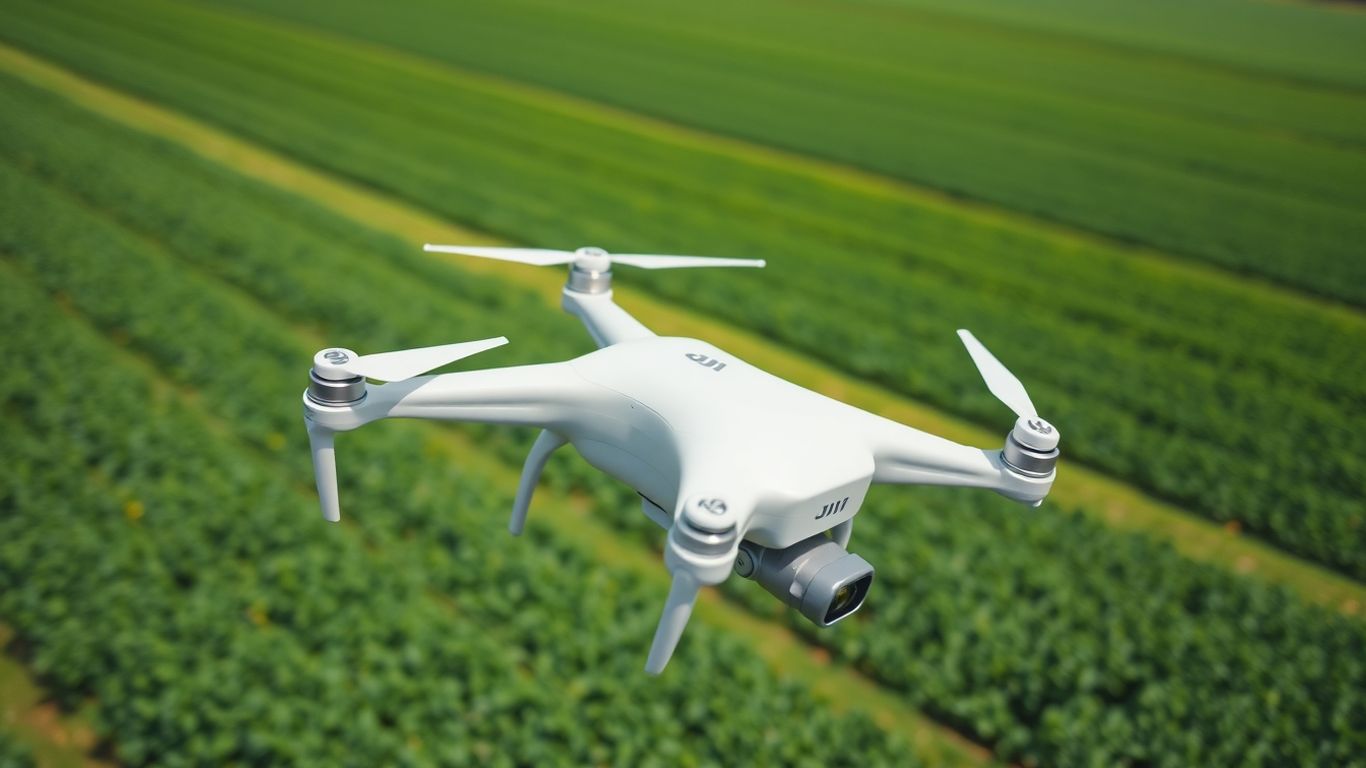
The DJI Phantom 4 Multispectral drone really changed the game when it first came out. It’s got this neat setup where it packs six cameras right into the drone itself. You get your standard RGB shots, but it also captures multispectral data, which is key for figuring out what’s going on with your crops on a deeper level. Think of it as giving your plants a check-up from above.
This drone is pretty handy for farmers, researchers, and anyone in agriculture who needs to get a good look at plant stress, figure out if they’re watering correctly, or just boost their crop yields. It even has an RTK module, which means it’s super precise with its mapping. This makes the data it collects really reliable, especially for scientific work or commercial operations.
It’s a solid choice for anyone needing high-precision NDVI analysis.
Here’s a quick look at what it offers:
- Camera System: Six-sensor multispectral array for detailed data.
- Flight Time: Around 27 minutes, which is decent for many tasks.
- Mapping Accuracy: Integrated RTK module for centimeter-level precision.
- Ease of Use: Integrates well with other DJI gear, making data management smoother.
While it’s not the longest-flying drone out there, its ability to capture detailed multispectral imagery and its precise mapping capabilities make it a standout option for detailed crop analysis. It’s a tool that helps you see beyond the surface.
If you’re looking for a drone that provides detailed insights into crop health and mapping accuracy, the Phantom 4 Multispectral is definitely worth considering. It’s a step up for serious agricultural monitoring, fitting nicely into the top drones for crop monitoring list.
7. Yuneec H520E RTK
The Yuneec H520E RTK is a solid choice if you’re looking for a drone that can handle professional surveying and mapping tasks, especially in agriculture. It’s a hexacopter, meaning it has six rotors, which generally gives it a bit more stability and redundancy compared to quadcopters. The big selling point here is the integrated RTK module. This fancy bit of tech allows for centimeter-level accuracy when positioning, which is pretty important if you need your maps to be spot on for things like precise field analysis or planning.
It’s designed to be pretty versatile with its camera system. You can swap out different modules, including thermal and multispectral cameras. This means you can use it for a bunch of different jobs, from checking crop health with multispectral data to spotting issues like irrigation problems or pest infestations with thermal imaging. It’s not just for farming either; people use it for environmental assessments too.
While it’s not the cheapest option out there, the H520E RTK hits a sweet spot. It gives you that high-precision data you need without costing as much as some of the really big, specialized agricultural drones. It’s a good balance for professionals who need reliable data.
Here’s a quick look at some of its specs:
- Flight Time: Around 30 minutes. It’s decent, but maybe not enough for really massive fields in one go.
- Camera: Interchangeable modules (multispectral, thermal, RGB).
- Weight: About 2.2 kg.
- Max Range: Roughly 7 km.
- Wind Resistance: Handles winds up to 12 m/s, which is pretty good.
It’s a capable drone, but keep in mind it’s a bit bulkier than some of the smaller models, and you might need a little practice to get the most out of it, especially with the RTK setup and different camera payloads.
8. Autel EVO Max 4T
When you’re dealing with large tracts of land, you need a drone that can go the distance and gather detailed information. The Autel EVO Max 4T fits that bill pretty well. It’s built for serious crop surveillance, packing a punch with its advanced camera system that includes both high-resolution thermal and multispectral sensors. This means you can spot irrigation problems, see where pests might be setting up shop, or get a good read on soil conditions, all from the sky.
What really sets it apart is its AI-assisted navigation. This makes it super handy for autonomous flights over big fields, letting you cover a lot of ground with precision. It’s a solid choice if you’re managing a lot of farmland and need consistent, reliable data to keep things running smoothly.
Here’s a quick look at what it offers:
- Flight Time: Up to 50 minutes, which is pretty good for covering large areas.
- Camera: An 8K HDR camera paired with a thermal sensor.
- Transmission Range: Up to 20 km, giving you a lot of flexibility.
- Wind Resistance: Can handle winds up to 12 m/s.
- Payload Capacity: Can carry up to 2 kg.
The EVO Max 4T is designed for those who need to monitor extensive agricultural areas. Its combination of long flight times, impressive range, and sophisticated imaging capabilities makes it a powerful tool for detailed crop analysis and farm management.
While it’s a fantastic piece of equipment, it does come with a price tag that might be a bit much for smaller operations. You’ll also want to make sure you have the right software to really make the most of the data it collects. But if you’re looking for a drone that can handle extensive agricultural monitoring with advanced features, the EVO Max 4T is definitely worth a look.
9. Parrot Anafi USA
The Parrot Anafi USA is a pretty neat drone, especially if you’re working with smaller fields or need something that’s easy to pack up and take with you. It’s not the biggest or the longest-flying drone out there, but it packs a punch for its size.
What really stands out is its camera setup. You get a 4K HDR camera, which is great for clear visuals, and it also comes with a thermal sensor. This combo is super helpful for spotting things like plant stress or irrigation issues that you might not see with just your eyes. It’s a solid choice for getting detailed crop health information without needing a massive setup.
Here’s a quick look at what it offers:
- Flight Time: Up to 32 minutes, which is decent for covering smaller areas.
- Camera: 4K HDR video combined with a thermal sensor.
- Range: Up to 8 km transmission range.
- Portability: It’s lightweight and folds up, making it easy to transport.
While it might not be the best fit for enormous farms that need to be covered in one go, the Anafi USA really shines for its ease of use and the quality of data it can collect for more manageable plots. It’s a good balance of features and cost for many farmers.
If you’re looking for a drone that’s user-friendly and can give you valuable insights into your crops, the Parrot Anafi USA is definitely worth considering. You can find more details about its capabilities on the Parrot Anafi USA product page.
10. JOUAV CW-30E
When you’re dealing with really big farms, the JOUAV CW-30E is a drone that really stands out. It’s a hybrid, meaning it uses both gasoline and batteries, which is pretty neat because it lets it stay in the air for a super long time. We’re talking up to 8 hours of flight time, which is way more than most other drones out there. This makes it perfect for covering huge areas without having to land and swap batteries all the time.
This drone is built for serious work. It can carry a good amount of weight, up to 8kg, so you can attach different kinds of sensors to it. Whether you need a high-resolution camera to see every detail, or a multispectral sensor to check on plant health, the CW-30E can handle it. It’s also got that VTOL (Vertical Takeoff and Landing) thing going on, so you don’t need a runway. It can just lift off and land pretty much anywhere, which is handy if your fields aren’t exactly flat and smooth.
The JOUAV CW-30E is designed for efficiency and endurance, making it a strong contender for large-scale agricultural operations where covering vast distances is key. Its hybrid power system and VTOL capability offer significant advantages over traditional drones.
Here’s a quick look at what makes it tick:
- Flight Time: Up to 8 hours (that’s a lot of flying!)
- Payload Capacity: 8 kg (can carry heavy sensors)
- Range: Up to 200 km (covers massive areas)
- Takeoff/Landing: VTOL (no runway needed)
- Power System: Hybrid (gasoline and battery)
If you’ve got a lot of land to monitor, the JOUAV CW-30E is definitely worth a look. It’s built for endurance and can handle pretty much any sensor you throw at it, giving you a lot of flexibility for crop monitoring and other farm tasks.
Wrapping Up: Finding the Right Drone for Your Farm
So, picking the best drone for your farm really comes down to what you need and what you can spend. If you’ve got a big operation and need to cover a lot of ground, something like the AgEagle eBee X or the DJI Matrice 350 RTK might be worth looking into. They’re built for the heavy lifting. But if you’re just starting out or have a smaller plot, the Parrot Bluegrass Fields could be a solid, more budget-friendly choice that still gives you good data. Ultimately, these flying gadgets are changing how we farm, making things more efficient and hopefully, more profitable. Think about your specific fields, your budget, and what kind of information you’re hoping to get, and you’ll find the drone that fits your needs.
Frequently Asked Questions
What exactly is a drone for farming?
Think of a farming drone as a smart flying robot for the farm. It’s a special aircraft, not for people, that carries cameras and sensors. These drones help farmers keep an eye on their crops and land, giving them useful information to farm smarter. They can be small like a toy helicopter or bigger like a small plane.
How much land can a drone check out in one go?
The amount of land a drone can cover depends on its battery life and how fast it flies. Most farming drones can check about 100 to 500 acres in one flight. Some of the fancier ones with longer battery life can do even more. The speed and camera it uses also play a part in how much it can see.
How far away can these farming drones fly?
Spraying drones usually stay within 1 to 5 kilometers (about 0.6 to 3 miles) of where they start. Drones made for mapping and checking fields can often go further, sometimes up to 15 or 20 kilometers (about 9 to 12 miles), especially if they have special long-range communication.
Can drones help spot problems like bugs or diseases on my crops?
Absolutely! Drones have special cameras that can see things the human eye can’t. They can spot early signs of plants being sick, not getting enough water, or having bug problems. This helps farmers fix things early before they get worse.
Do I need to be a tech expert to use these drones?
While some advanced drones might need a bit of training, many are designed to be user-friendly. Companies often provide software that makes it simple to fly the drone and understand the information it collects. Think of it like learning to use a new smartphone – there’s a learning curve, but it’s manageable.
Are drones really cheaper than farming the old way?
Yes, in the long run, they can be! Drones help farmers use less fertilizer and bug spray because they know exactly where to apply them. This saves money on supplies. Plus, by catching problems early and making fields healthier, drones can help farmers get bigger harvests, which means more money.